
And once again we stayed longer in one place than planned - if this carries on, we will still be in Mexico in two months. Like Cancún, Playa del Carmen is a tourist stronghold. Not disfigured by huge hotel resorts, but with little Mexican flair all the same. The tourist strip Calle Quinta Avenida in particular could be just about anywhere in the world where mass tourism has had its boom.
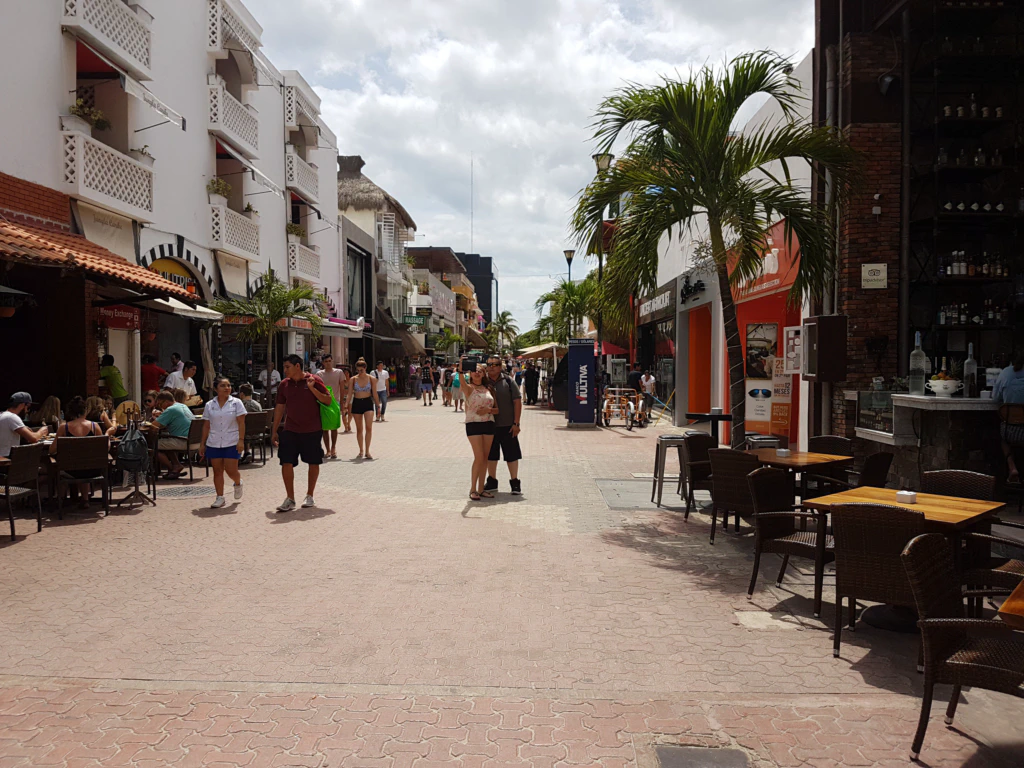
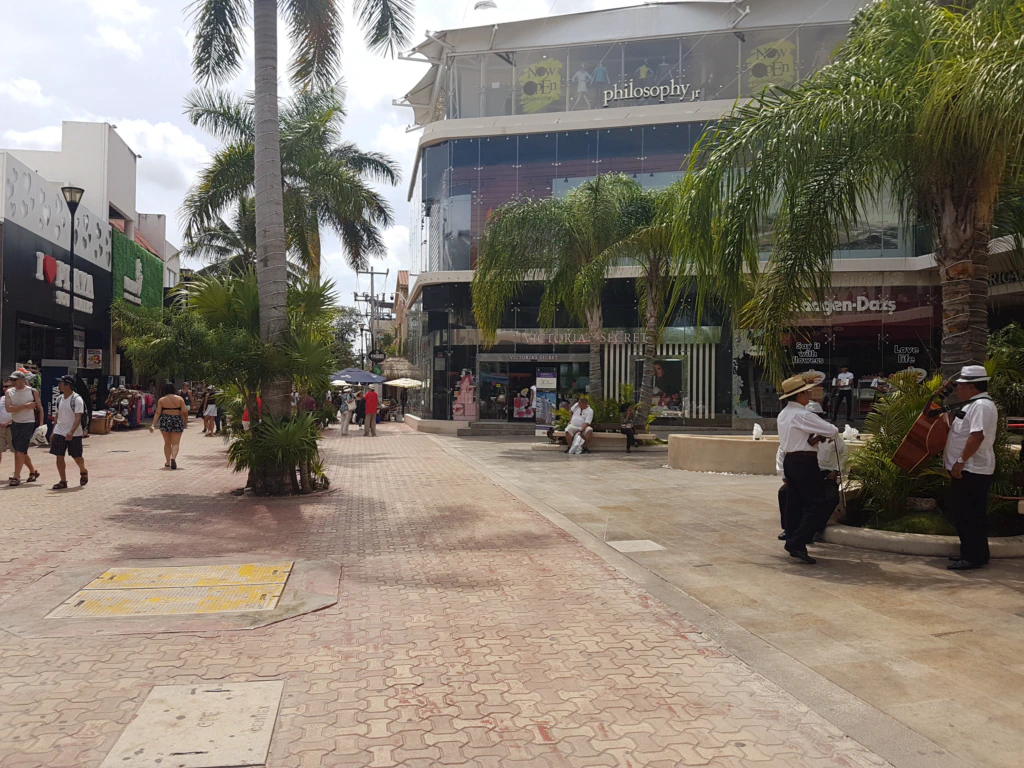
So what did we want there? Well, in Playa nothing really. Just offshore, though, lies one of the most beautiful coral reefs in Mexico, if not in all of South America: the reef around the island of Cozumel.
So the very first thing we did was head to the dive centre to book a trip for me (Jan does not dive). Sadly it turned out that the weather forecast - or rather the wind forecast - would not allow a diving trip to Cozumel for another four days. By then we had actually wanted to be in Tulum. But diving this reef is an absolute must! So we had barely arrived before we were extending our stay by another three nights…
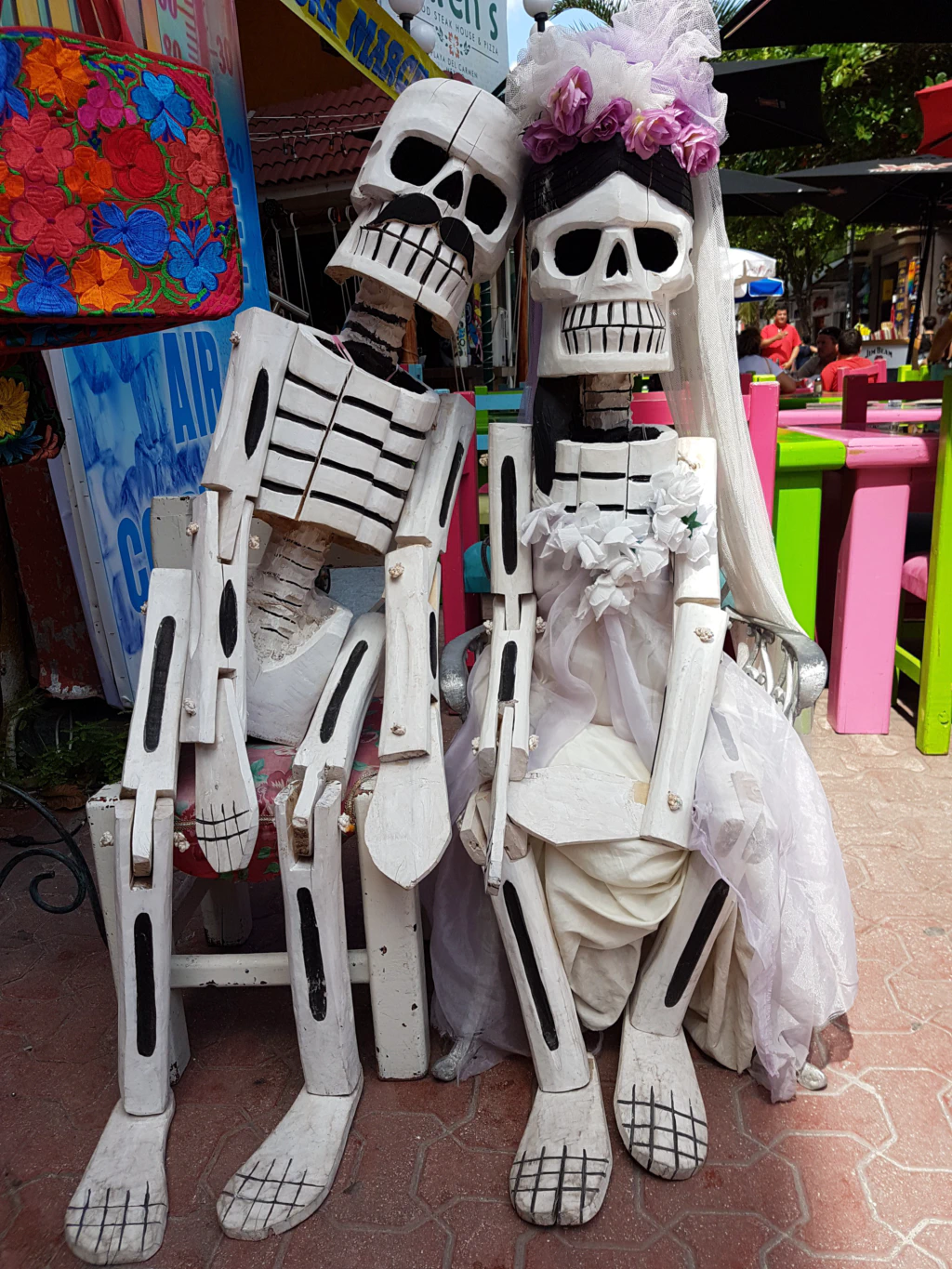
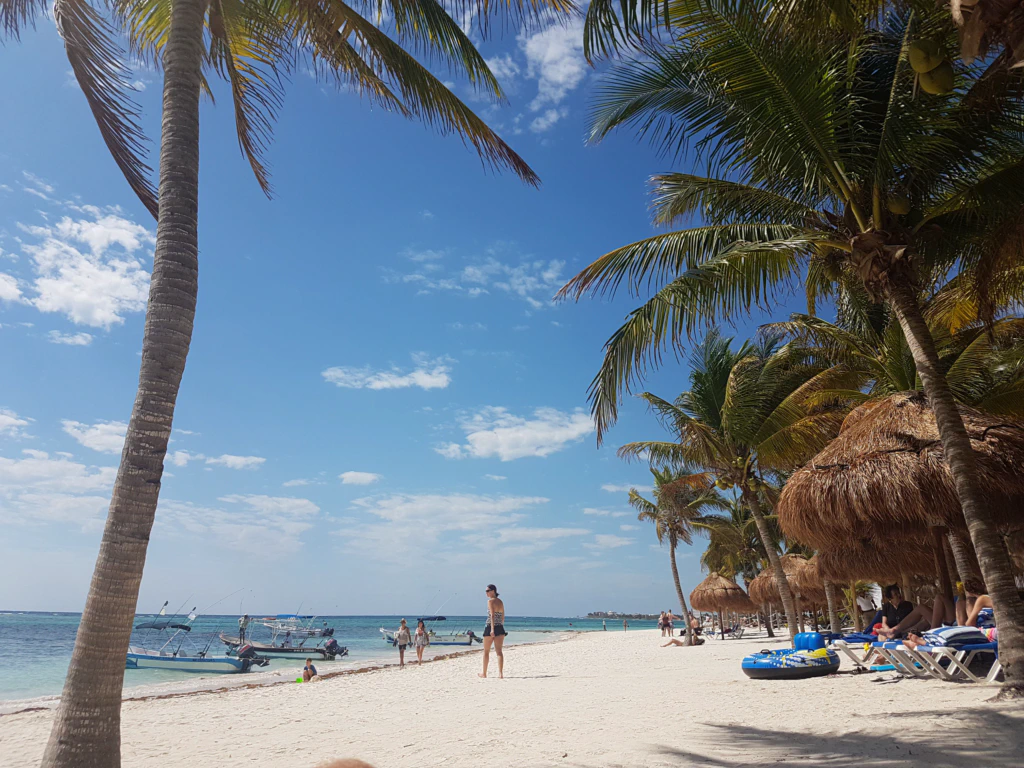
Playa del Carmen definitely has a good position for trips of all kinds, but otherwise it does not have much to offer (apart from the nightlife). The beach in particular really is not among Mexico’s finest. For one thing the hotel complexes leave only a strip about a metre wide free for the public (as always we are not sleeping in one of these hotels but in an AirBnB), and for another there is a real problem here with the brown algae washed up on the beach, whose smell truly does not invite you to linger!
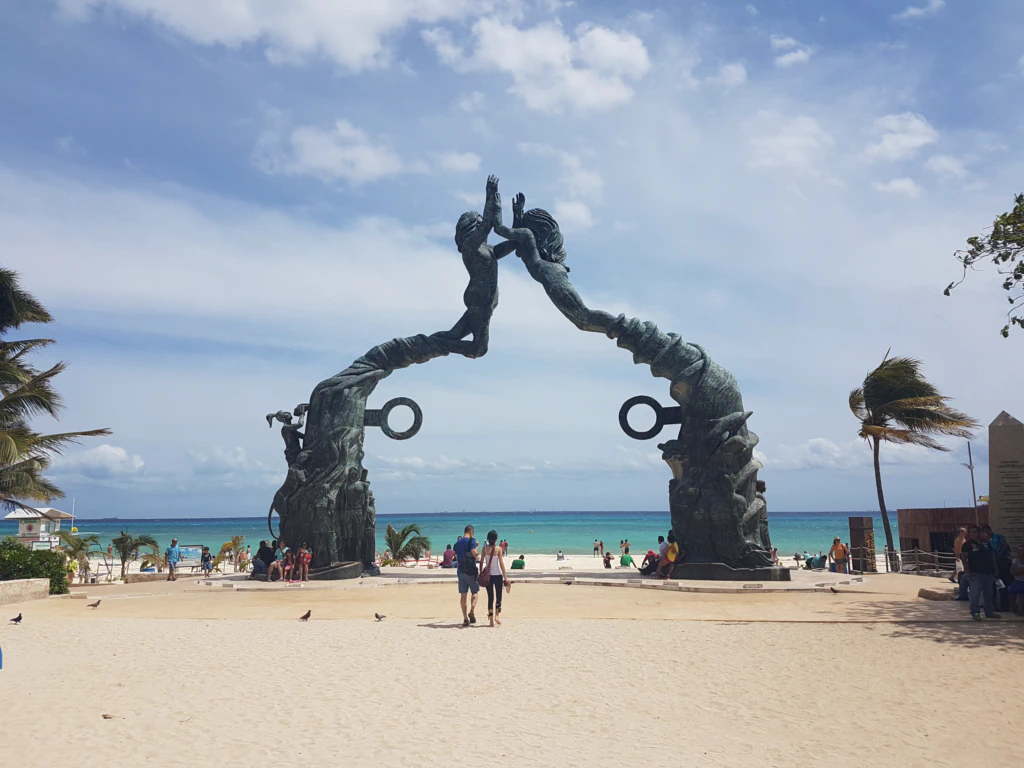
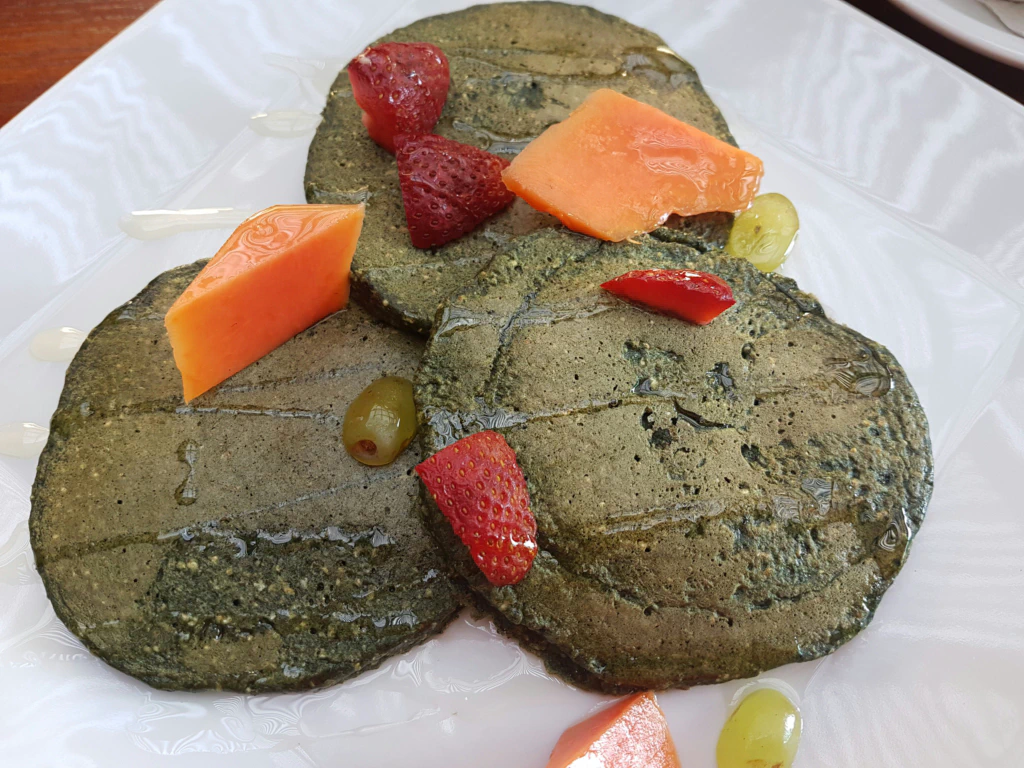
So we spent most of the time strolling from one café to the next along the ‘5th Avenue’, tasting such exotic dishes as algae pancakes… Ordered by mistake! It did not taste as bad as it sounds, but I would never order it a second time. Purely on principle. Because you do not combine pancakes and algae!
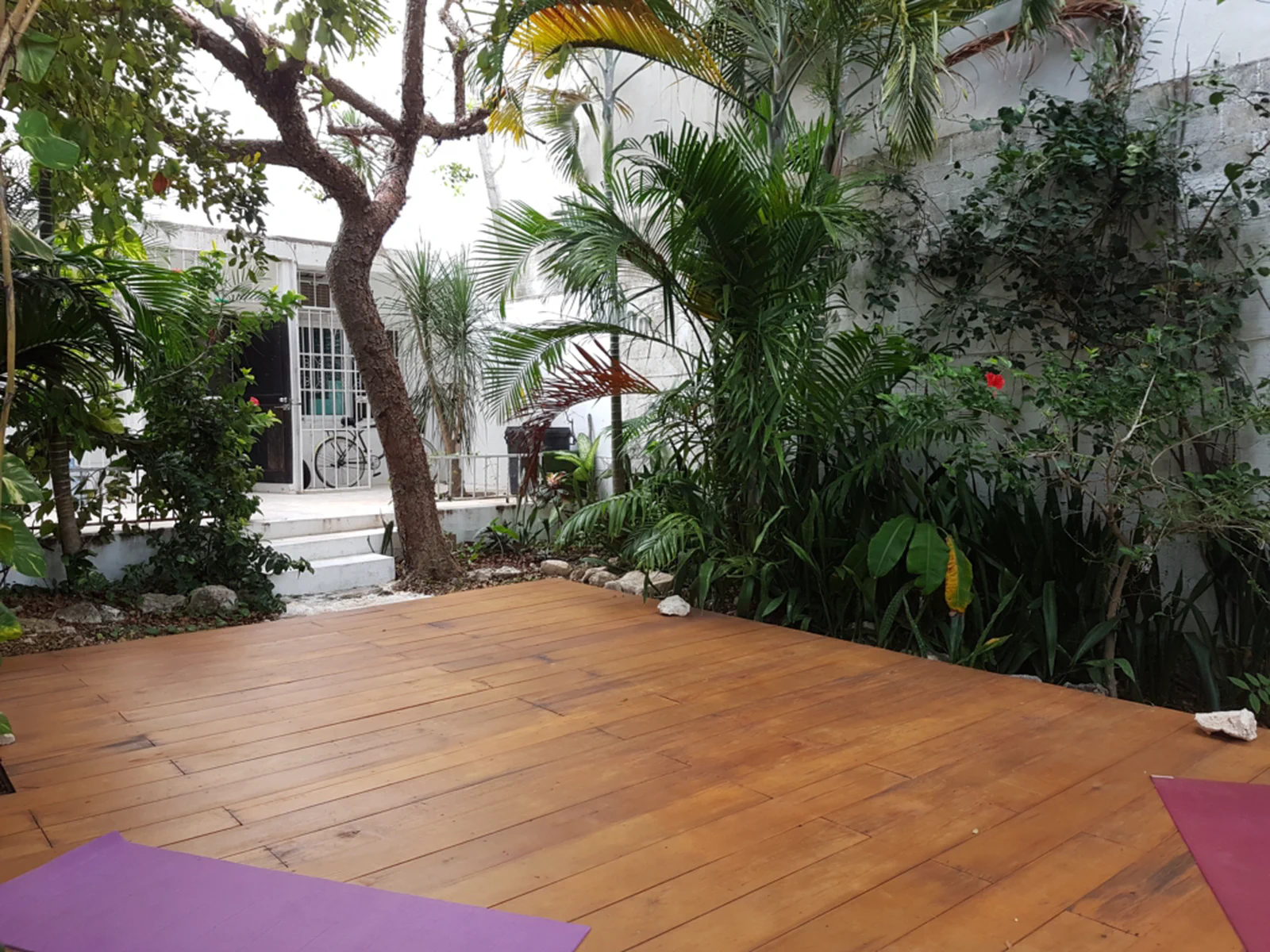
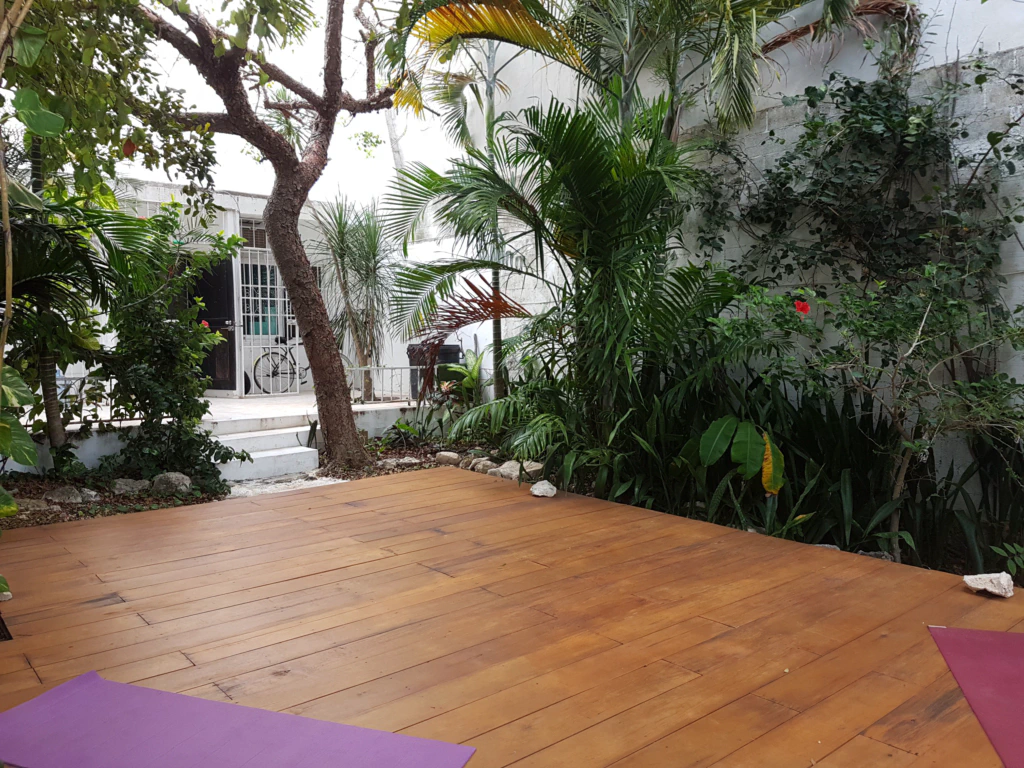
Even though Playa was far too touristy for us, I would happily have rented a flat here. That was mainly down to a yoga oasis I discovered on the very first evening and where I was a regular for the short time we had. ❤ Plus a fine French café where we had breakfast after my morning yoga class. What more could you want? Ah, I think I felt the same on Holbox as well. So the chances are good of finding both at our future destinations too. And Jan is anything but sad about being able to sleep in while I go to yoga.
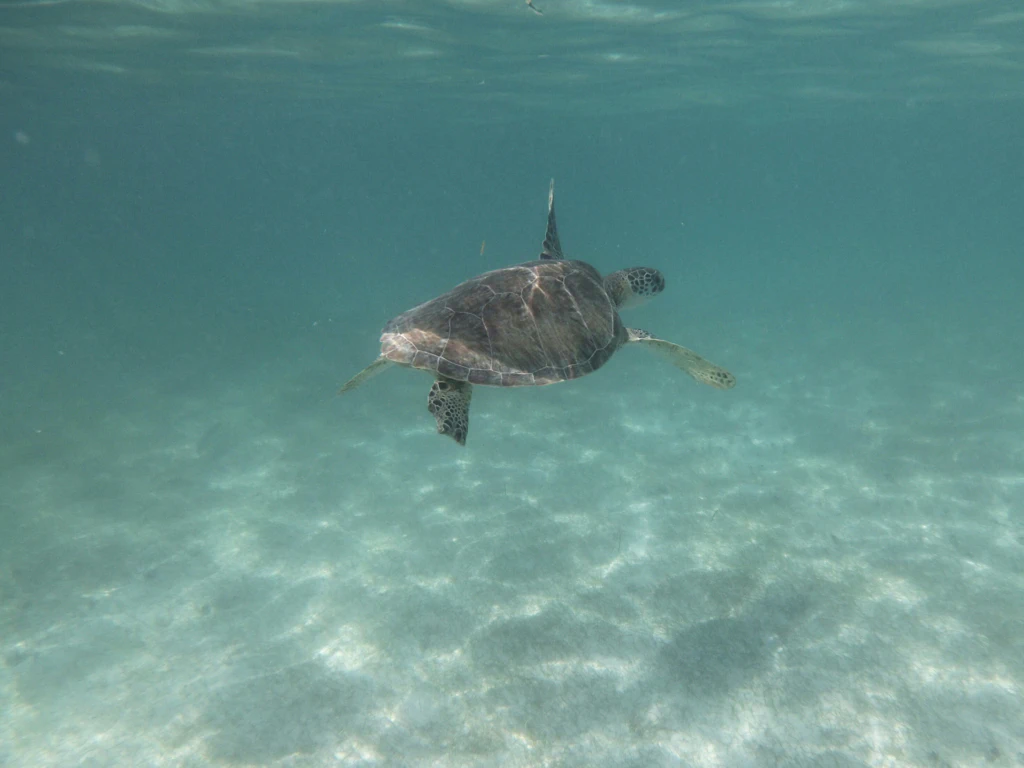
Right, but we did do one thing after all: we went to the beach at Akumal, where turtles are supposed to swim through the water close to shore. We quickly bought a mask and snorkel at Walmart, plus biodegradable sun cream to protect the turtles (lol, as if there were really a sun cream police in Mexico), and off we went early in the morning to be there before all the other turtle fans.
Sadly only a very small area was marked with buoys as a ‘swimming permitted zone’ and the beach police made very sure, with angry, wild whistling, that nobody swam beyond the limits. You will never see a turtle in there, I was about to give up… but then, and for the first time, our GoPro was not on my list of things needlessly lugged along.
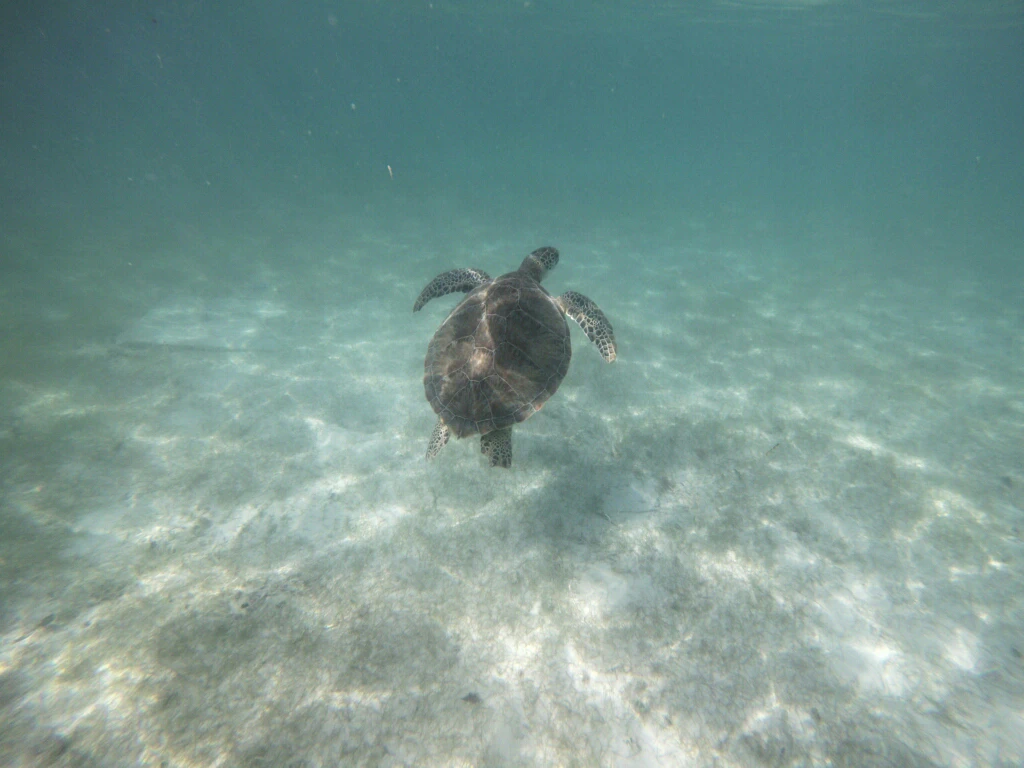
By 11 the beach, and above all the permitted snorkelling area, really was packed… We did everything right!
And then, after days of waiting, the moment had finally come: my dive was upon me! I do have a bit of respect for it every time… The last time I dived was ten months ago in Australia and I had had very unpleasant experiences with a conveyor-belt dive on the Great Barrier Reef (8 divers per guide). But all clear: there were only two of us with our dive guide Sophia.
The crossing to the reef was spectacular. With the note that it might get a bit wet, we were handed thick rain jackets. Oh, come on, I thought, and threw the jacket half-heartedly over my shoulder. Well, the jackets were truly not excessive. We were sluiced with water by the swell for 45 minutes. Our dive guide said afterwards that this was the roughest swell in which they will make the crossing at all.
Once off Cozumel the water was as calm as a swimming pool. At first I was still torn about whether to take the GoPro on the very first dive or first get used to diving again (especially since I had never had an underwater camera with me before). Luckily I decided to take the camera, because we were barely under water when a huge turtle swam right in front of our fins. Click!
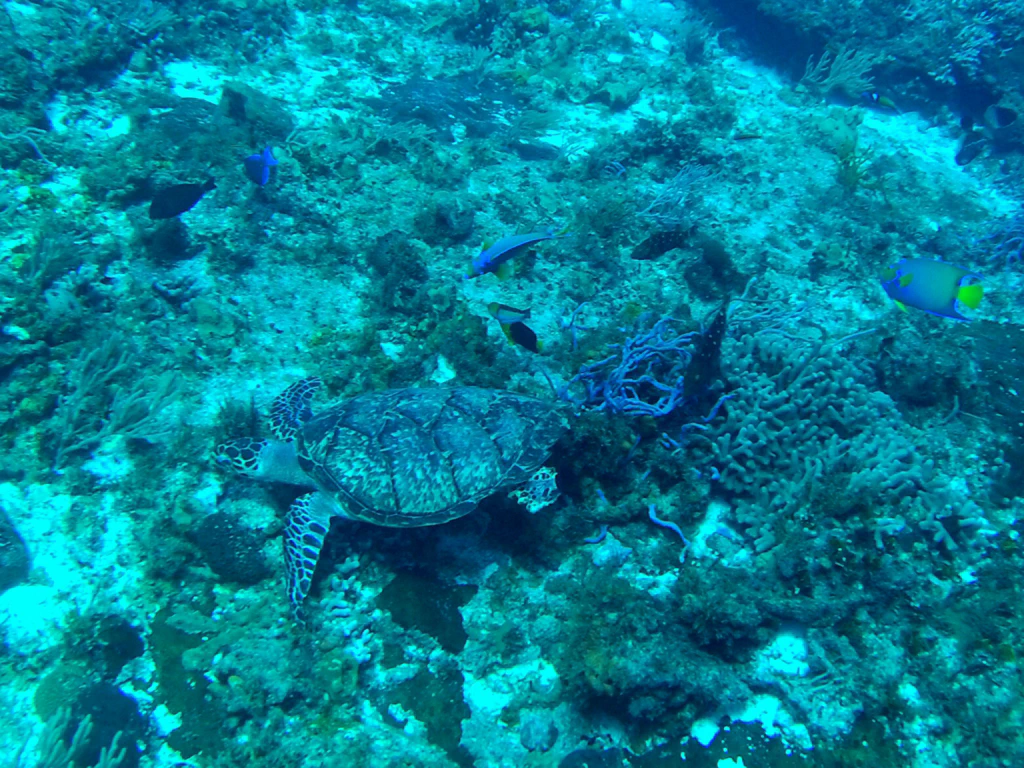
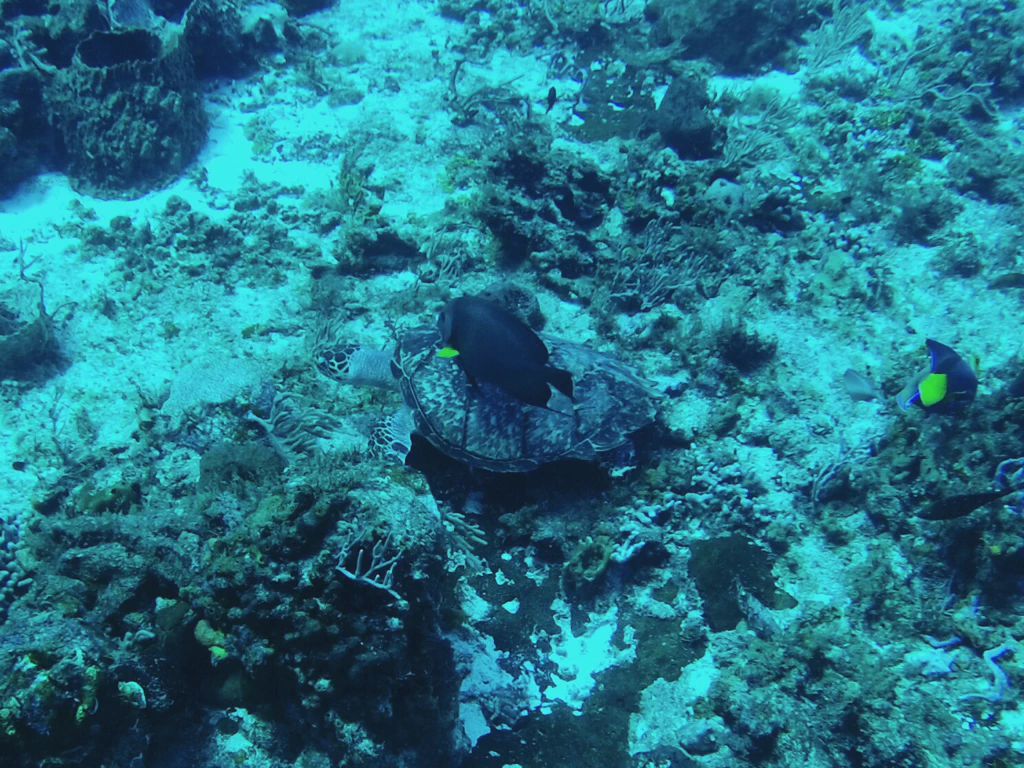
And a second later a nurse shark swam straight towards us! The turtle was very quickly forgotten. We also discovered a sleeping specimen! Yep, nurse sharks are the only species of shark that can lie on the seabed and sleep.
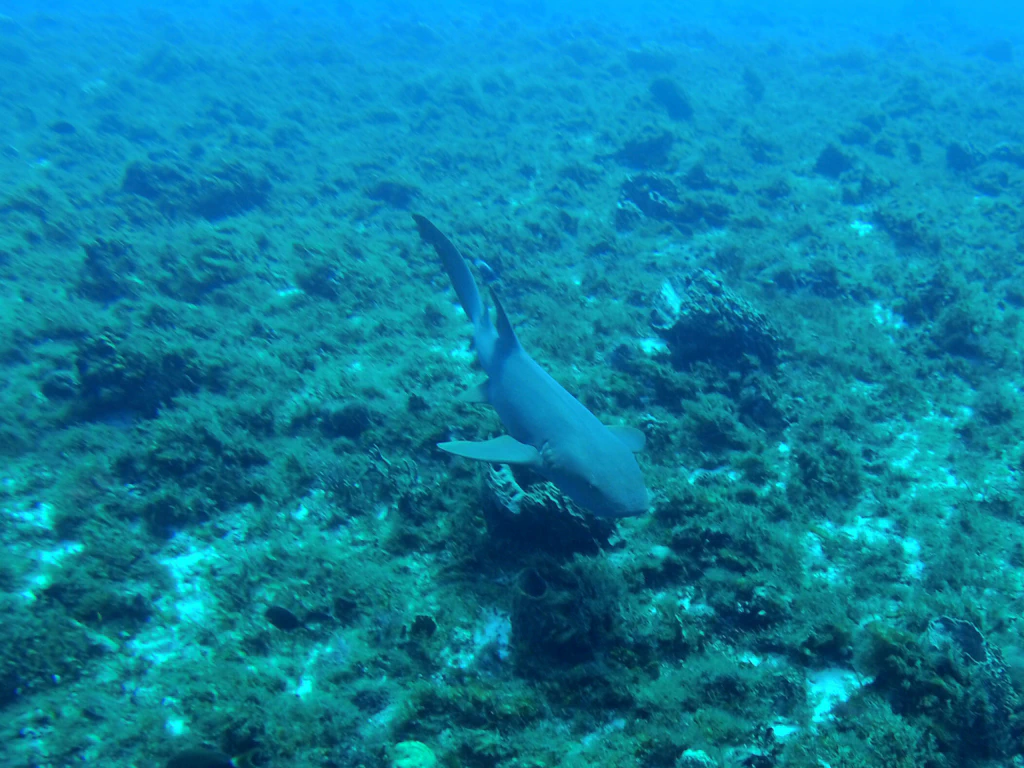
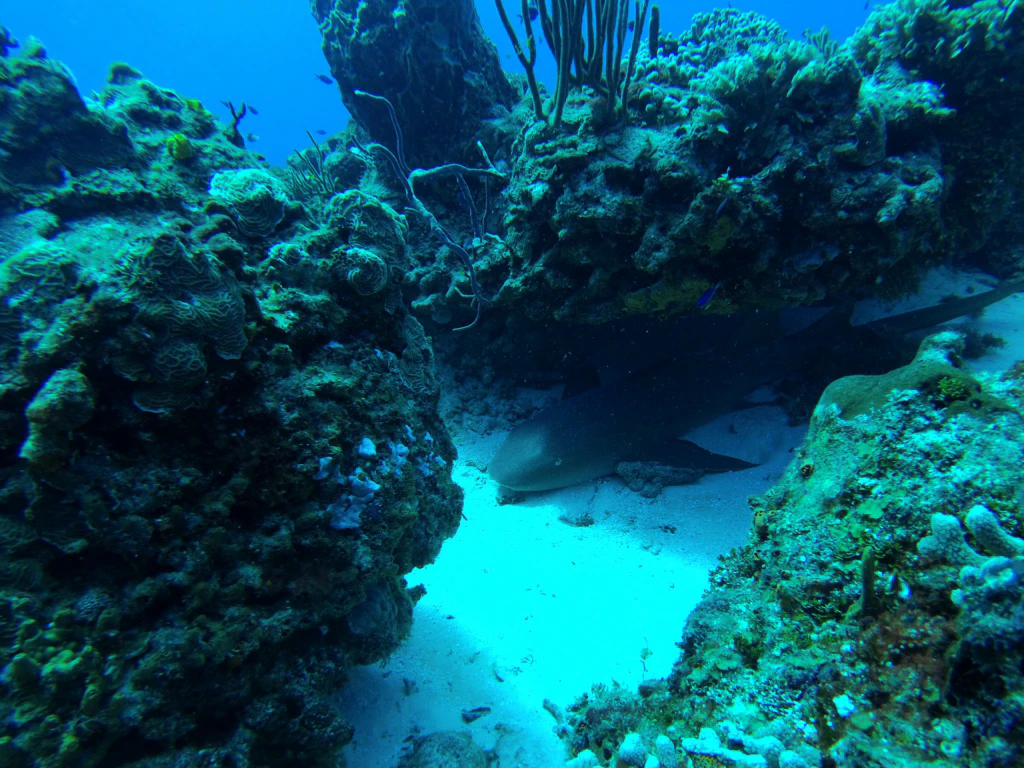
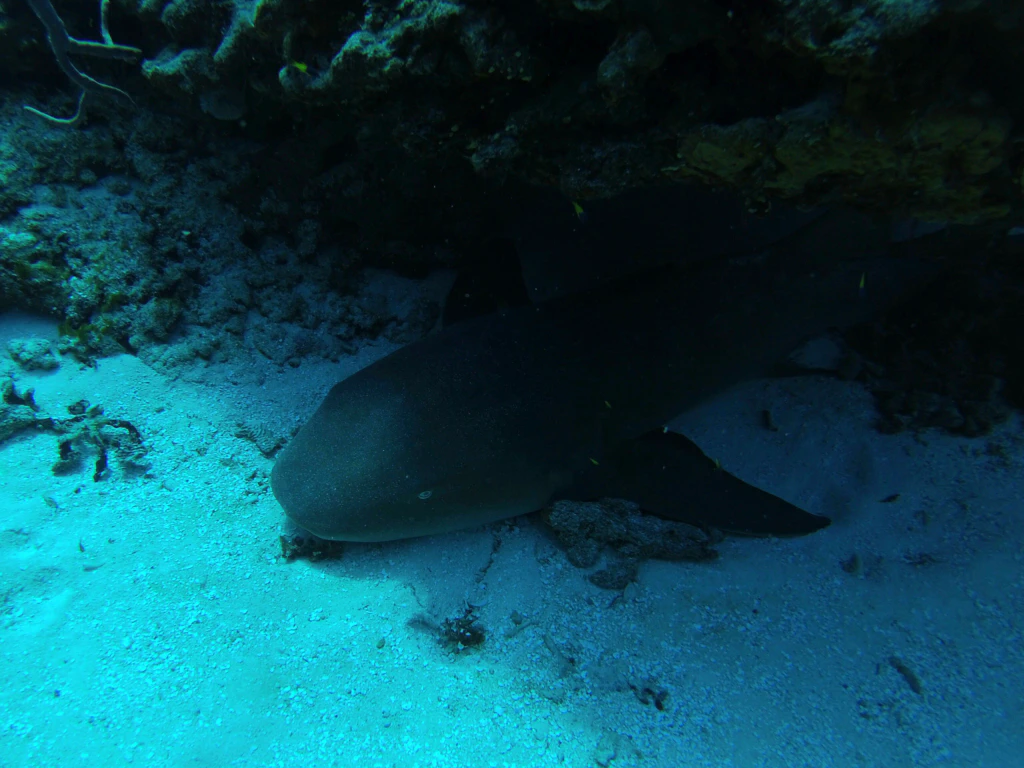
Given these highlights I really should not have hoped for anything more. But I so wanted to see a ray as well. Alright, on the first dive we had seen one buried in the sand. But instead of rising into the water, it dug itself deeper into the sand the longer we eyed it.
On the second dive the same game. We were just about to head for the safety stop when a stingray suddenly swam in from a distance and glided alongside us for a minute. Simply magical…
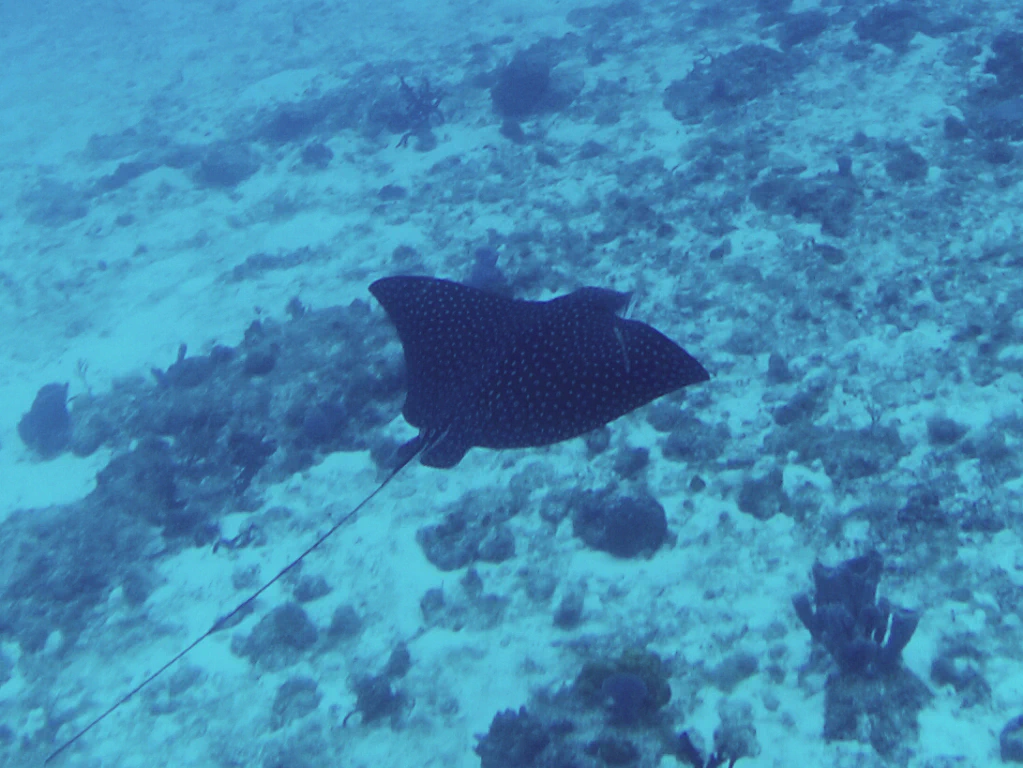
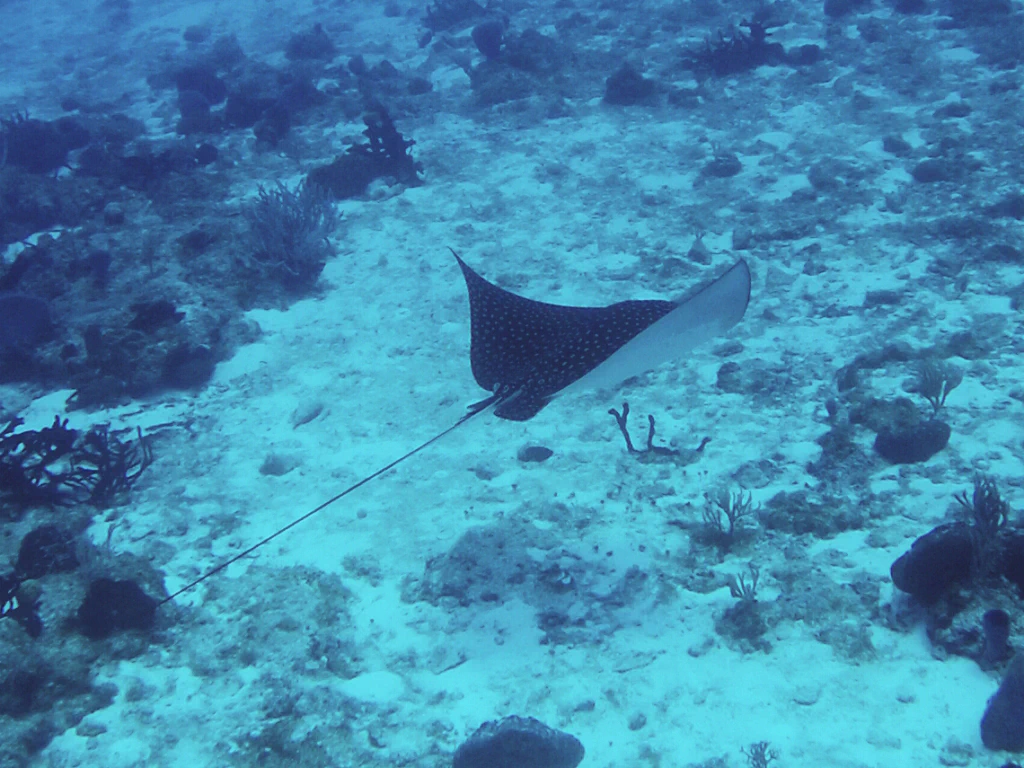
Sadly the camera swallows practically all the colours under water and, because of the extreme wide angle, you can only make out the fish that swam right in front of the lens… so my underwater photography career does not have much of a future.
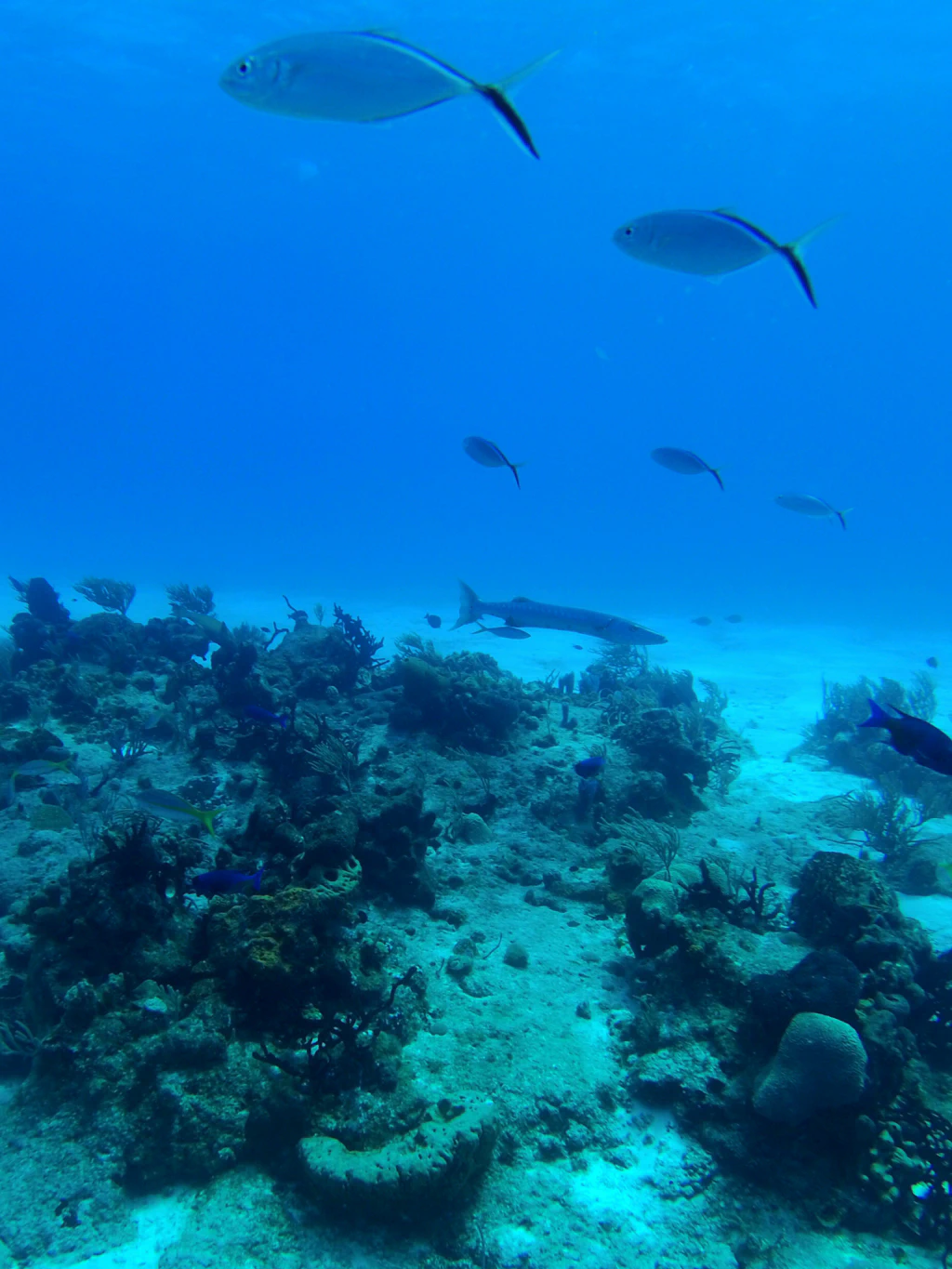
The journey back, incidentally, was just as turbulent as the one out… ⛵
The next day we visited our first cenote, Cenote Dos Ojos. Cenotes are water-filled limestone caves, over 100 of which dot the Riviera Maya. You can swim and snorkel in the freshwater pools that have formed. What is impressive, though, are the branching underground cave passages decorated with stalactites, which for the most part can only be explored as a diver - in some cases only as a certified cave diver, since some caves are a long way from the nearest exit and require special skills. Strictly speaking I am therefore only doing cavern diving.
When we arrived, a fashion photo shoot was going on at the cenote. So I was able to catch a few pictures without any bathers.
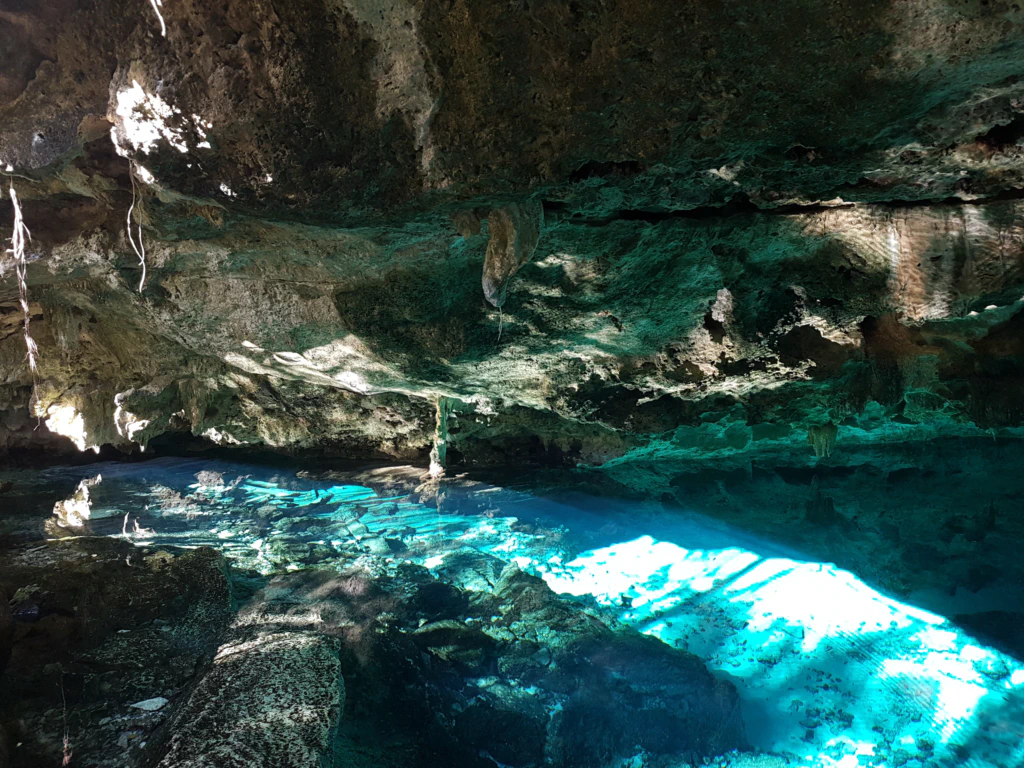
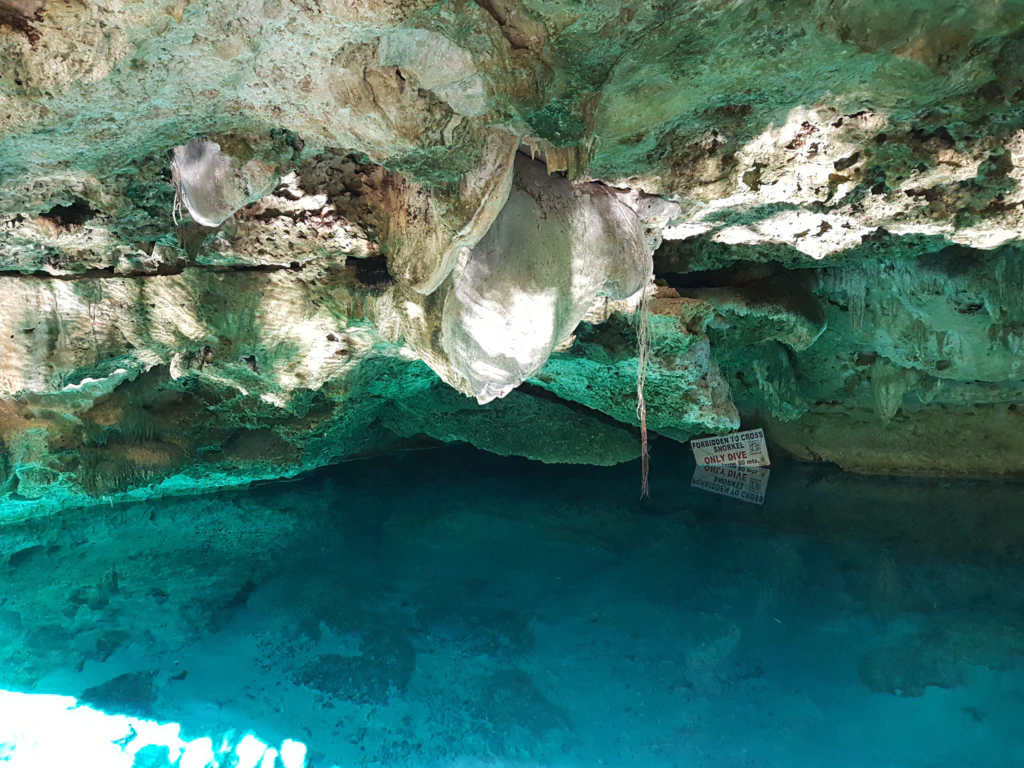
Cave diving really is an entirely different experience from diving in the sea: no corals, no fish or barely any, but in return a winding cave system decorated with limestone formations that you explore with a torch in your hand. Very fascinating! Especially when the cave meets an opening through which sunlight falls, there is something very magical about it! In places you also have to be very careful not to swim too far off the bottom, since the stalactites hang down from above (trial and error).
Dos Ojos, meaning two eyes, is the cenote’s name because it consists of two wings each with an open pool. The left eye is the so-called Bat Cave, where bats live. Our guides arranged things so that Jan and I were there at the same time (Jan was snorkelling). Sweet.
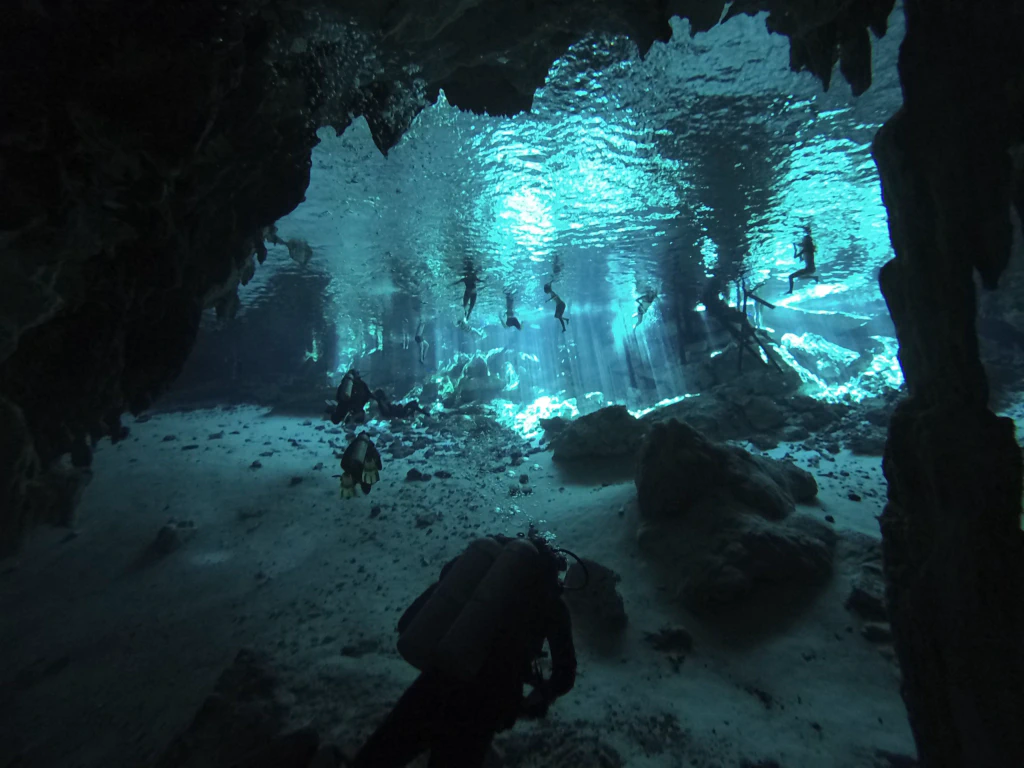
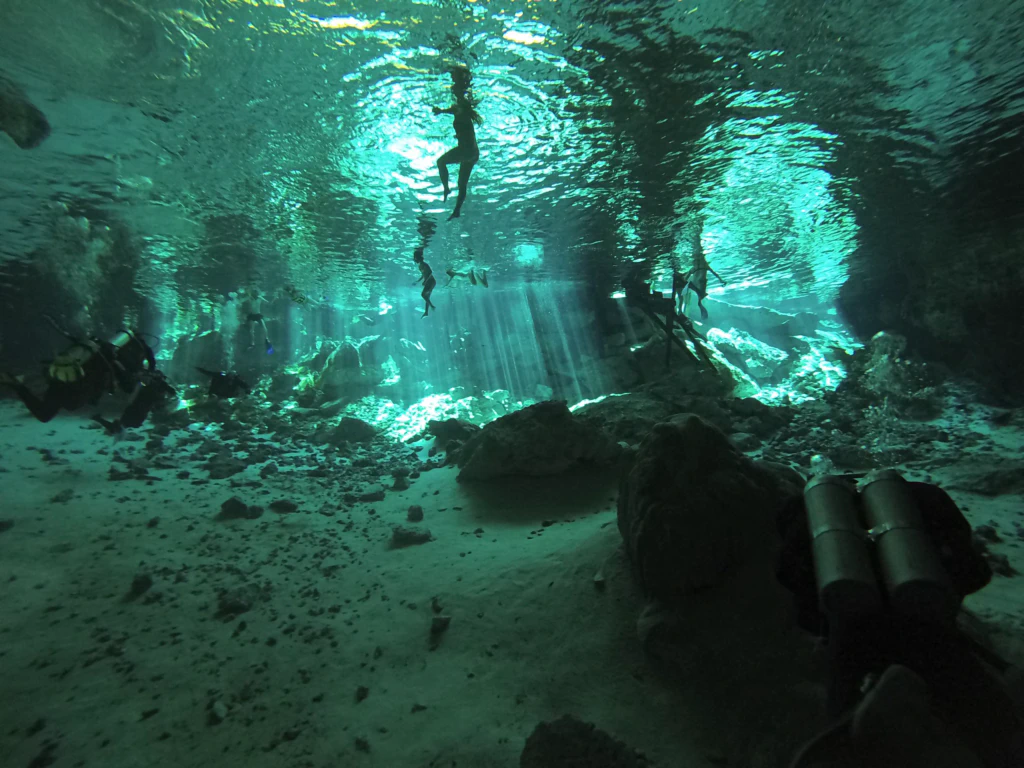
The cenotes vary quite a bit, so we will certainly be exploring more of them. There are cenotes with access to the sea, for instance, where sea creatures also live and where, at the point where salt water meets fresh water, a layer forms in which the two do not mix (a halocline). There are also cenotes whose cave roof is broken by shafts of light far more often, which must look very magical. There is plenty left to discover!
But for now it is on to: Tulum.