
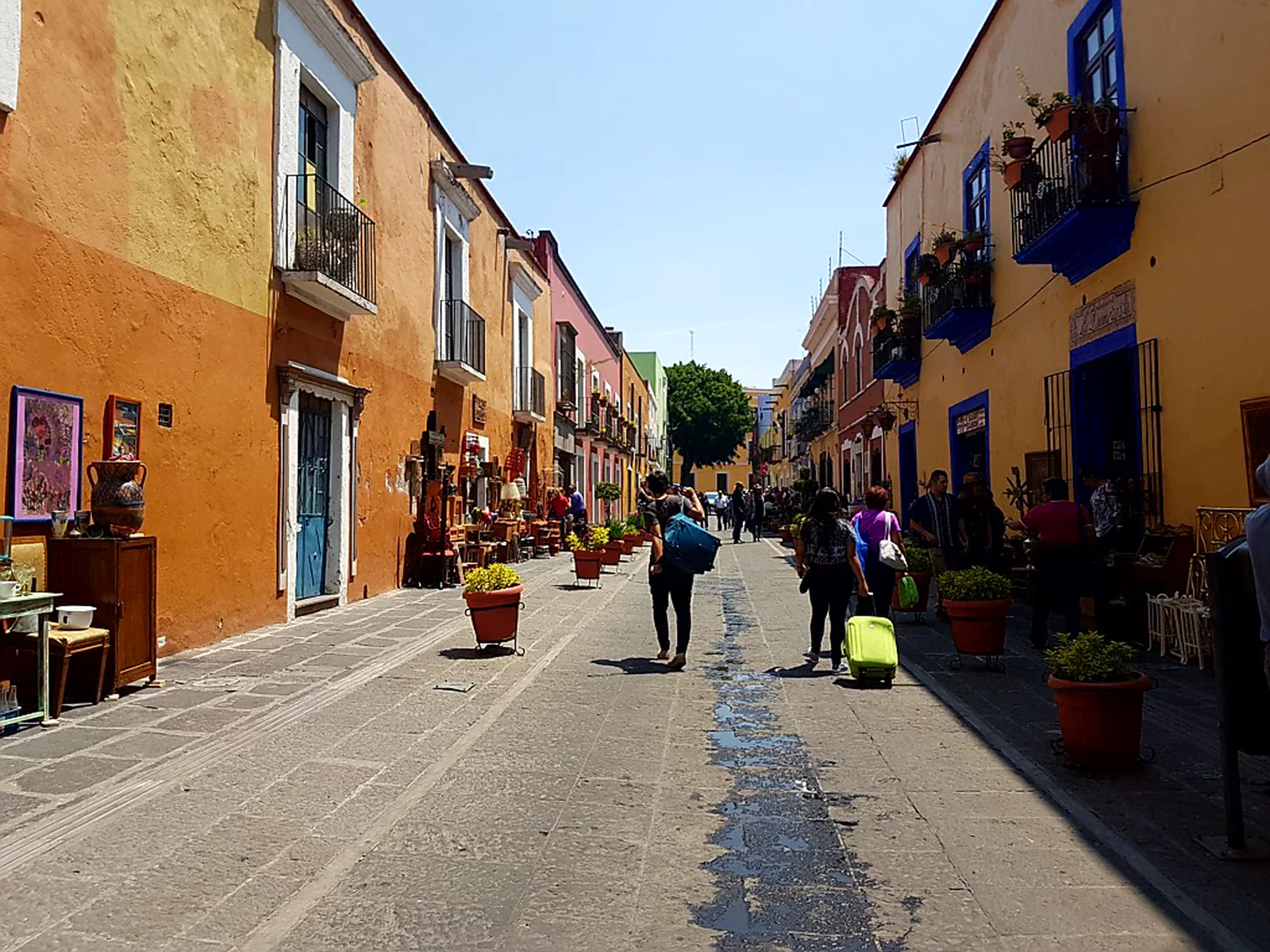
After a long 12-hour overnight journey we arrived early in the morning in Oaxaca de Juárez, capital of the state of Oaxaca. If we have any choice in the matter, we will not put ourselves through such a long bus ride again.
Sadly there are no buses with reclining seats in Mexico (or at least we were not lucky enough to find one), so every passenger screws their seat back as far as it will go to get some sleep. Behind me sat a - to put it nicely - corpulent Mexican woman whom I sadly had to squash in order not to sleep upright - lo siento!
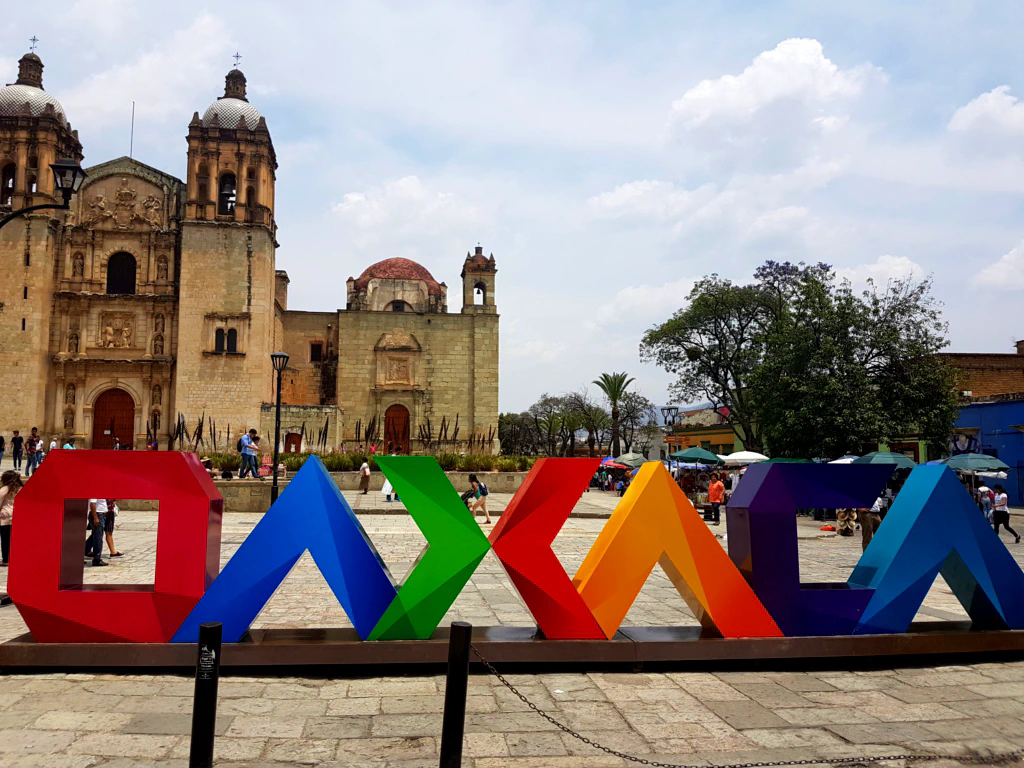
Happily we were allowed into our AirBnB despite the early hour and could catch up on some sleep before setting off on a first exploration.
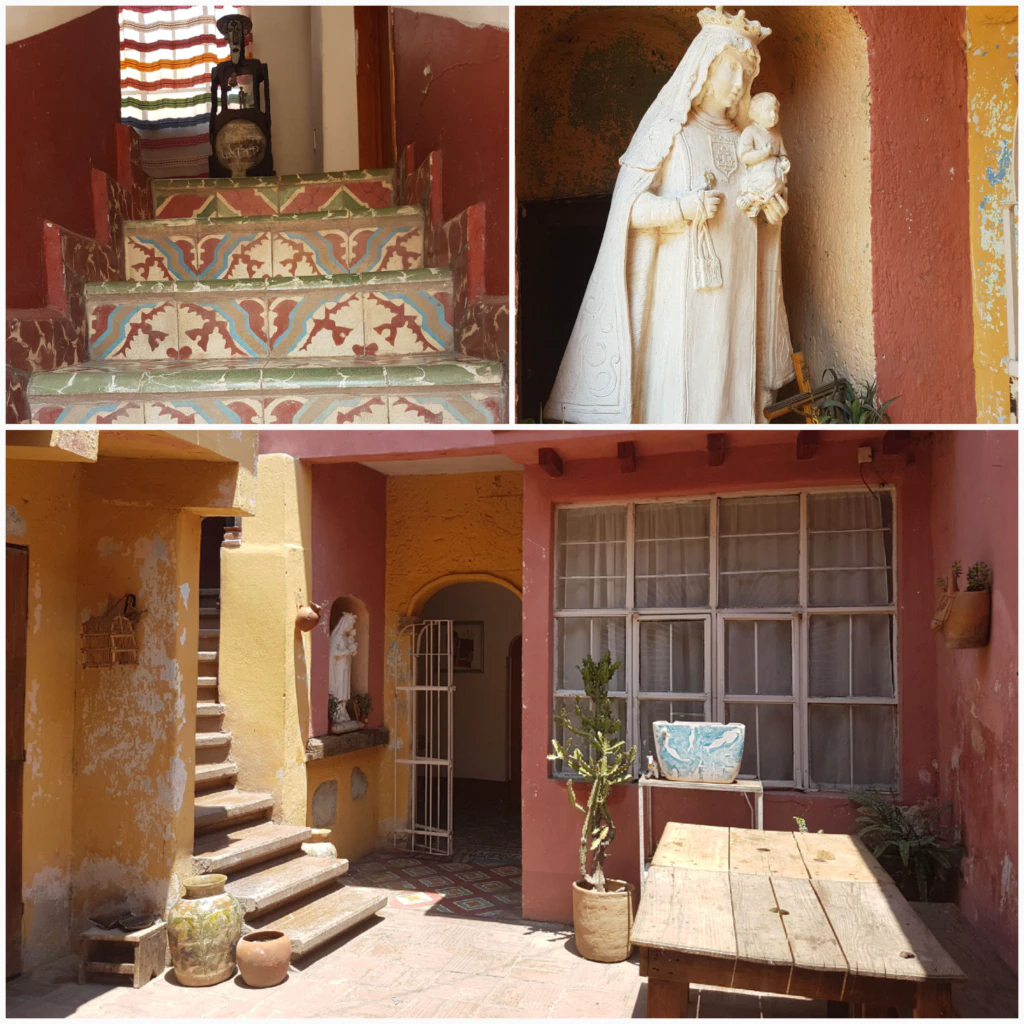
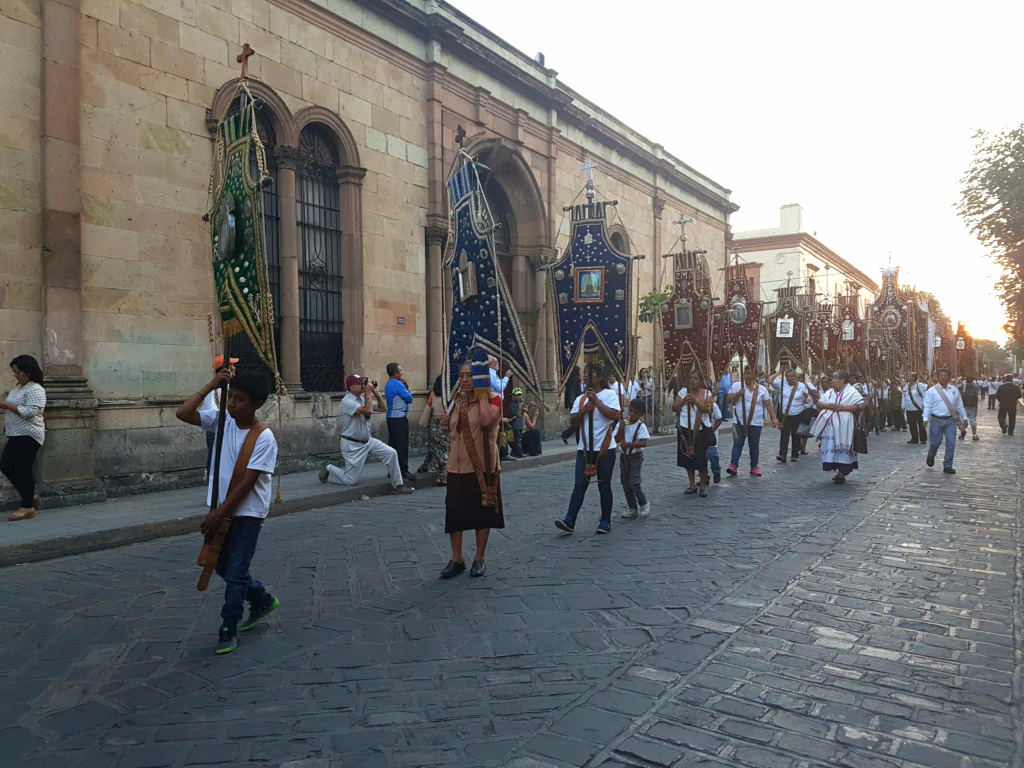
We had not actually wanted to spend this week in Oaxaca at all. At least not in the capital but at one of Oaxaca’s beaches. But the week before Easter is the main holiday week in all of Mexico - Semana Santa. Everybody who can afford a holiday goes on holiday in exactly that week. So genuinely every place to stay in every beach town was booked out - and we needed a plan B.
When we reached the market square there was a huge crowd! Not a Semana Santa celebration, though, but a protest that masses of people had travelled in for from the surrounding towns. As we later learned, the Oaxaqueños have a pronounced protest culture. When something displeases them, they take to the streets. And now and then they succeed: they prevented the opening of a McDonald’s branch on the market square that way, for instance.
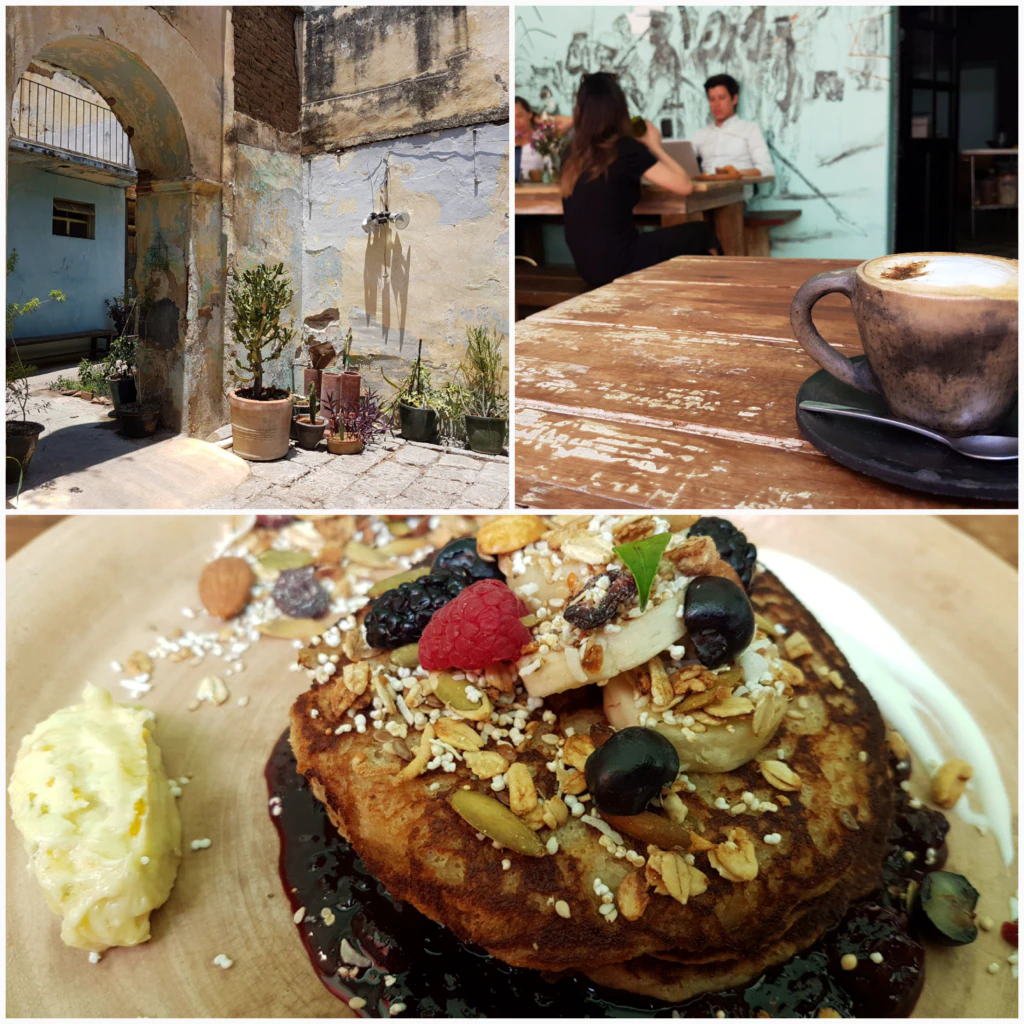
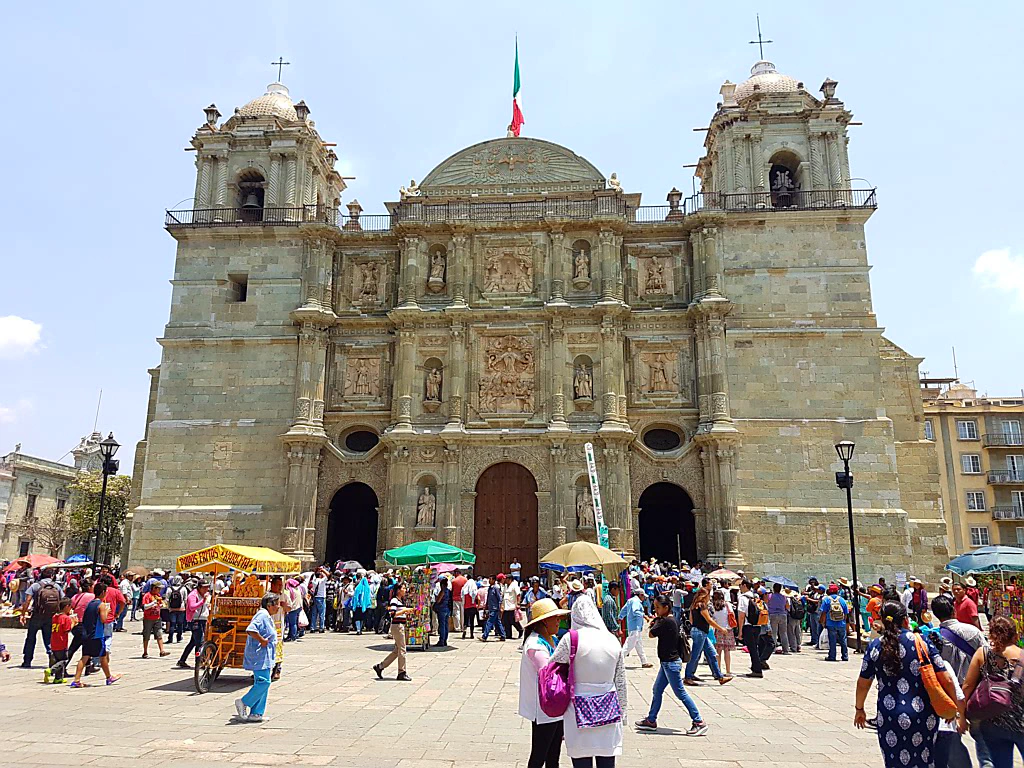
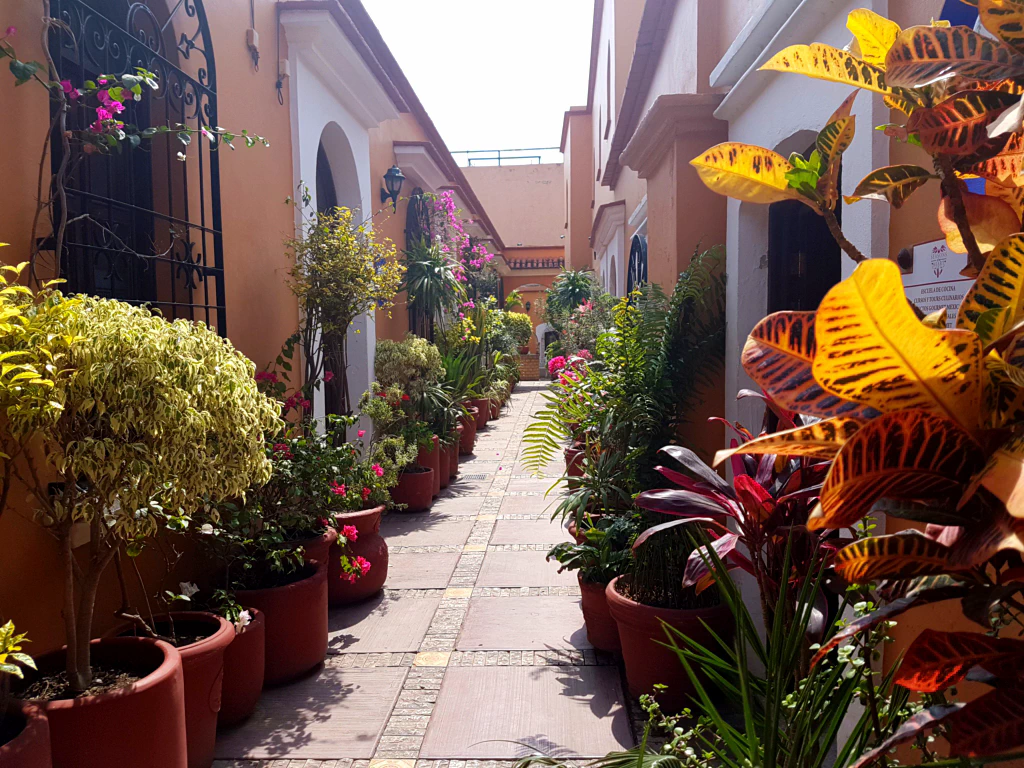
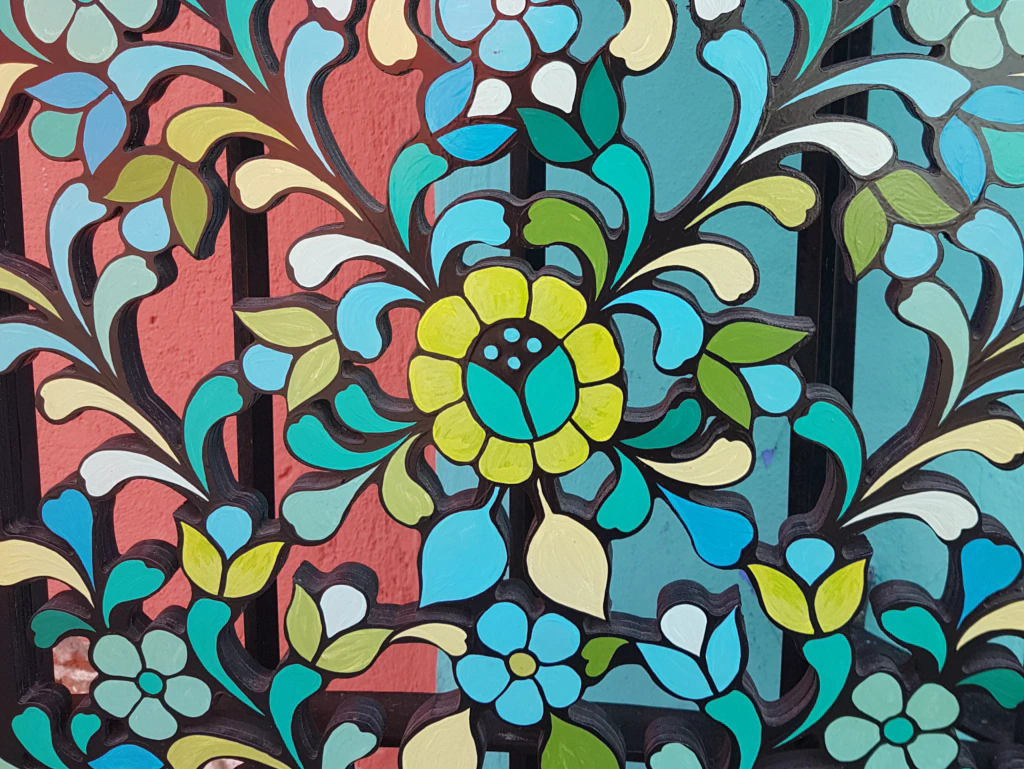
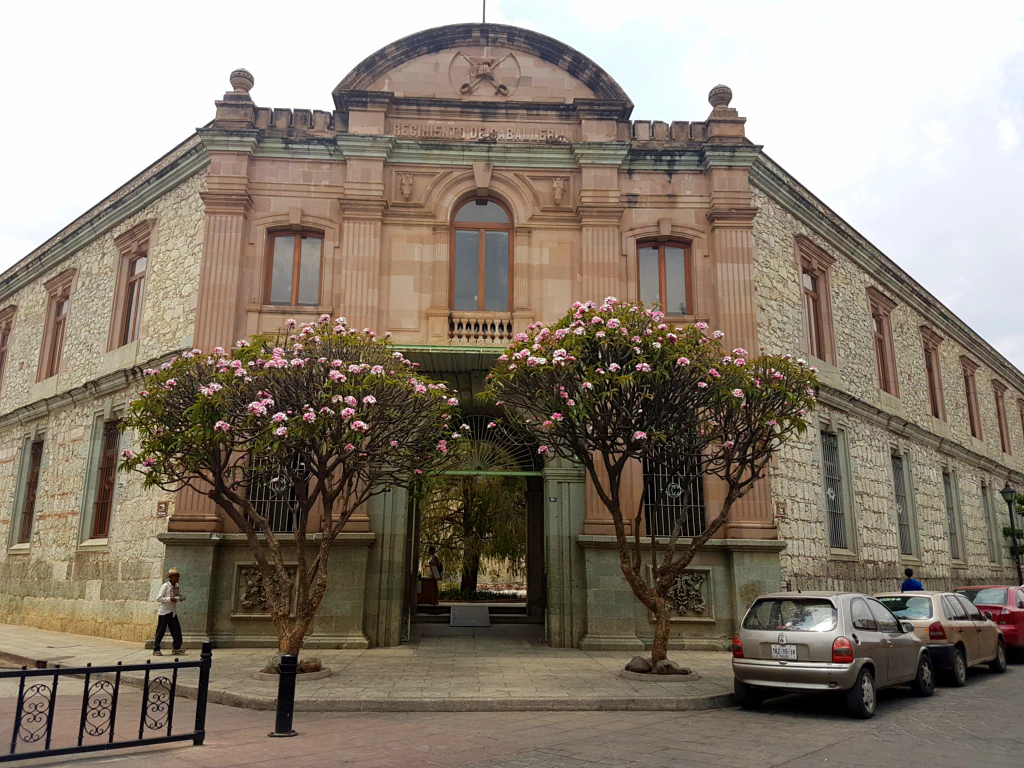
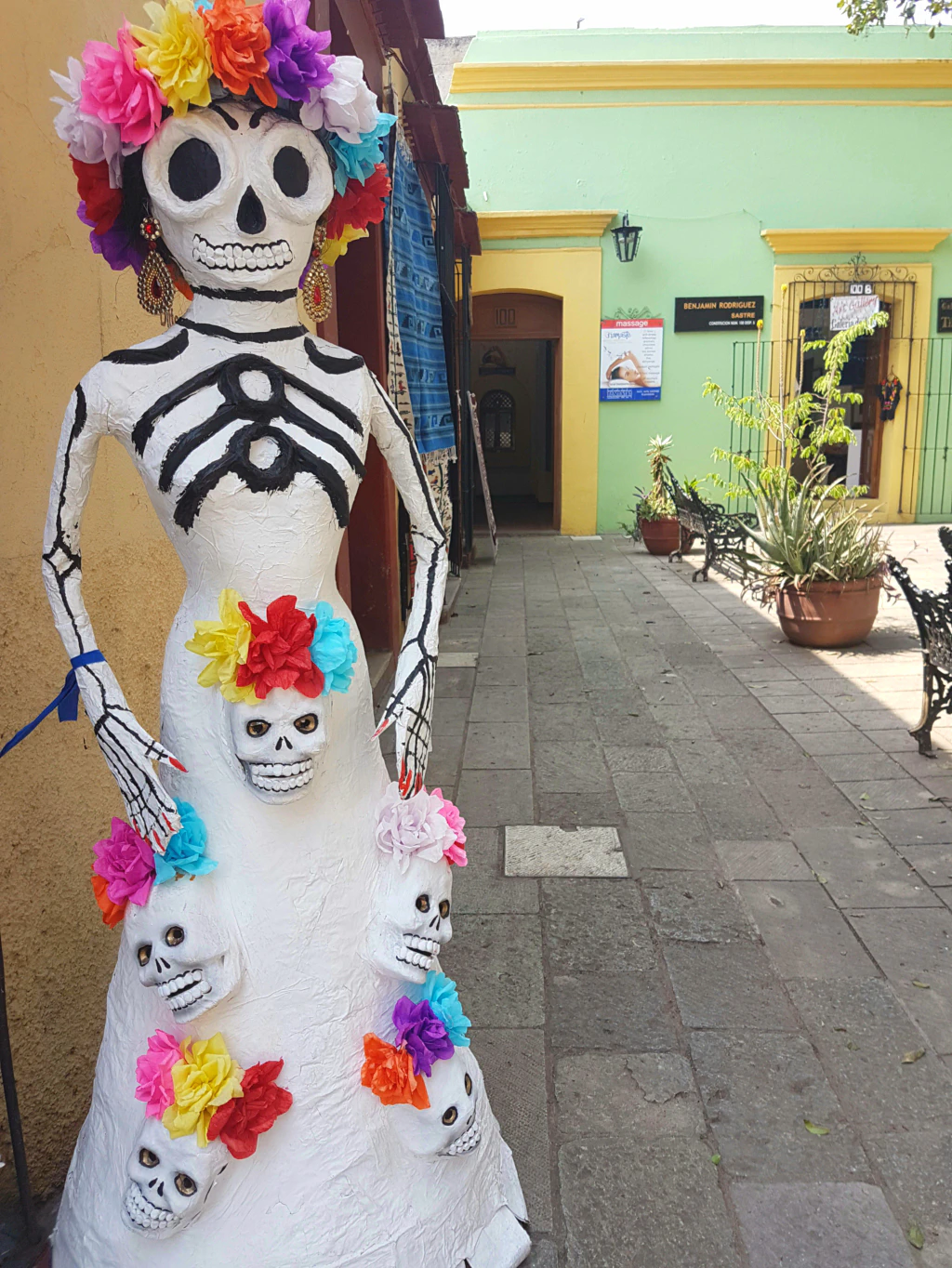
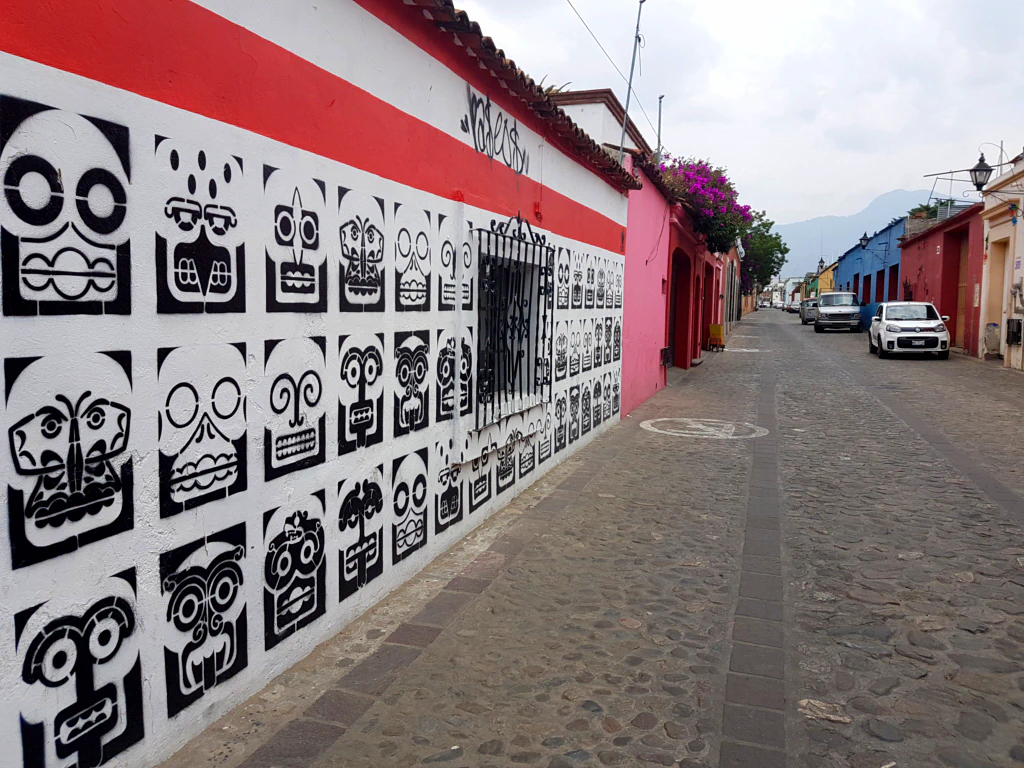
Oaxaca’s historic centre is wonderfully preserved as a World Heritage Site, and is also ‘in full bloom’ with craft markets and shops as far as the eye can see. ❤️
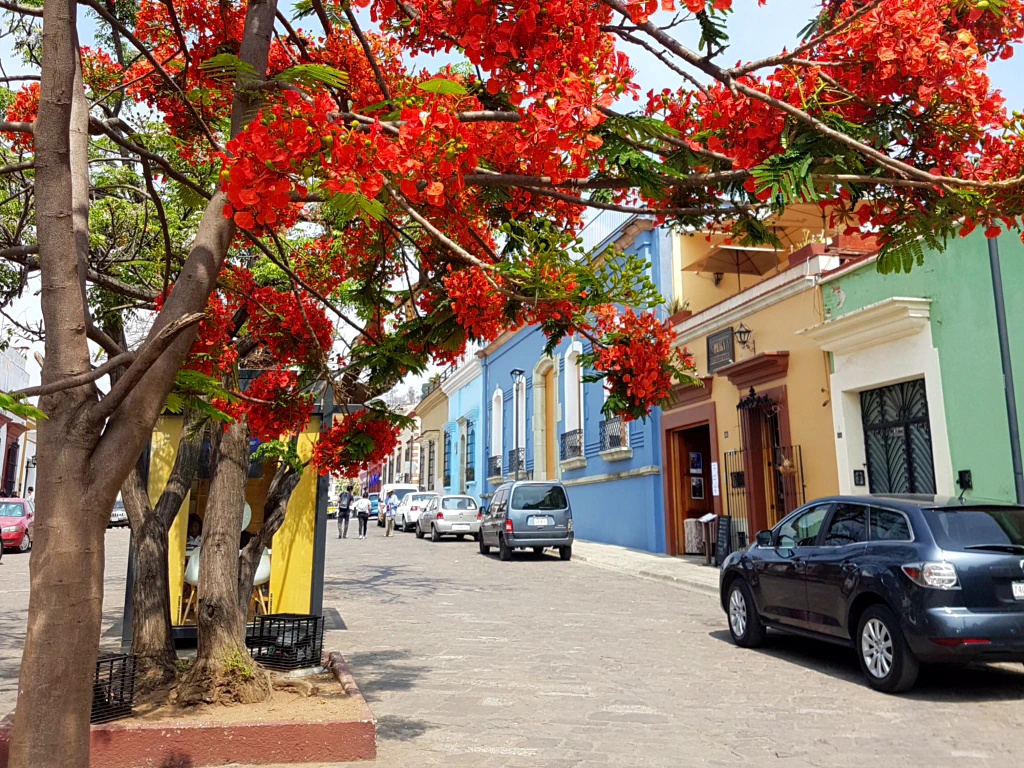
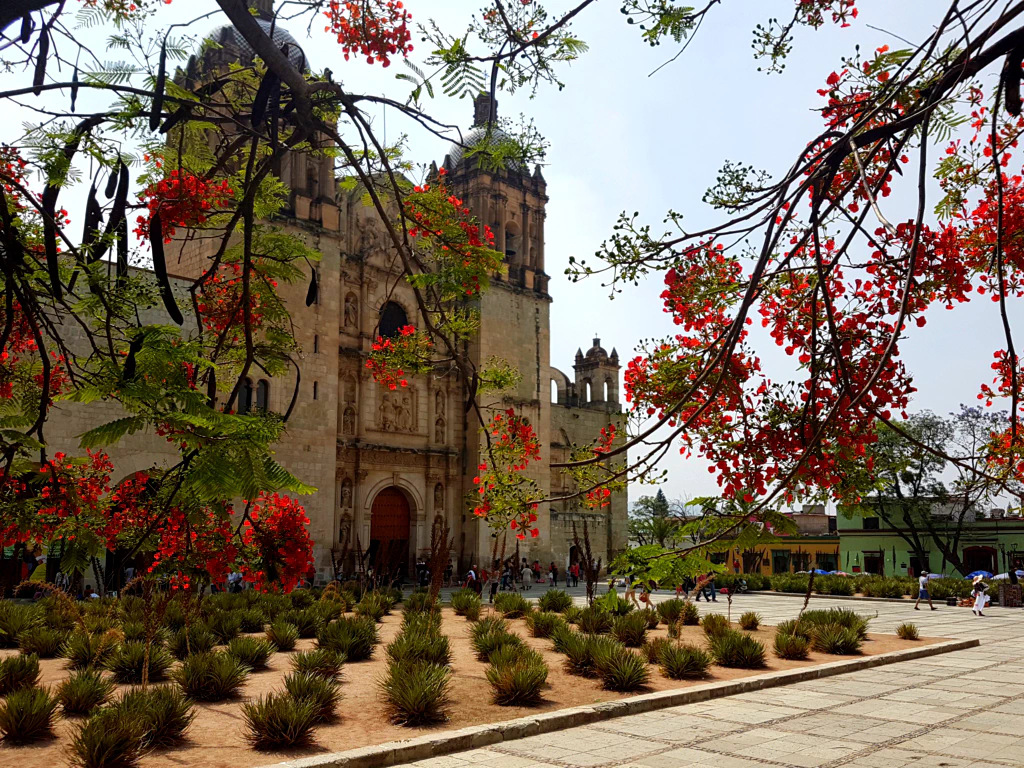
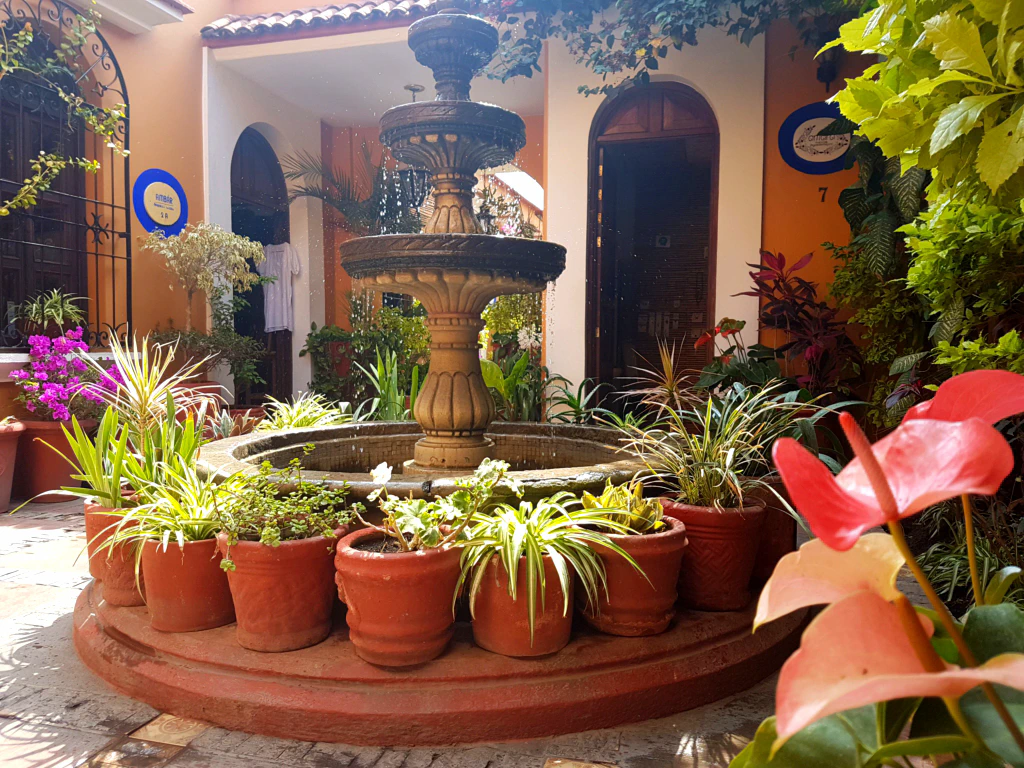
Sadly Jan was struggling with his stomach in Oaxaca, so I got to pass the time alone. I had read that a concert was to take place in the cathedral. That sounded like a good evening programme to me (and Jan was not sad to miss it…).
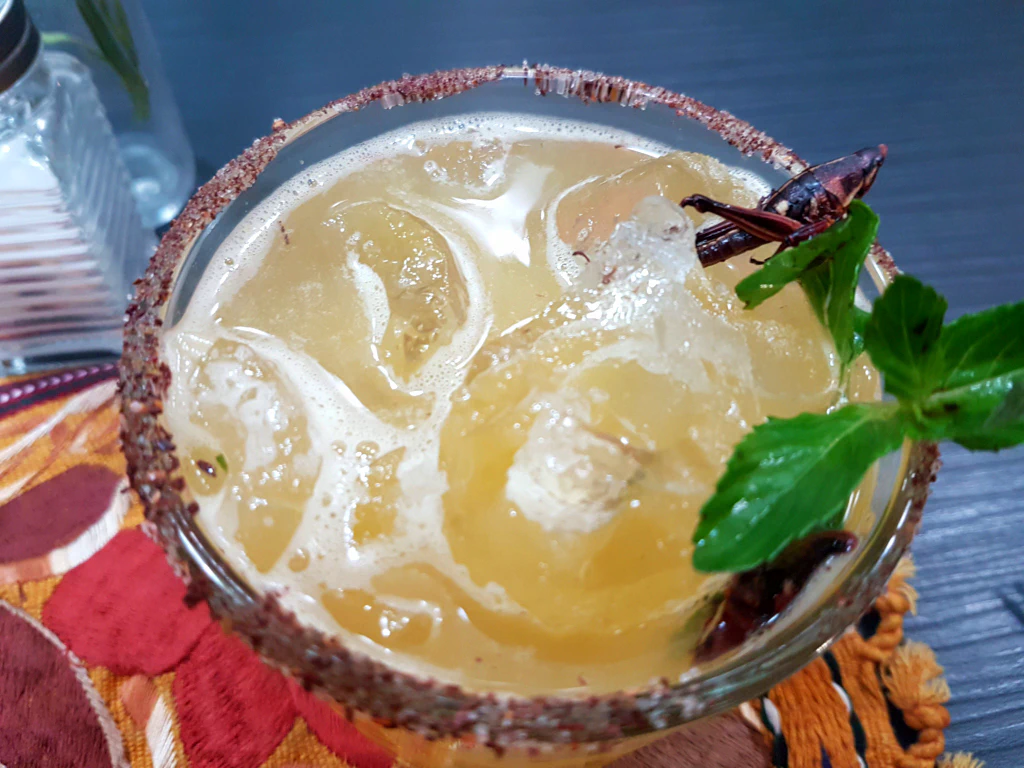
Before that I wanted to enjoy a mezcal cocktail, since the spirit is produced around Oaxaca. When the cocktail was brought over, my thirst vanished rather quickly: two roasted grasshoppers were bathing in my drink. Whyyyyy?!?
The concert, incidentally, was quite a disappointment, so I slipped out of the church after half an hour…
The state of Oaxaca is known for having the best cuisine in all of Mexico. So why not do a cookery course here? Especially since I still find the Mexican food offering rather impenetrable, given that it consists not only of tacos, tortillas, burritos and quesadillas as you know it from the chain restaurants back home, but also of gorditas, gringas, chilaquiles, tamales, elotes, huaraches…
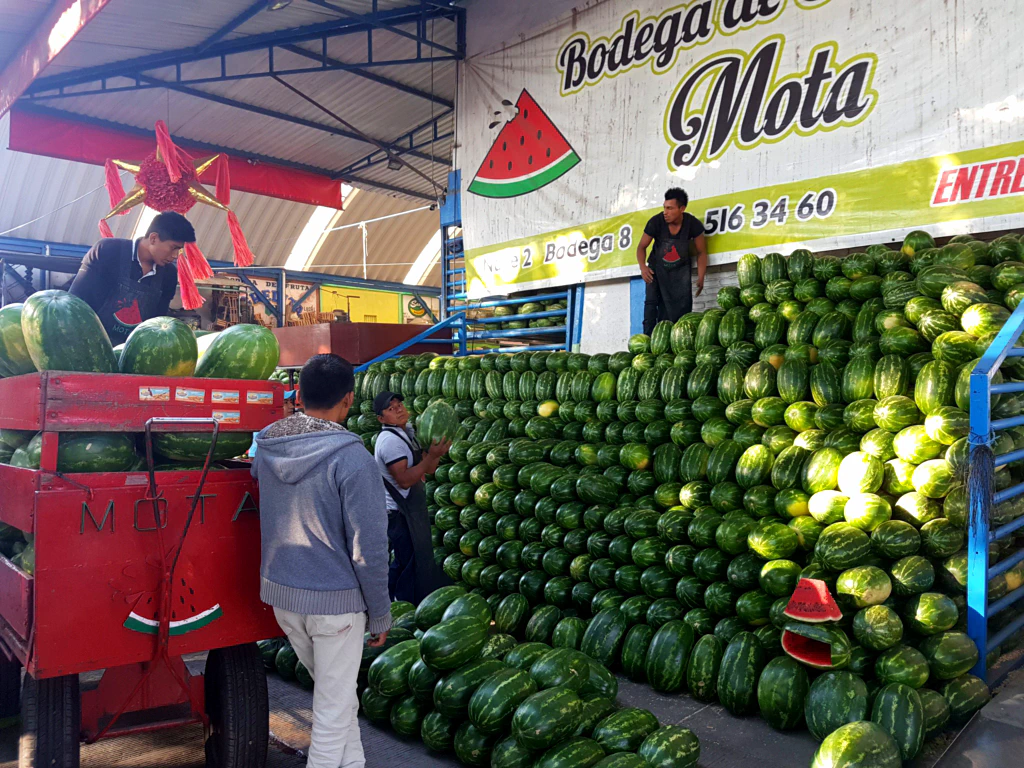
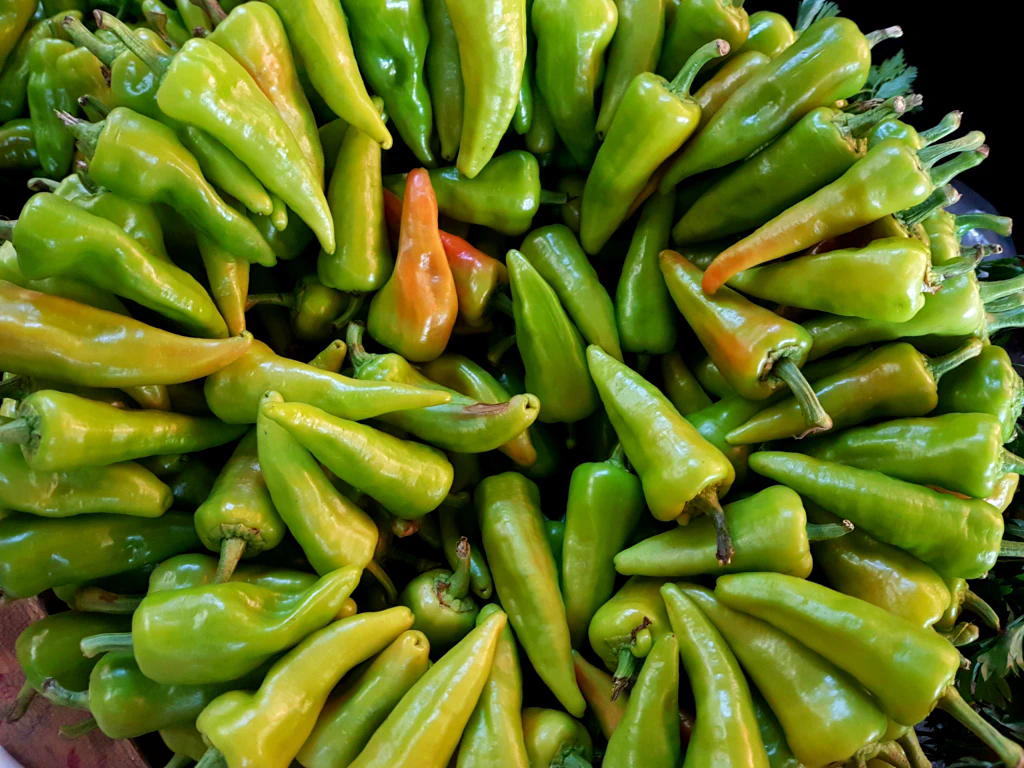
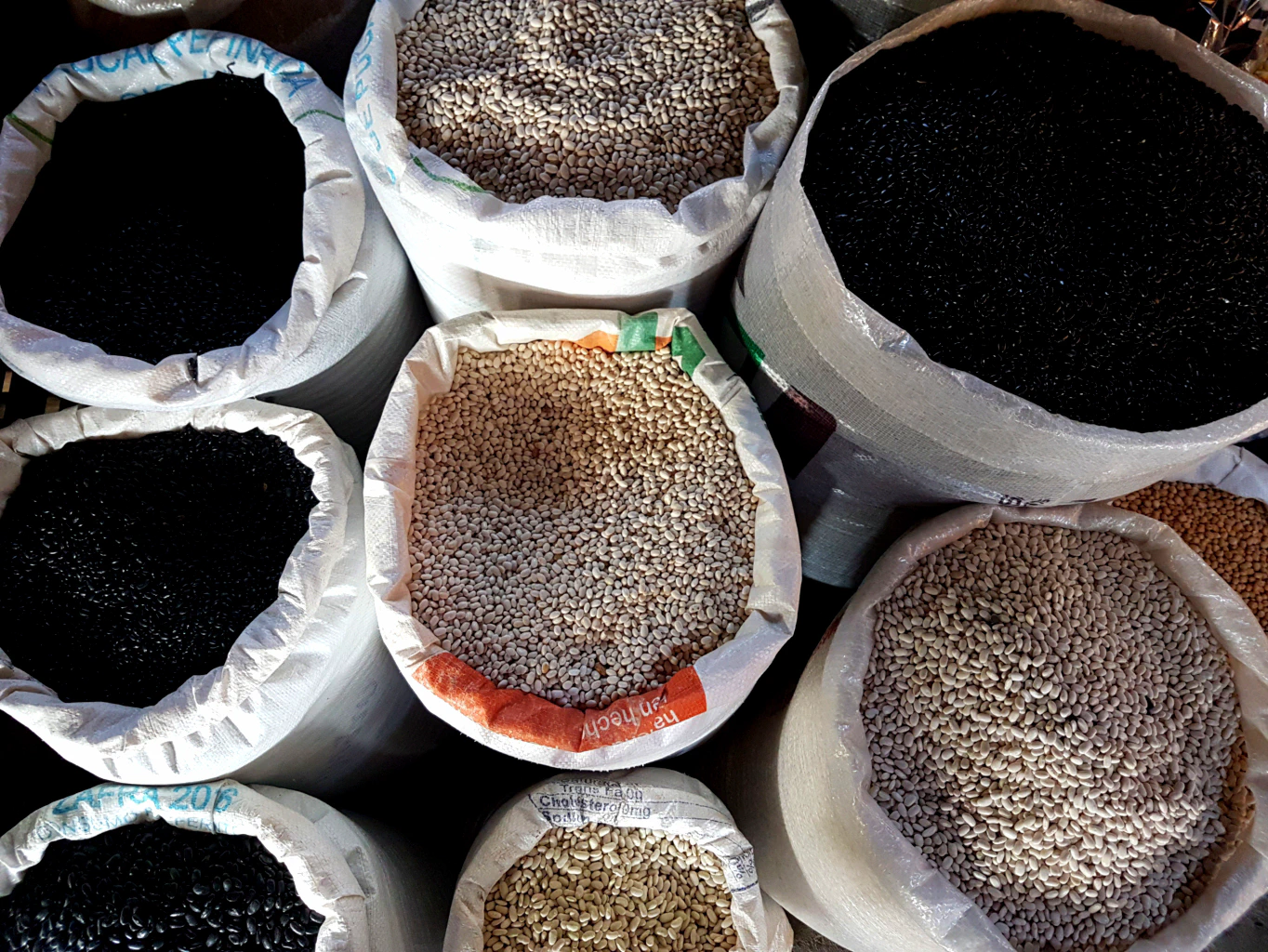
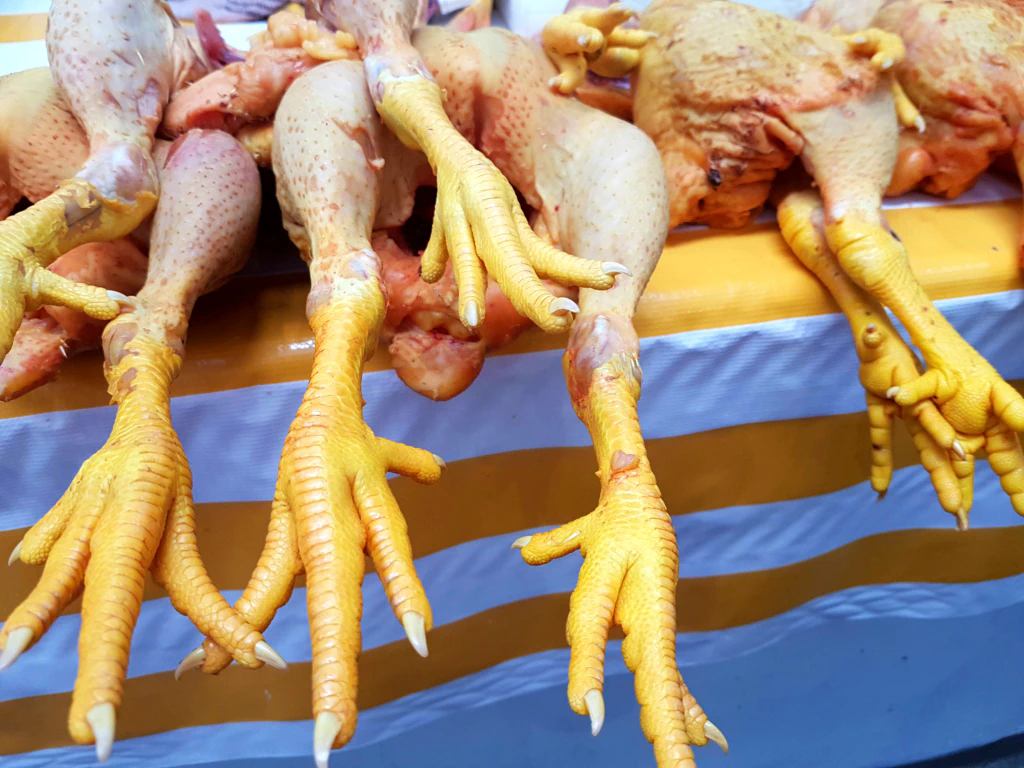
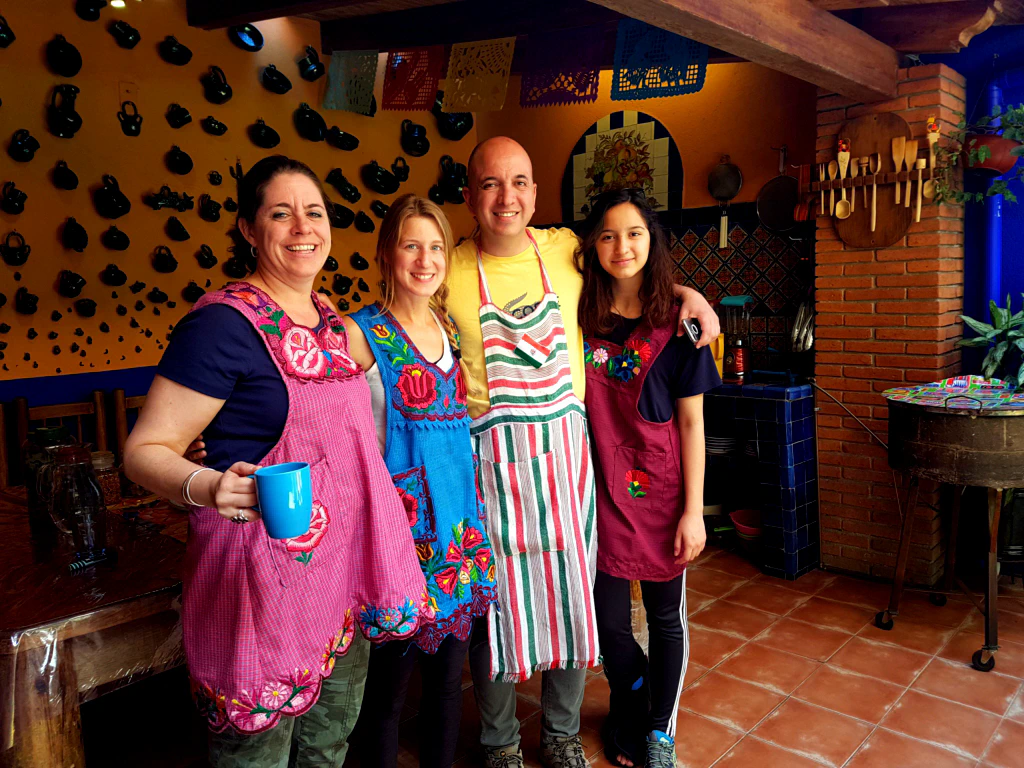
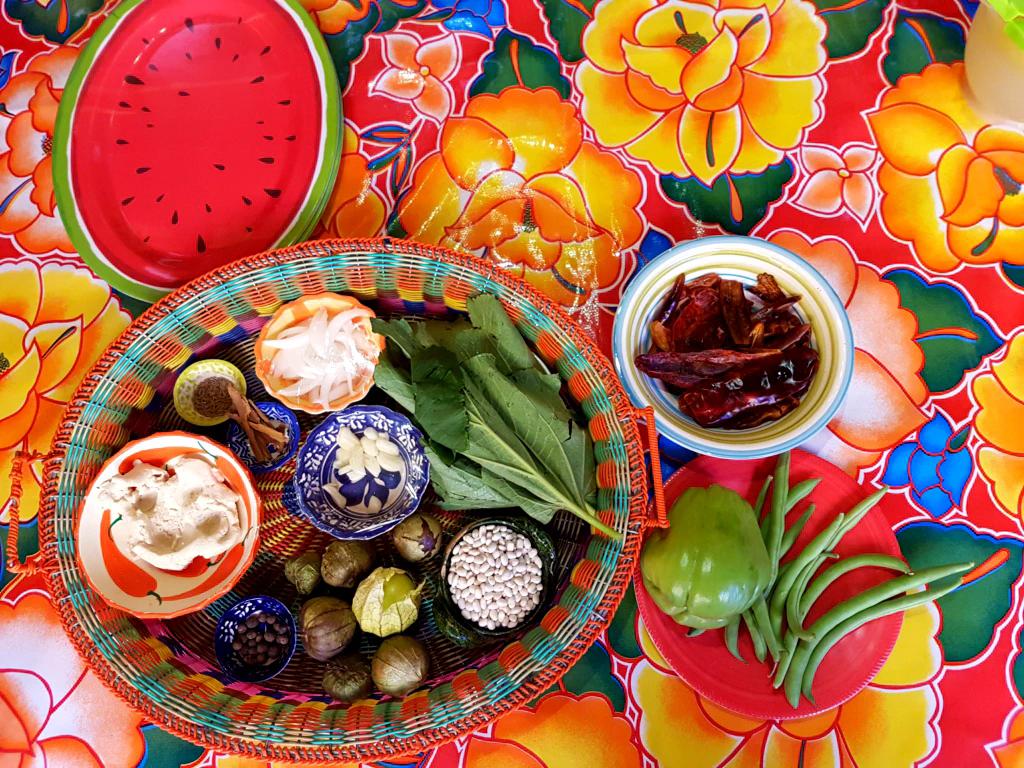
Together with chef Gerardo of La Cocina Oaxaqueña, Kirsten from New York and Manuel and Andrea from Monterrey, we first headed to the local market to buy the ingredients for our course. It really is remarkable how many kinds of fruit and vegetable I do not know, even though a fair amount is imported these days!
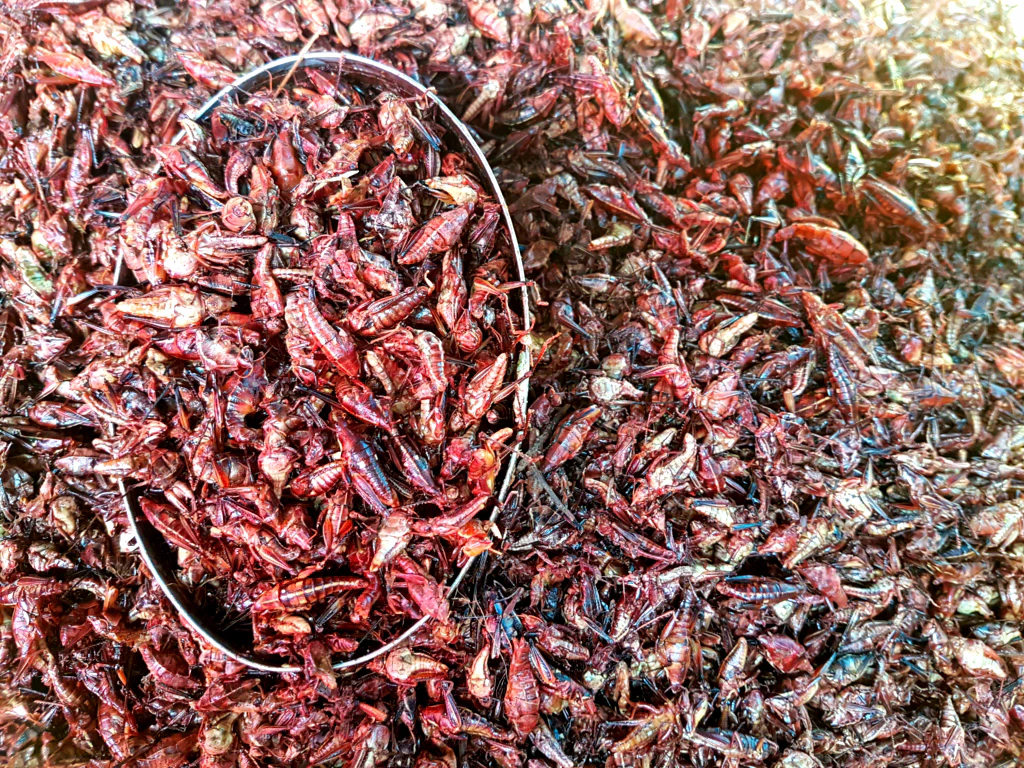
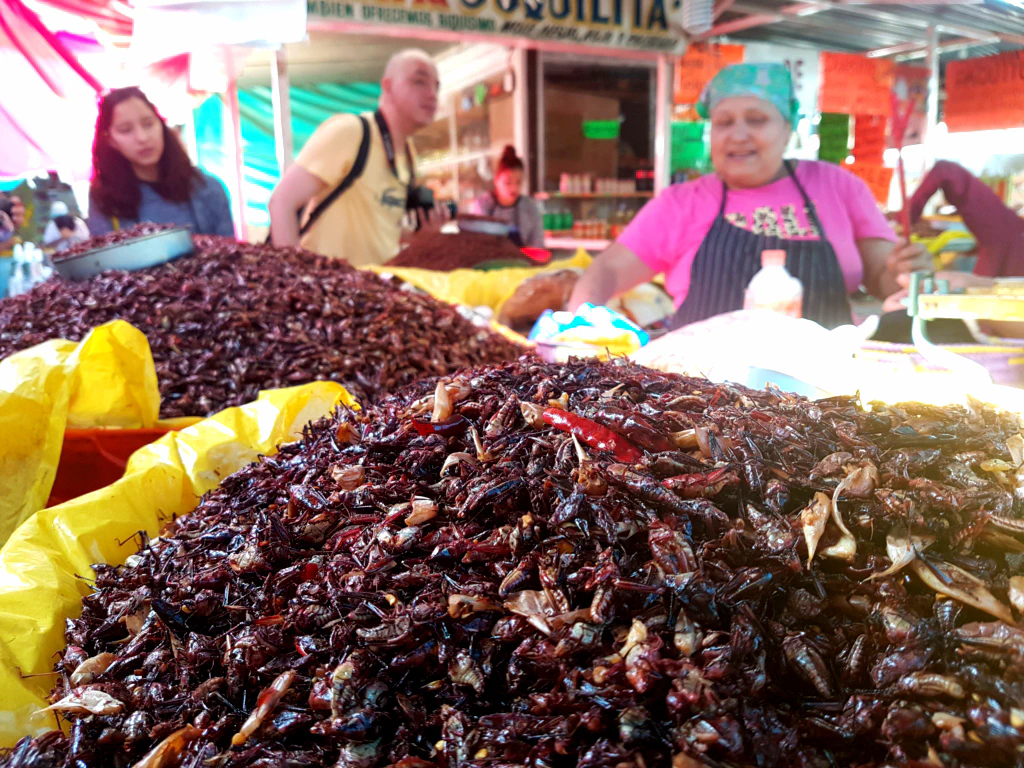
And suddenly there they were again - my nightmare from the previous evening: heaps of grasshoppers. In every conceivable size. And Manuel tucked in heartily, since in Monterrey grasshoppers are considered a delicacy.
As I had to learn, grasshoppers (chapulines) are also an important part of the best cuisine in Mexico. And you can guess it already - they will be part of our menu too…
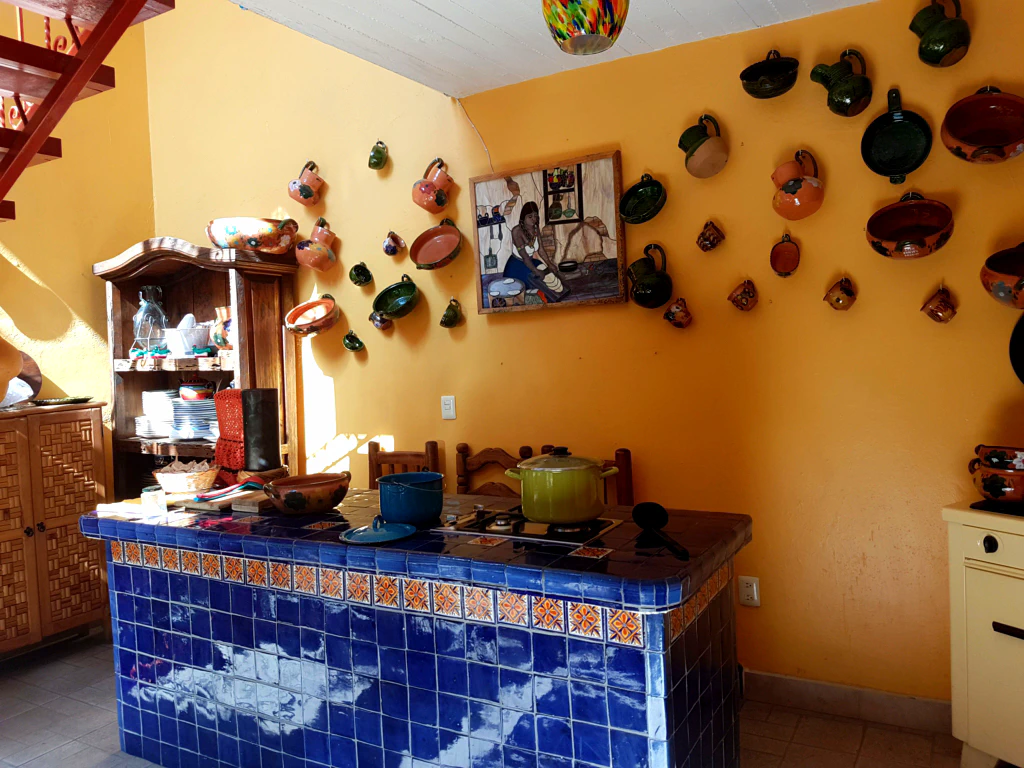
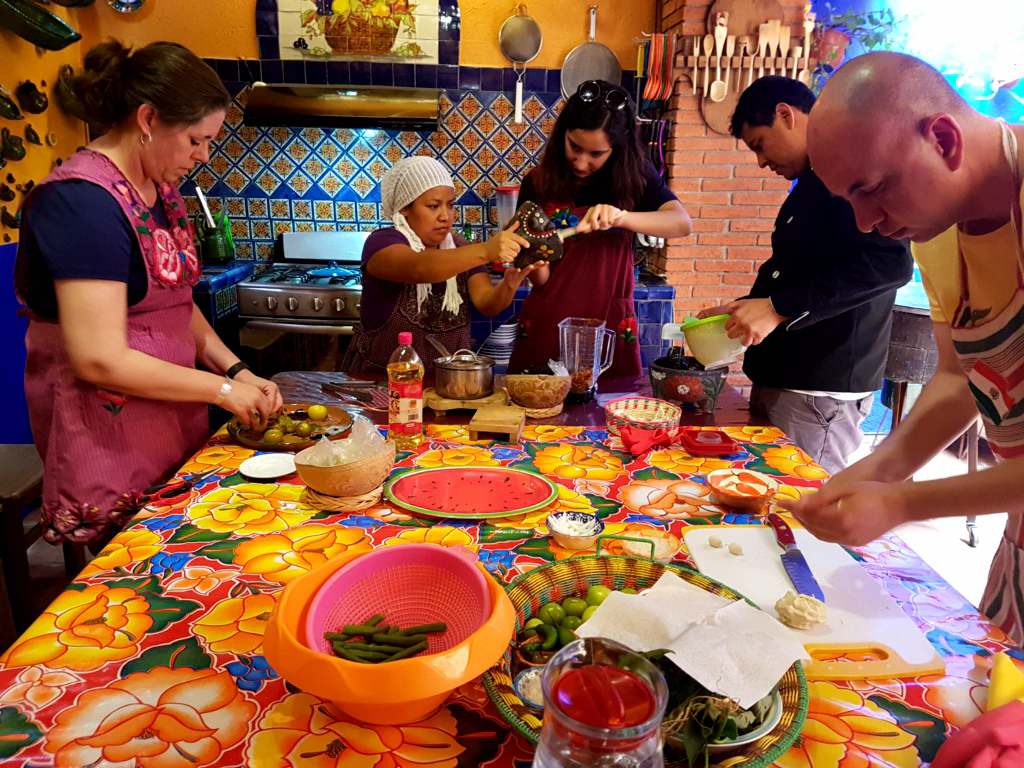
The cooking took place at Gerardo’s mother’s house in a beautiful outdoor kitchen. On our cooking plan were:
- mole verde and amarillo (‘mole’ means sauce, in this case the particularly rich and flavourful kind Oaxaca is famous for),
- guacamole
- peppers stuffed with grasshoppers and with fungus-infected maize (another delicacy… (huitlacoche))
- tacos
A short list, which nevertheless took a good deal of time thanks to the many ingredients per component. And I can say in advance: I dutifully tried everything!
Admittedly: the grasshoppers were the smallest variety on offer; the peppers were also deep-fried and stuffed with other bits and pieces as well. But they still crunched unsettlingly when you bit into them.
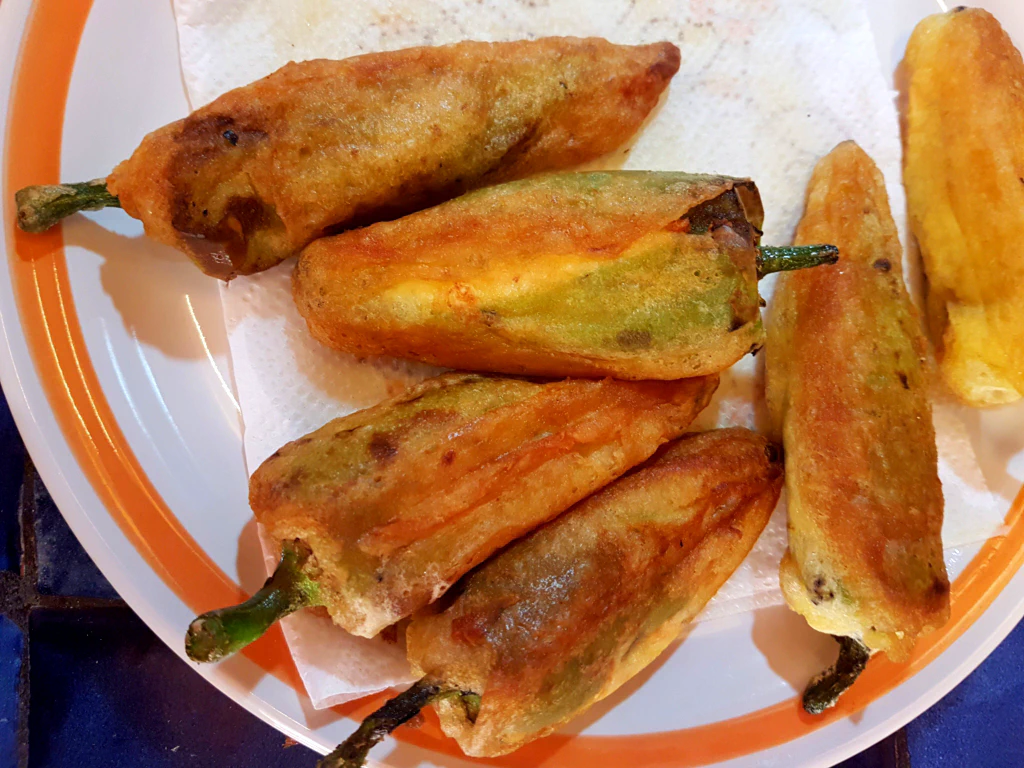
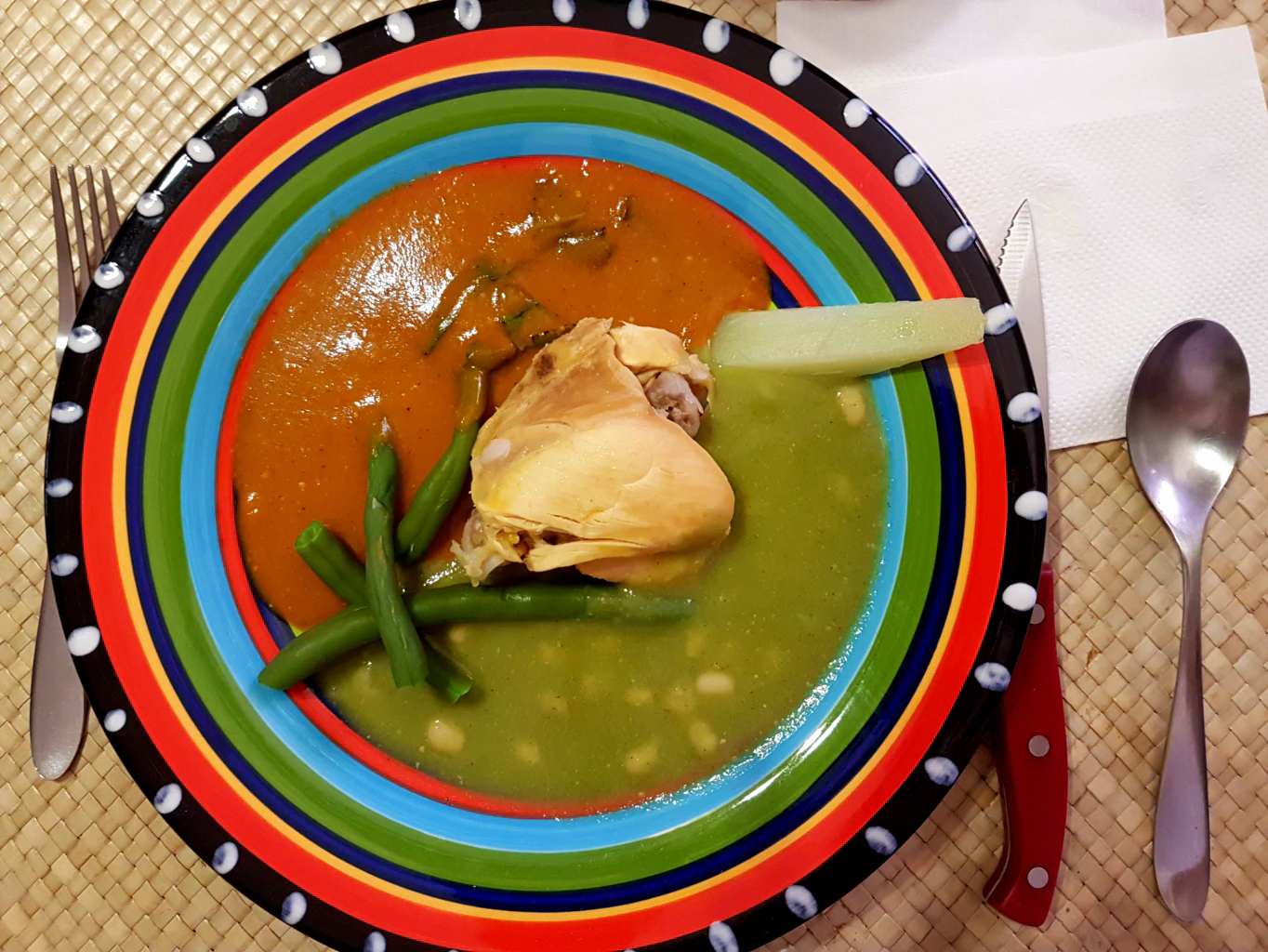
Verdict: Very interesting, but very unlikely that I will cook any of it again (apart from the guacamole). It might also be difficult to find boiled or grilled grasshoppers at home. Unless I want to catch them myself.
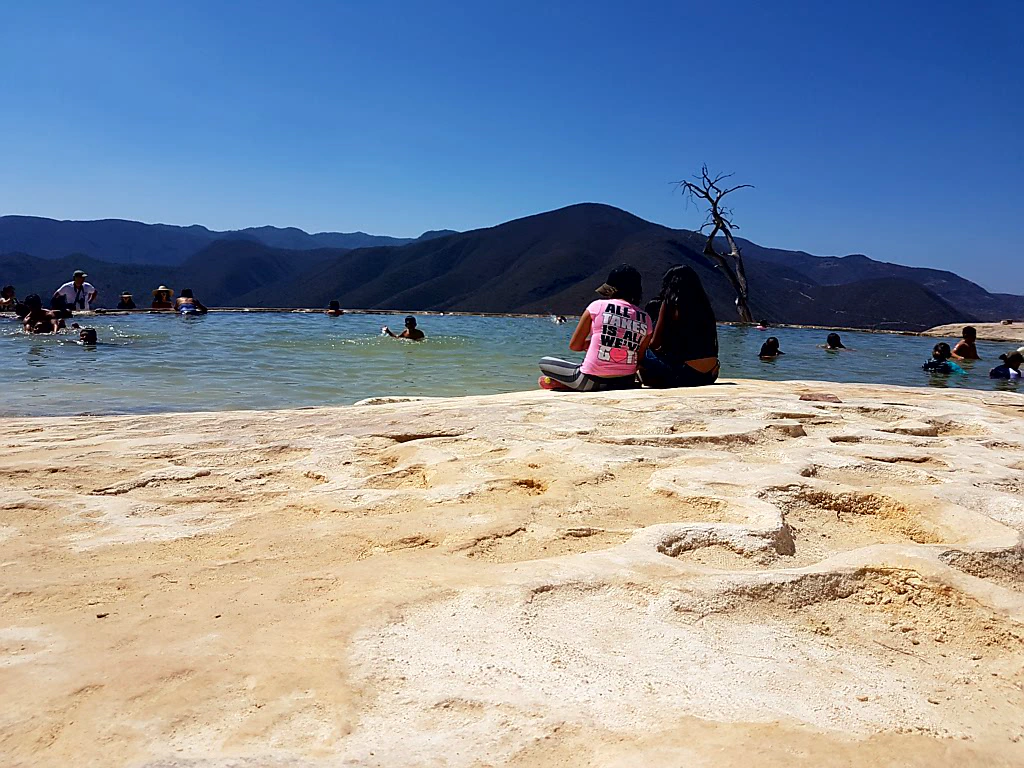
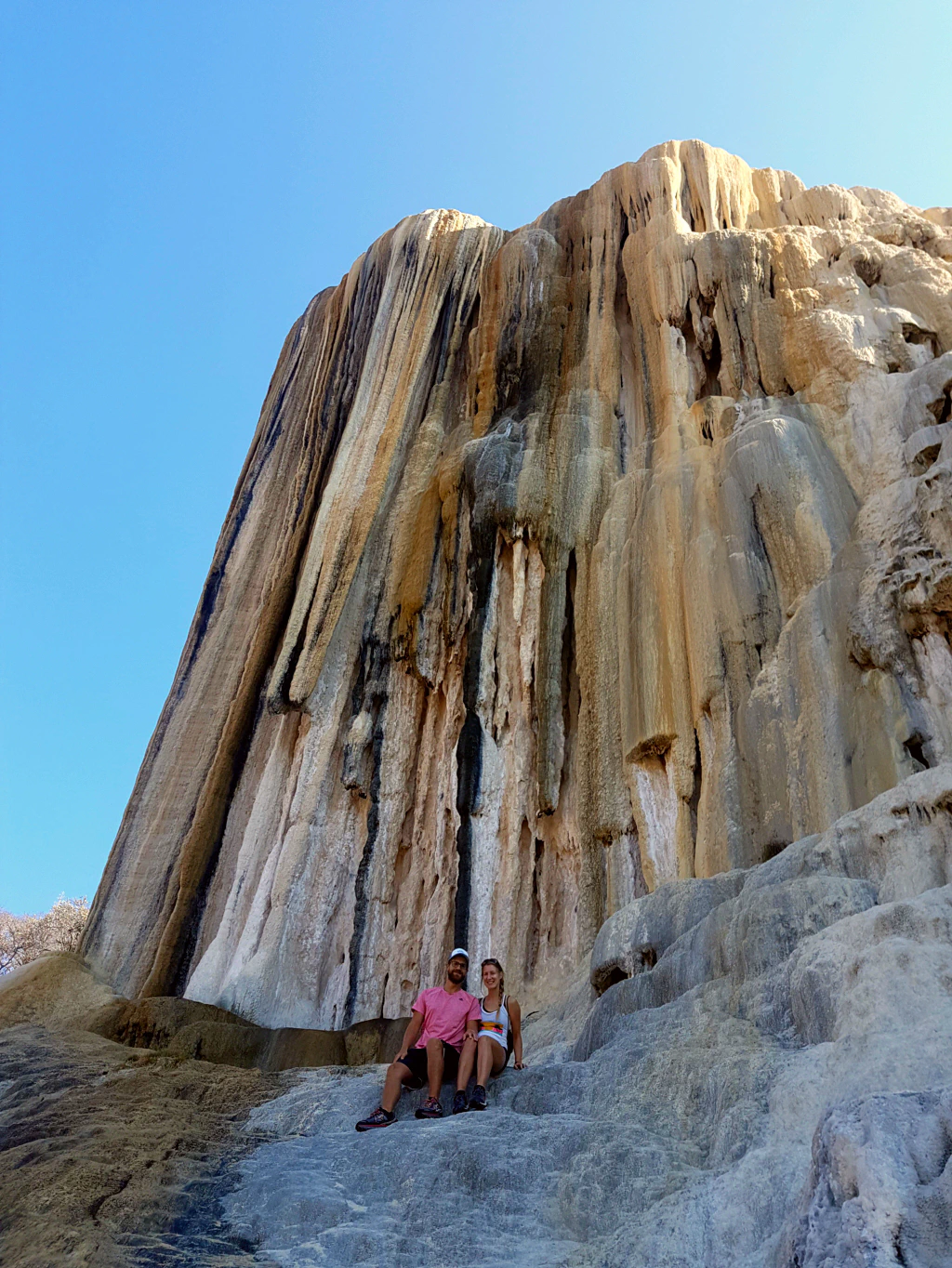
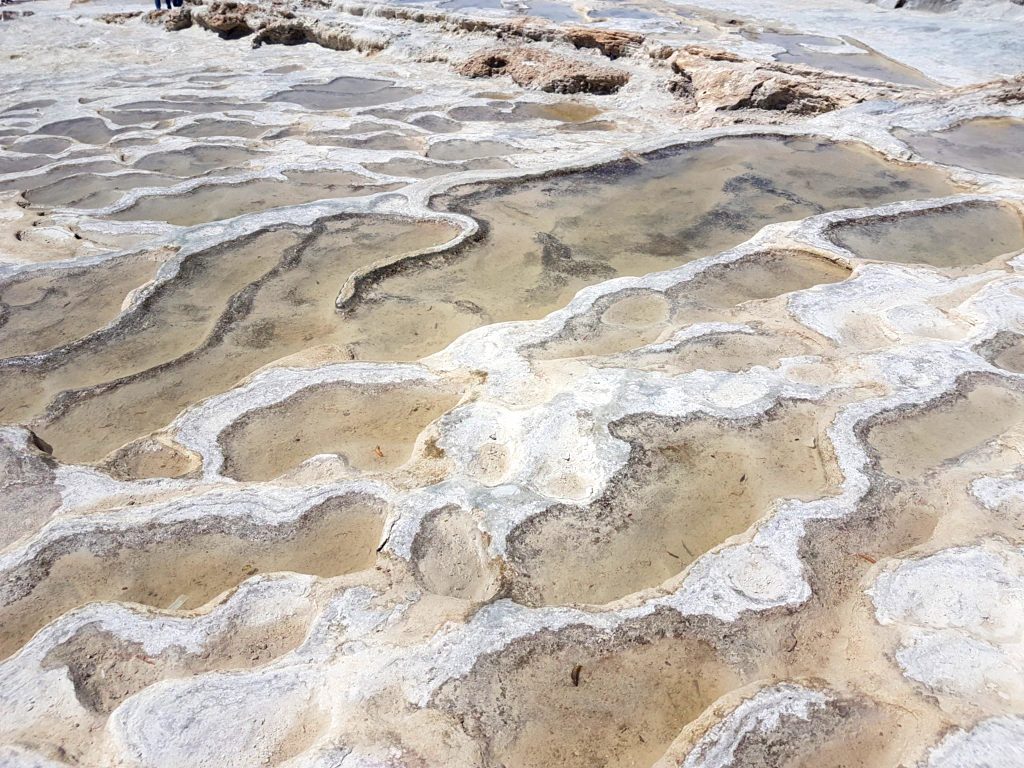
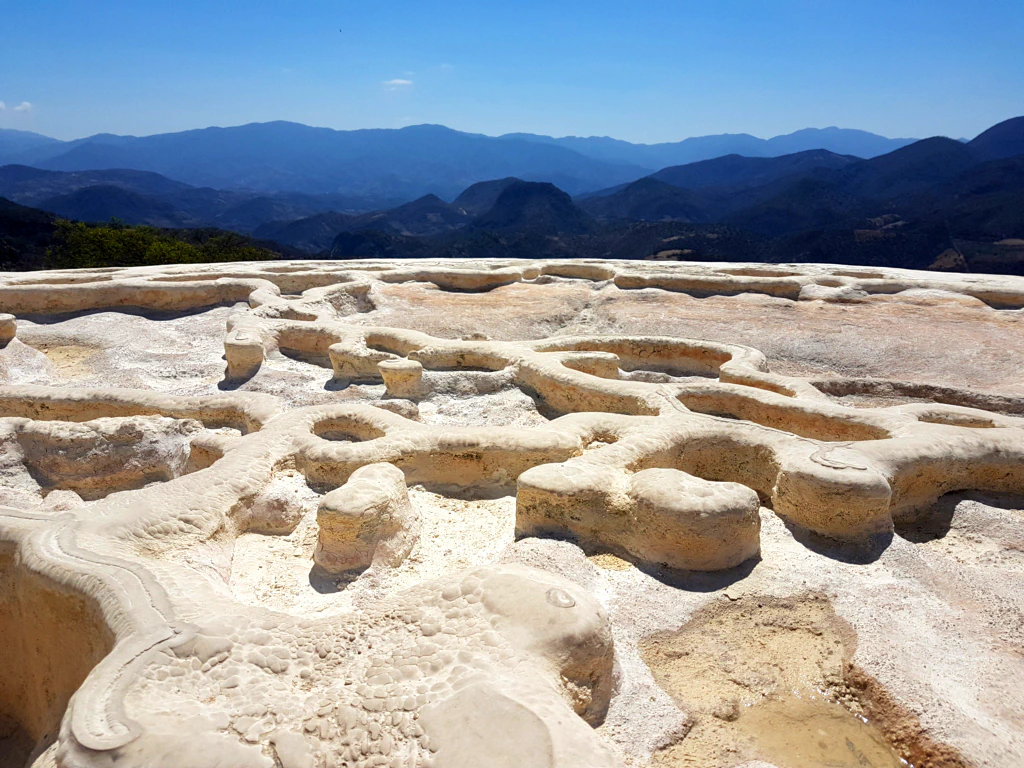
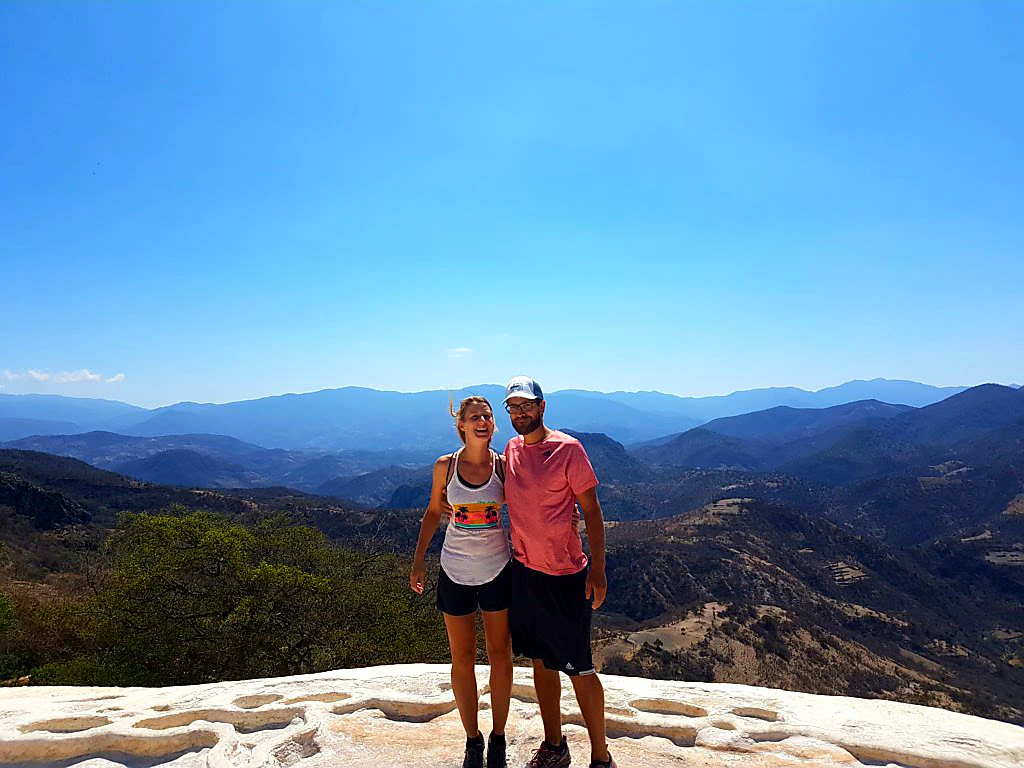
The next day Jan was back on board and we drove to Hierve el Agua. We expected an enormous area of waterfalls and infinity pools. What awaited us: an infinity pool without water, a petrified waterfall and another small pool onto which busloads of holidaymakers descended - the Semana Santa effect… how glad I will be when these holidays are over!
But quite apart from the streams of tourists, perhaps we should not base our expectations solely on a Google image search. But look, it does look deceptively convincing, does it not?
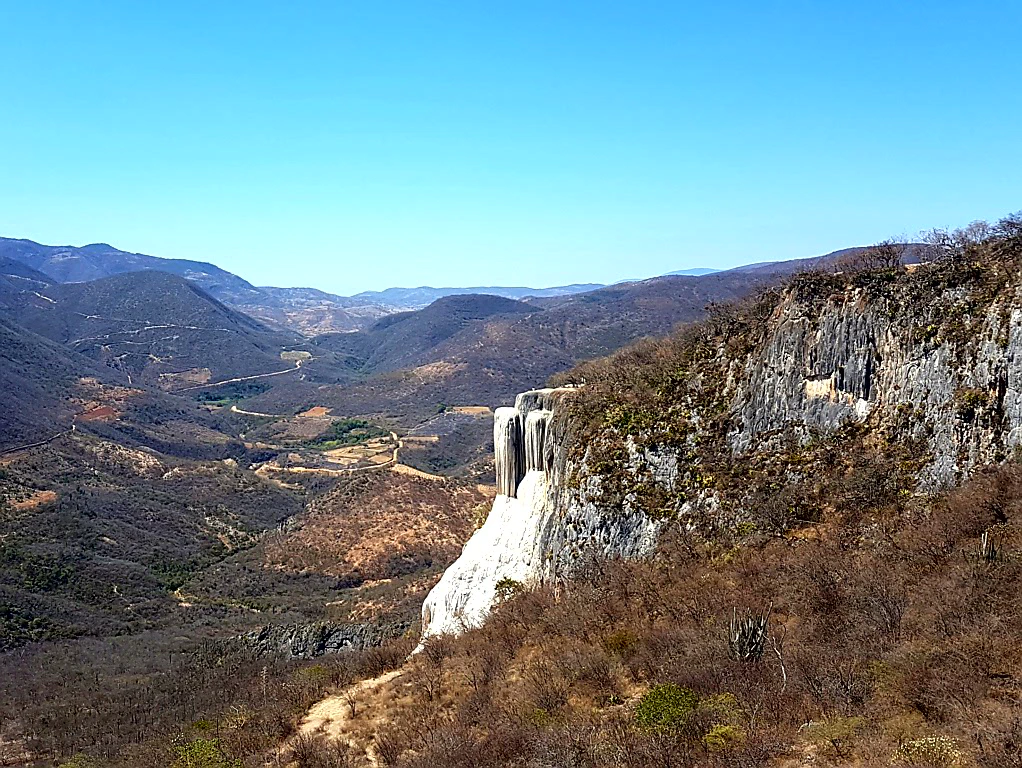
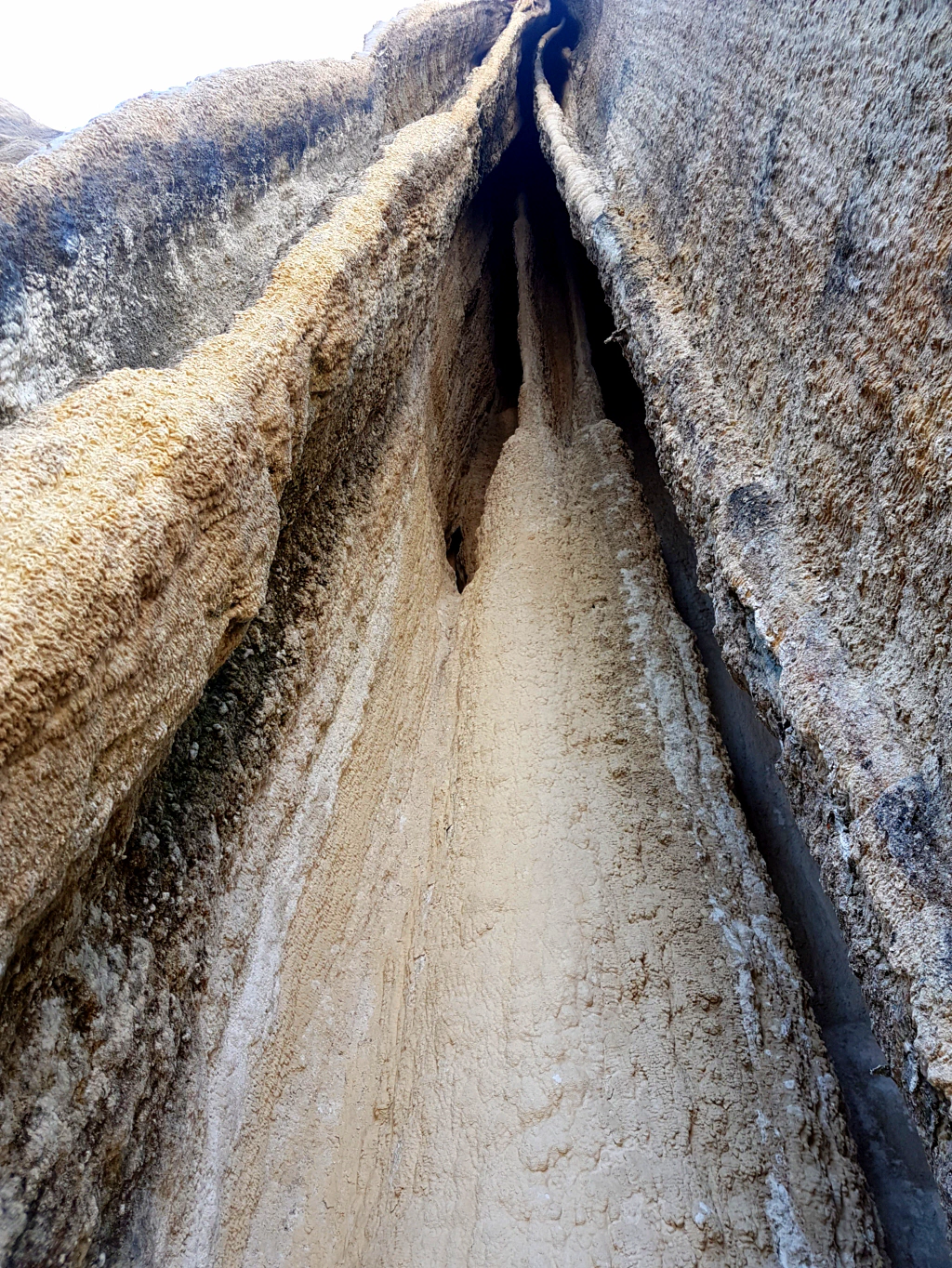
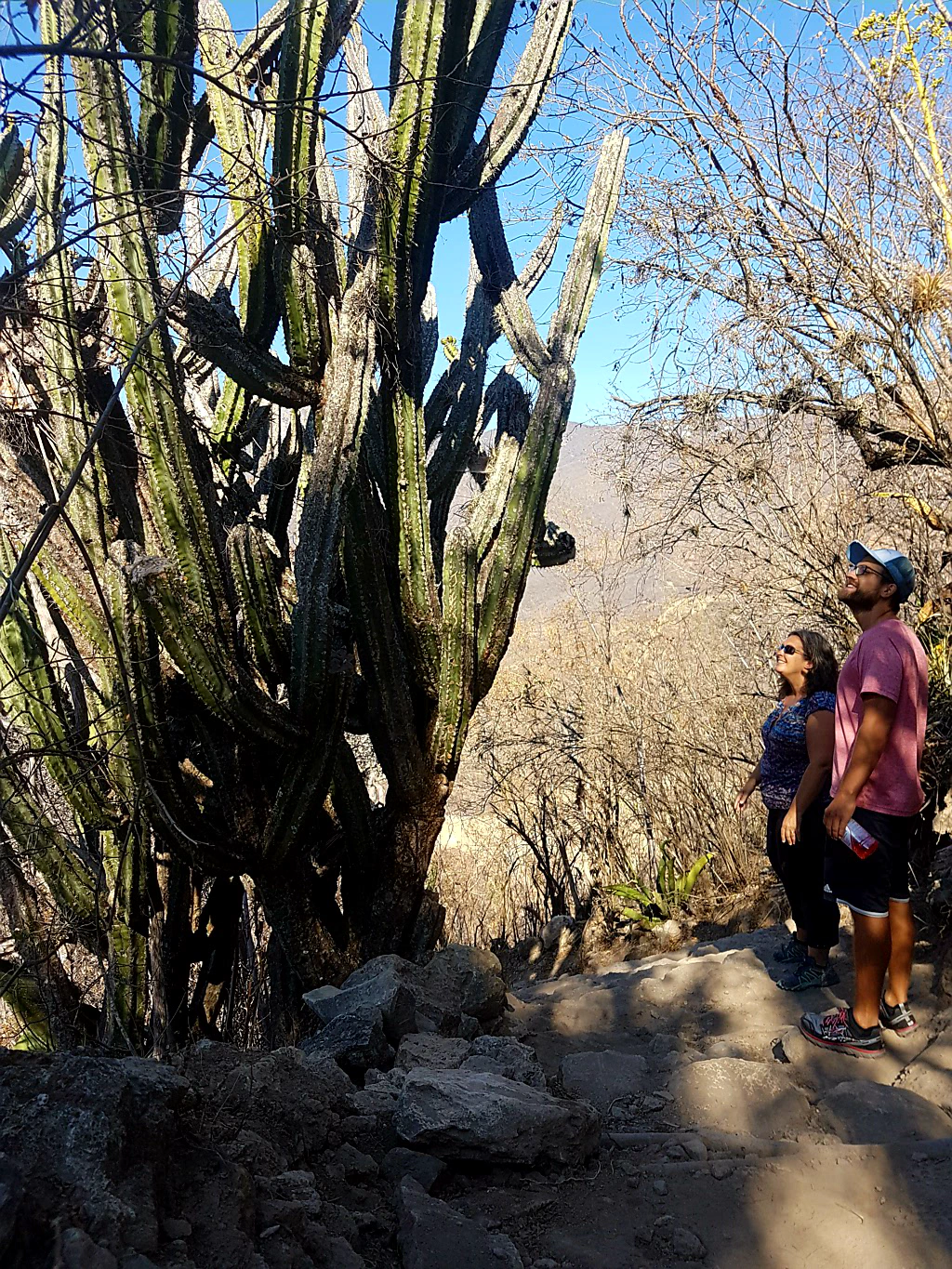
Hierve el Agua, meaning ‘boiling water’, is a lovely area with interesting limestone formations and, at last, wild cacti - but otherwise completely overhyped. Quite astonishing: the Cascadas Roberto Barrios were a genuine natural highlight and are listed only as an also-ran among the sights, while Hierve el Agua was talked up as the highlight of all. Mad…
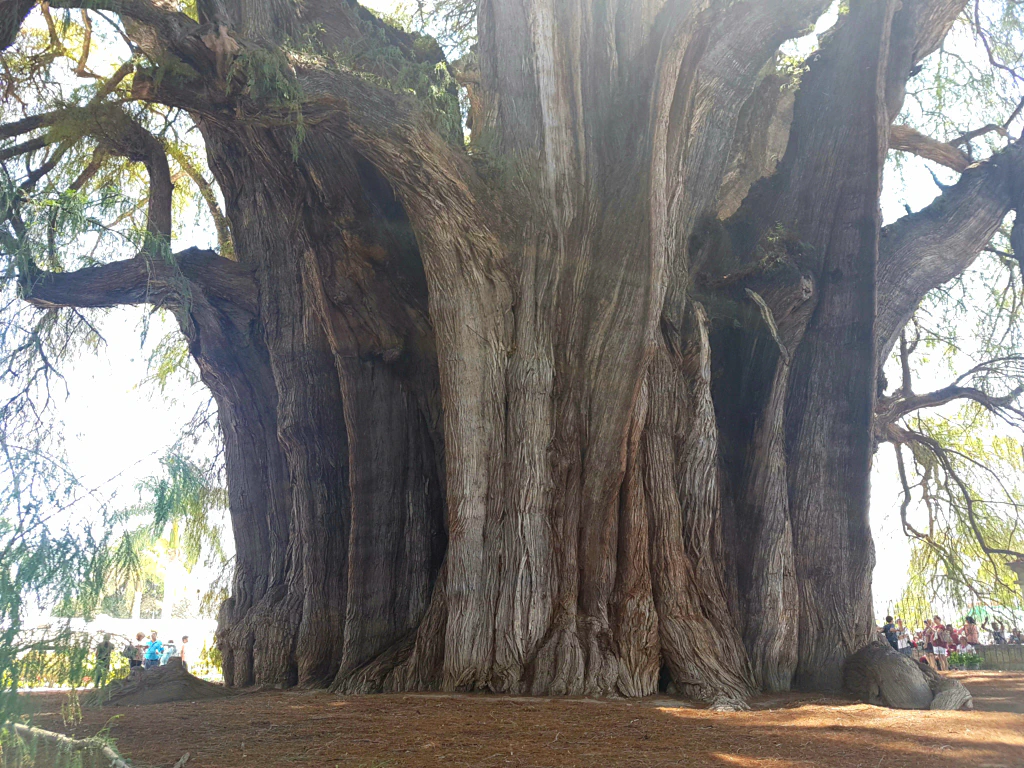
Afterwards we went on to the widest tree in the world, ‘El Tule’, with a circumference of 52 m. It is enormous - and, according to Wikipedia as well, the widest tree in the world. I had assumed quite a few crafty villages would claim that title. But it seems to be true!
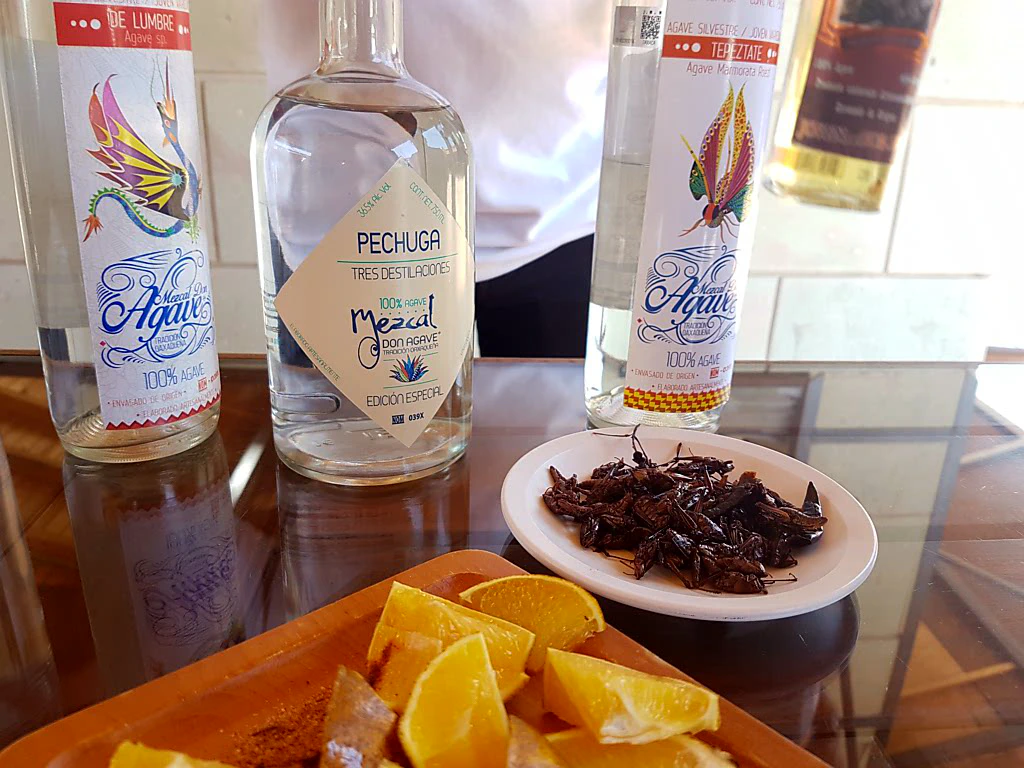
What must not be missing on a trip through Oaxaca, of course, is an extensive mezcal tasting! Instead of eating a piece of bread to neutralise the palate as at a wine tasting, here you traditionally crunch on grasshoppers fried with lime, chilli and salt! Again!
Eyes shut and get on with it, I eat only one as an appetiser before I can wash the grasshopper taste away with the mezcal. And since Jan famously does not drink alcohol, he crunches his way through one grasshopper after another during my mezcal tasting…
15.04.-16.04.2017
From Oaxaca it was a trifling 4.5-hour bus ride to the capital of the next state of the same name: Puebla (properly Heroica Puebla de Zaragoza).
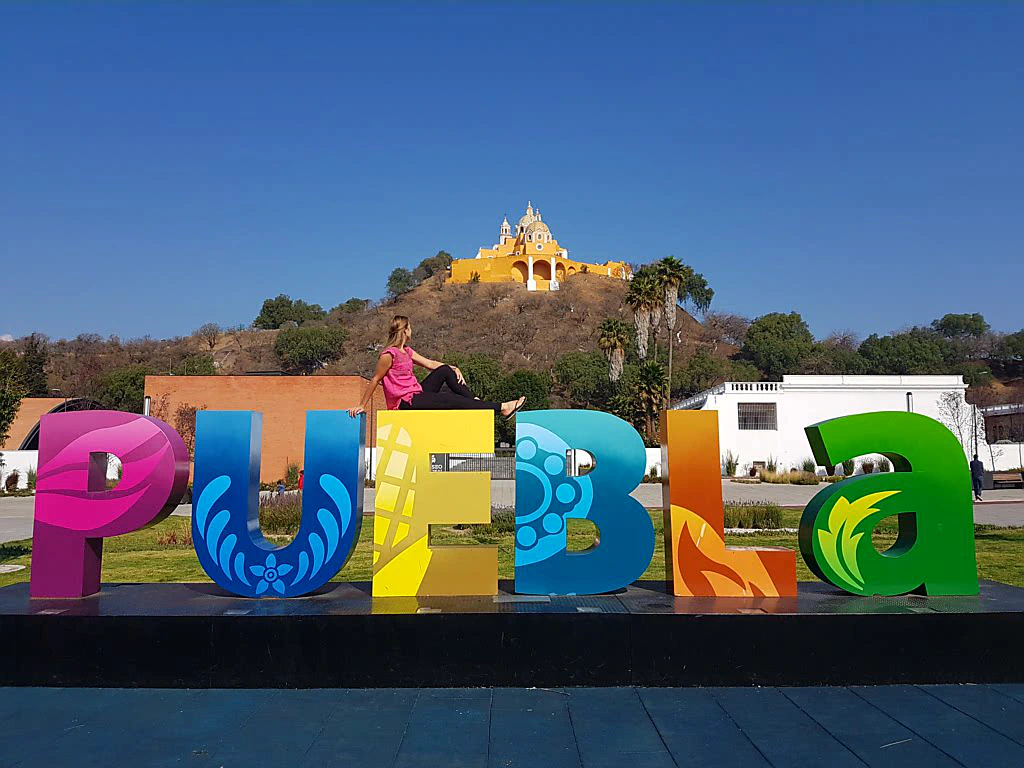
When my dive guide in Playa del Carmen recommended his home town of Puebla as a destination, I pictured a sweet little place just before Mexico City. Well, slightly off. With 1.4 million inhabitants Puebla is Mexico’s fourth largest city. And of all places this was where we decided to economise, renting a room outside the old town. In the cities so far that would have been no problem, but in Puebla it is quite a long way off the beaten track!
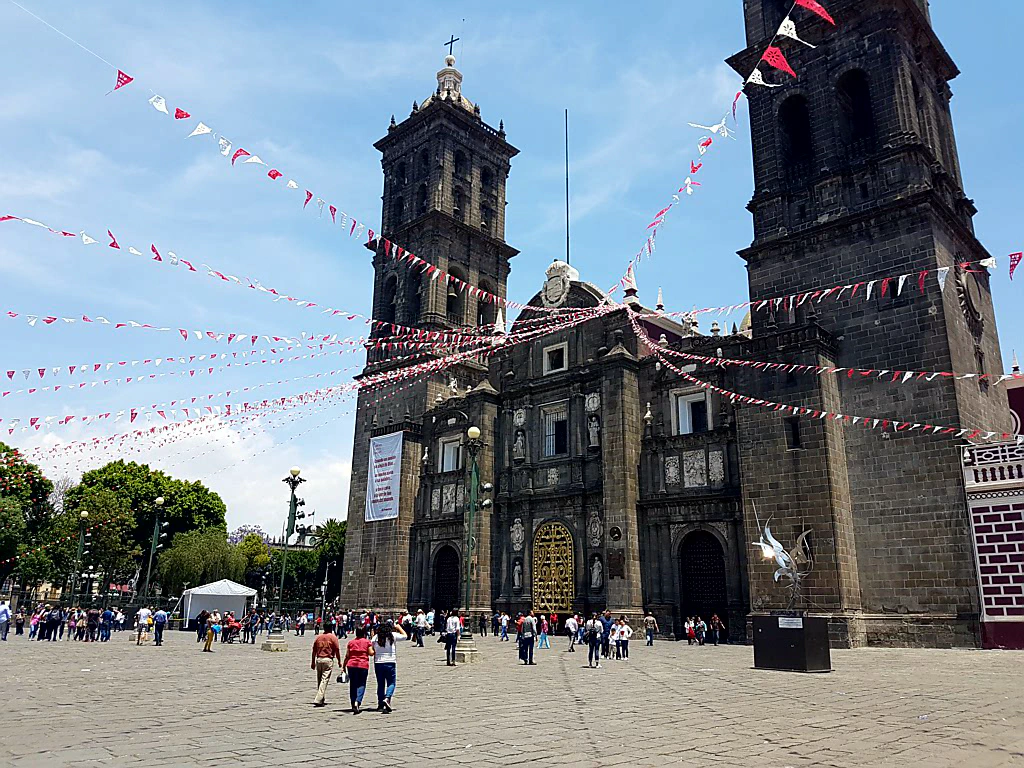
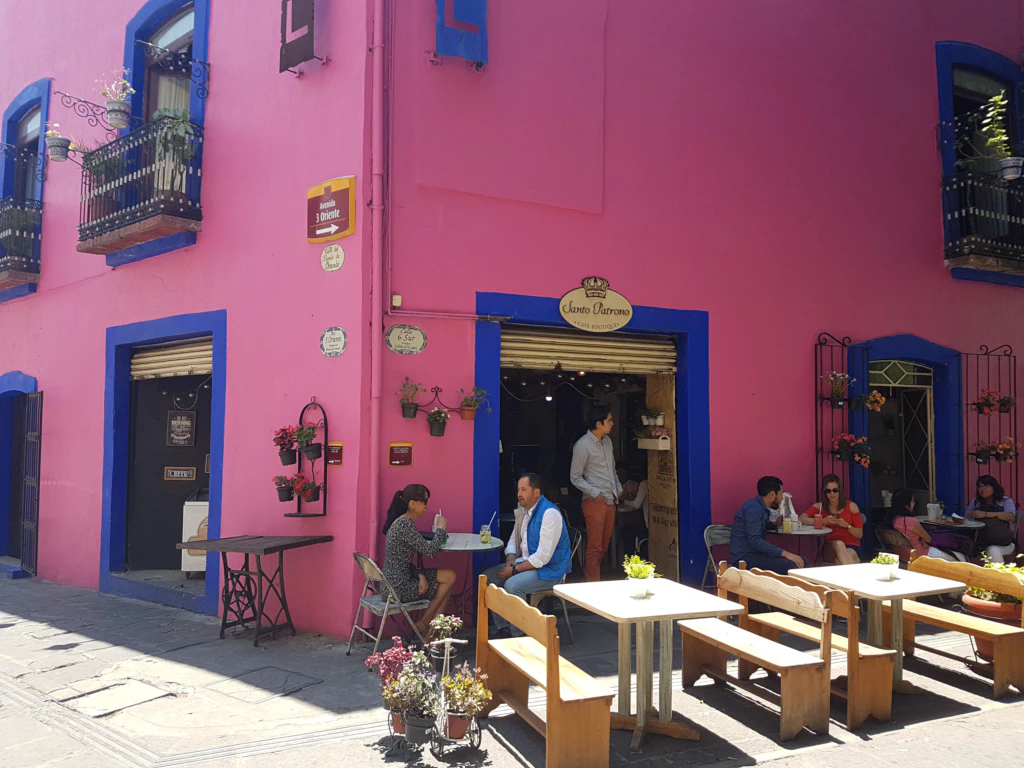
Puebla’s historic centre is lovely - but honestly, over time the Mexican old towns do start to look rather similar.
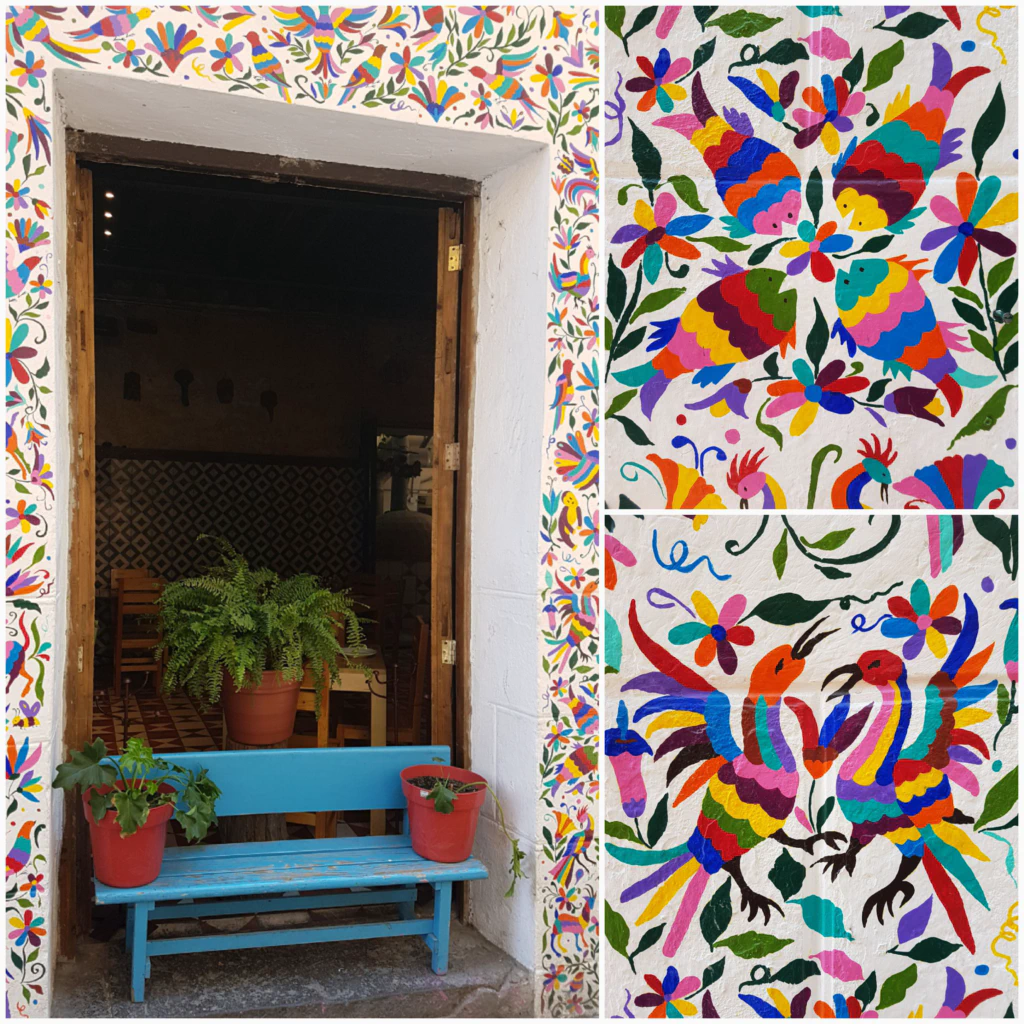
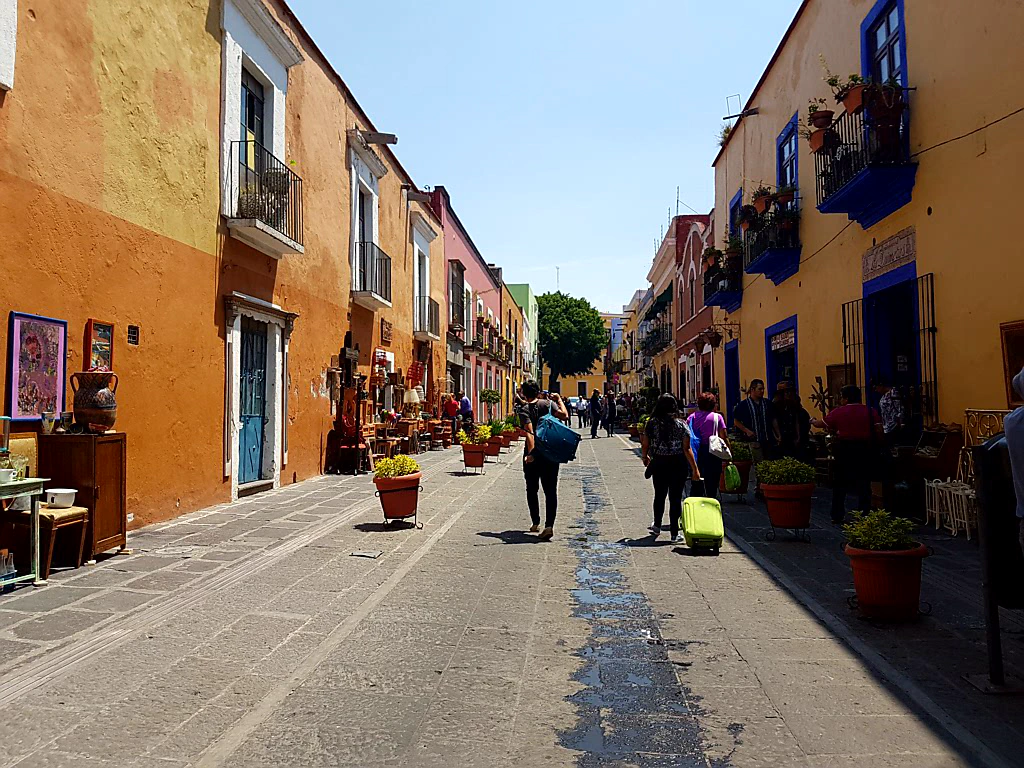
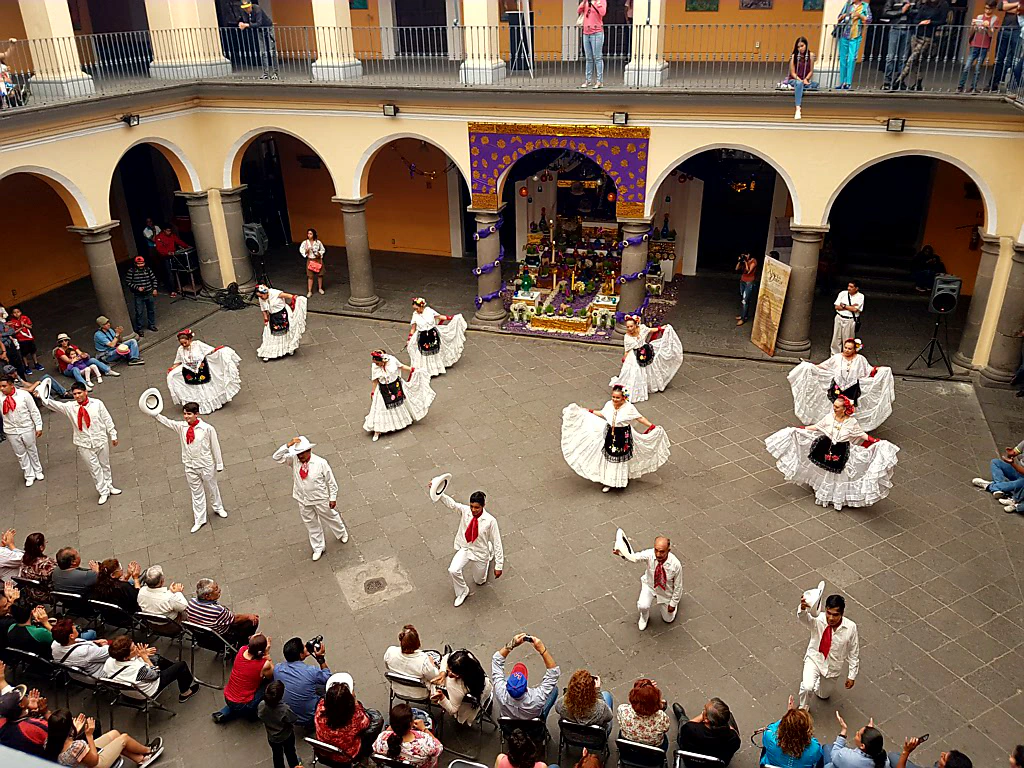
But Puebla did have one highlight in store for us, and this time a genuine highlight: the sight of the continuously smoking volcano Popocatépetl - at 5462 m Mexico’s second highest mountain, about 40 km from Puebla.
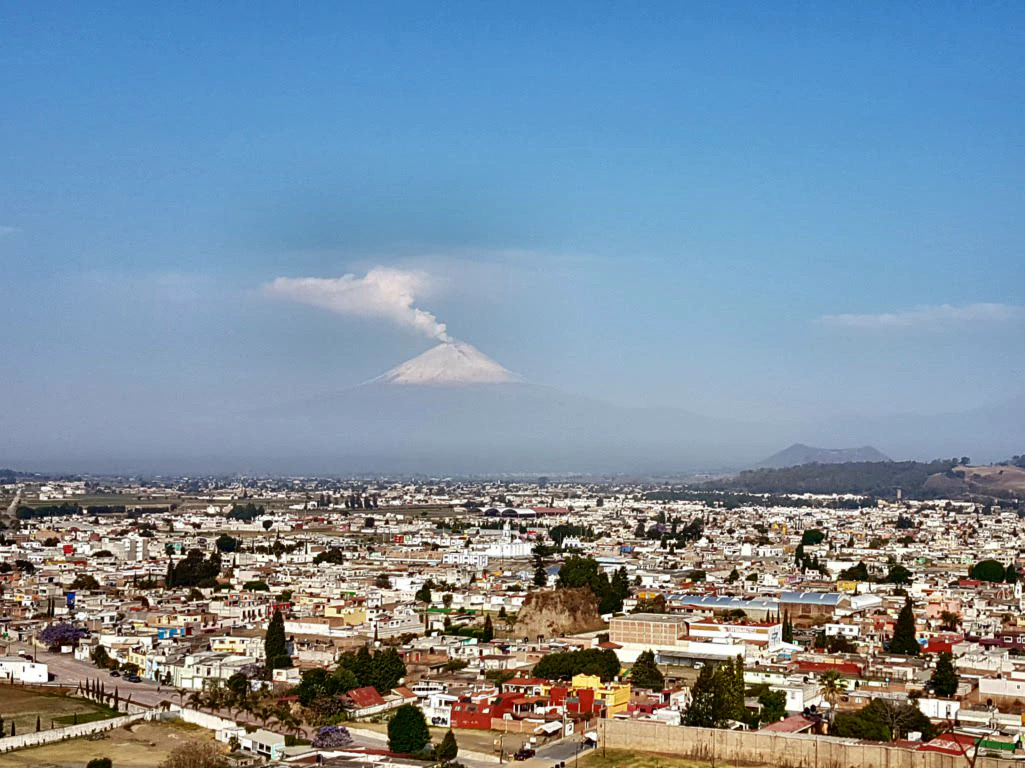
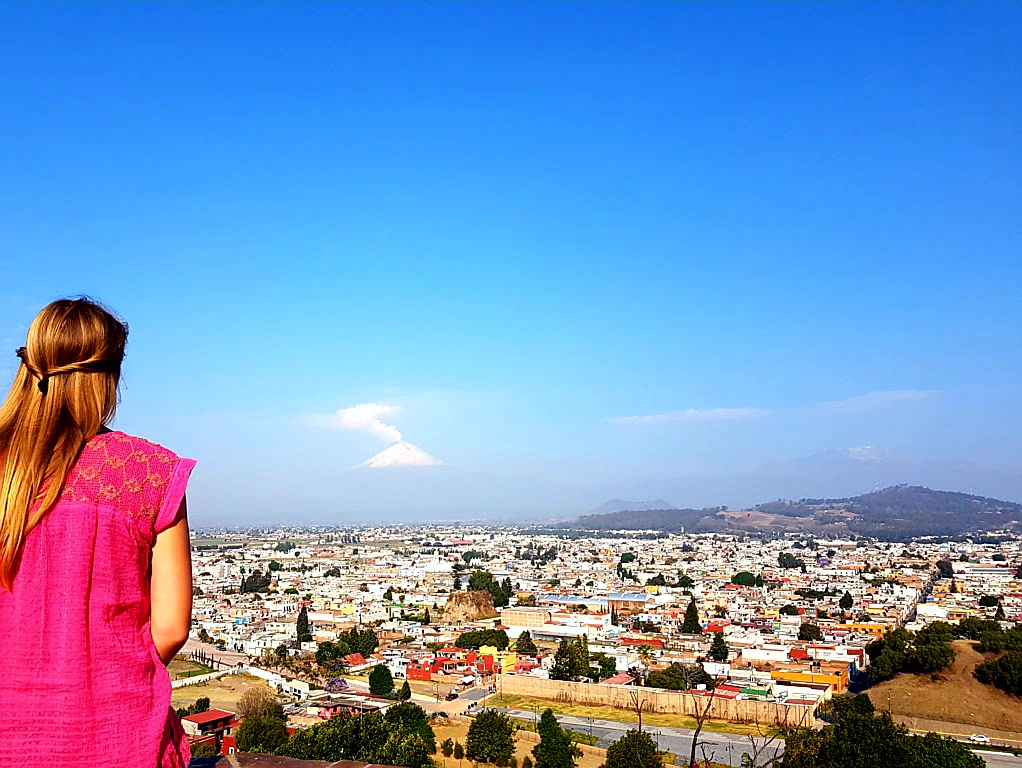
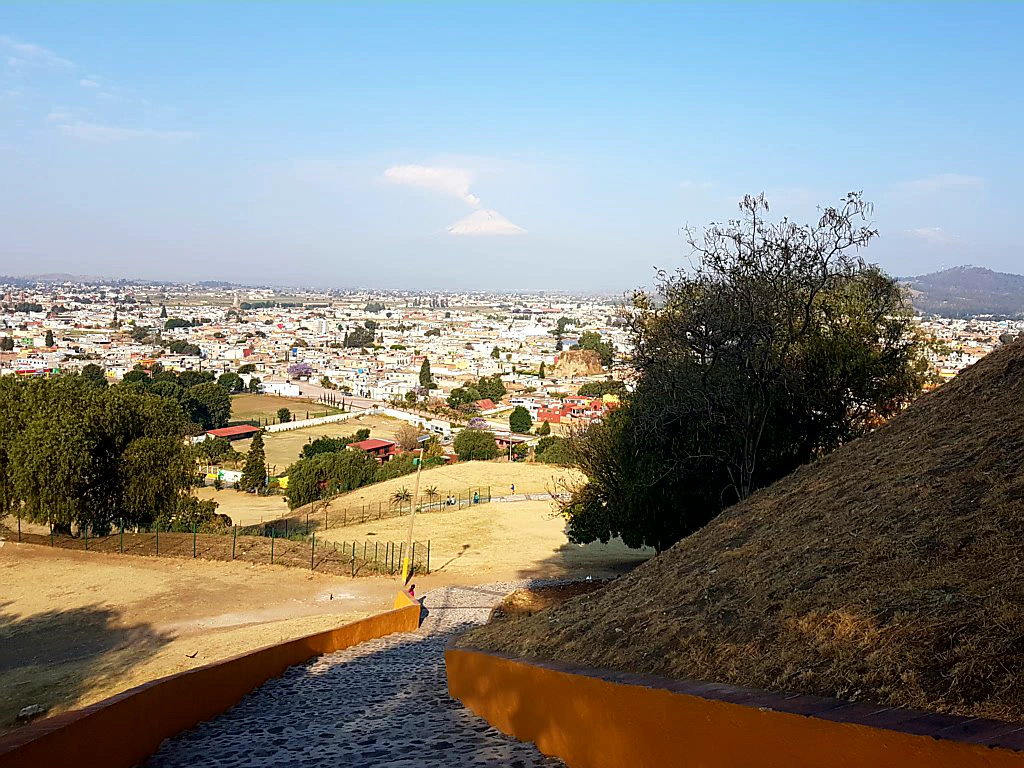
Live and in colour it is immensely impressive! And all the more so when my phone can capture the scene. Pure goosebumps.
Almost exactly a year ago the ‘Popo’ erupted for the last time and, because of its activity, may not be climbed. I very much hope, though, that from our next destination an opportunity will arise for a trip into the Popocatépetl and Iztaccihuatl national park: Mexico City.