
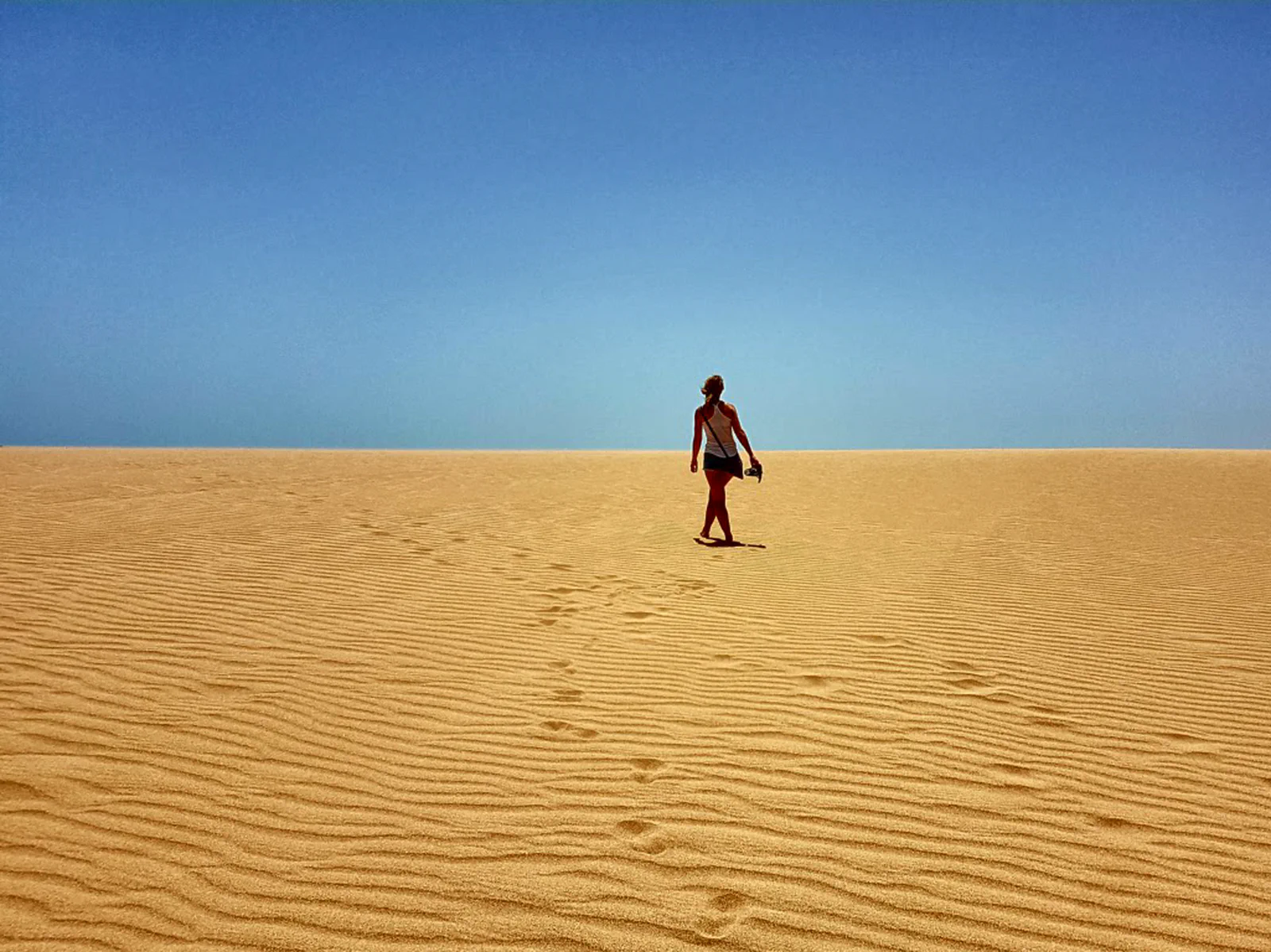
Having just arrived in Santa Marta, our plan was to take things slowly: stroll through the streets a bit, eat well, soak up some sun and settle into Colombia. Because even though we have been travelling in Central America for a few months now and much of it is similar (the fondness for rice and beans with every meal, the fact that you always have to haggle, the missing concept of punctuality…), every country has its own quirks.
Since we had our eye on two tours in the north of the country, we went to the travel agency Magic Tour, whose name I did not like at all but which happened to have the best reviews. Just to ask when it would be best to start the tours. Answer: tomorrow. At 4:30. So much for taking things slowly.
Our first tour would take us into the Guajira desert for three days:
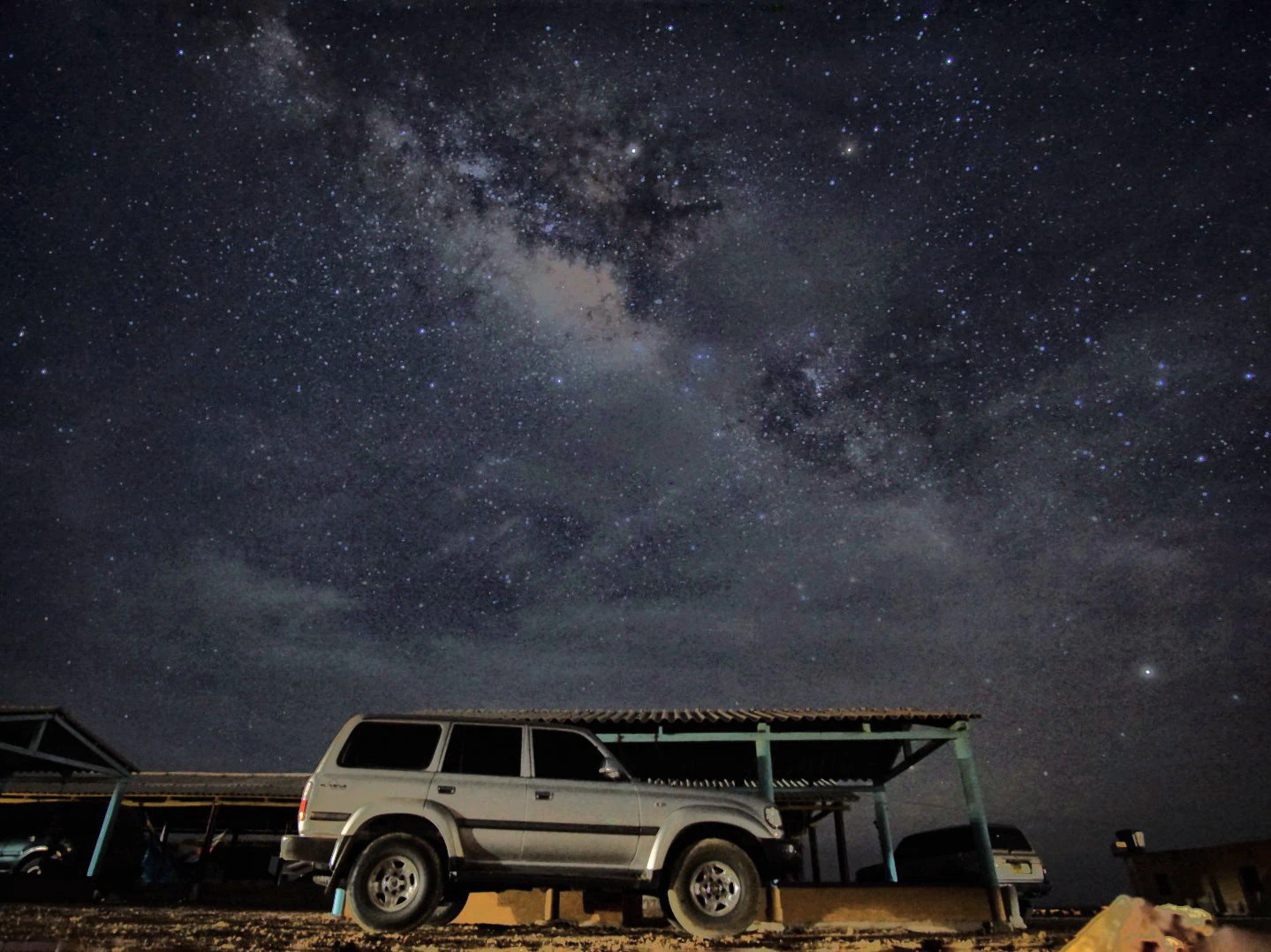
To where the desert meets the sea, where one of the few remaining indigenous peoples of Colombia lives, where you sleep in hammocks under the starry sky, and where you watch the sun set at the northernmost point of South America.
Since the tour (despite my perhaps slightly romanticised description) is not everybody’s top priority, it only runs if at least four people can be found. Fair enough. So it will be a kickstart rather than a gentle settling in.
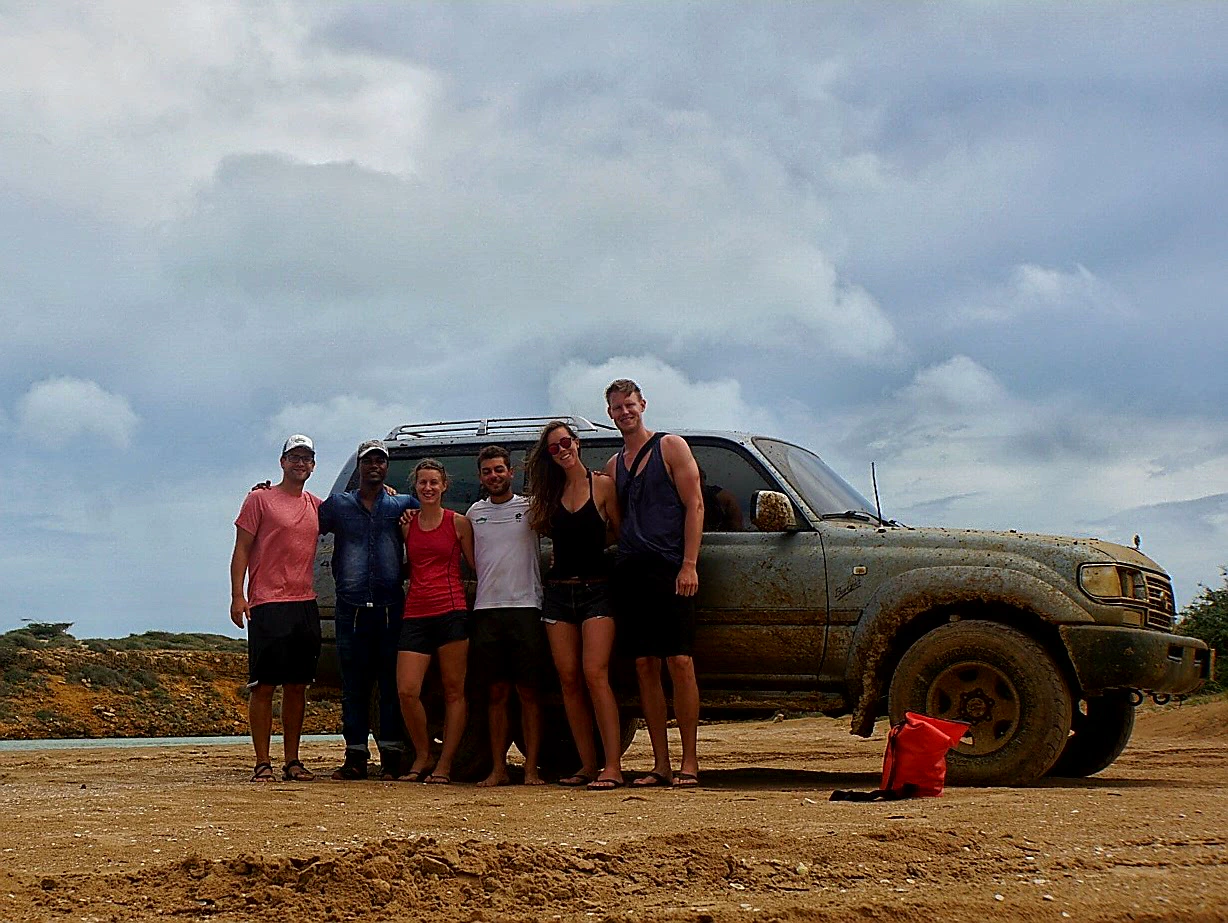
Together with the Dutch couple Koen and Brigit and Lorenzo from Italy we set off by jeep on the more than 300 km drive towards the desert. On the map it looked as though the desert were just around the corner, but Colombia is really rather big and distances are easy to underestimate. Along the way we filled up for the equivalent of 25 cents a litre from street traders who smuggle petrol into the country from Venezuela: one of the more or less accepted black market goods.
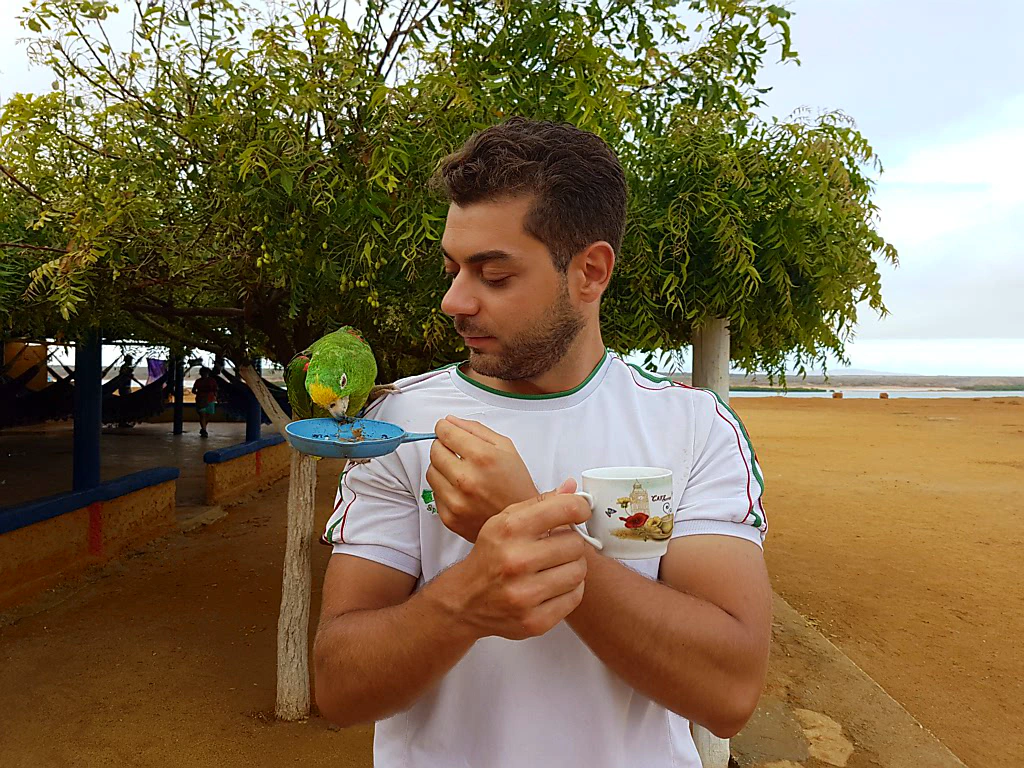
At our breakfast stop I gained one more insight: never order café, always café sin azúcar (coffee without sugar), otherwise you get an inedibly over-sweetened brown brew…
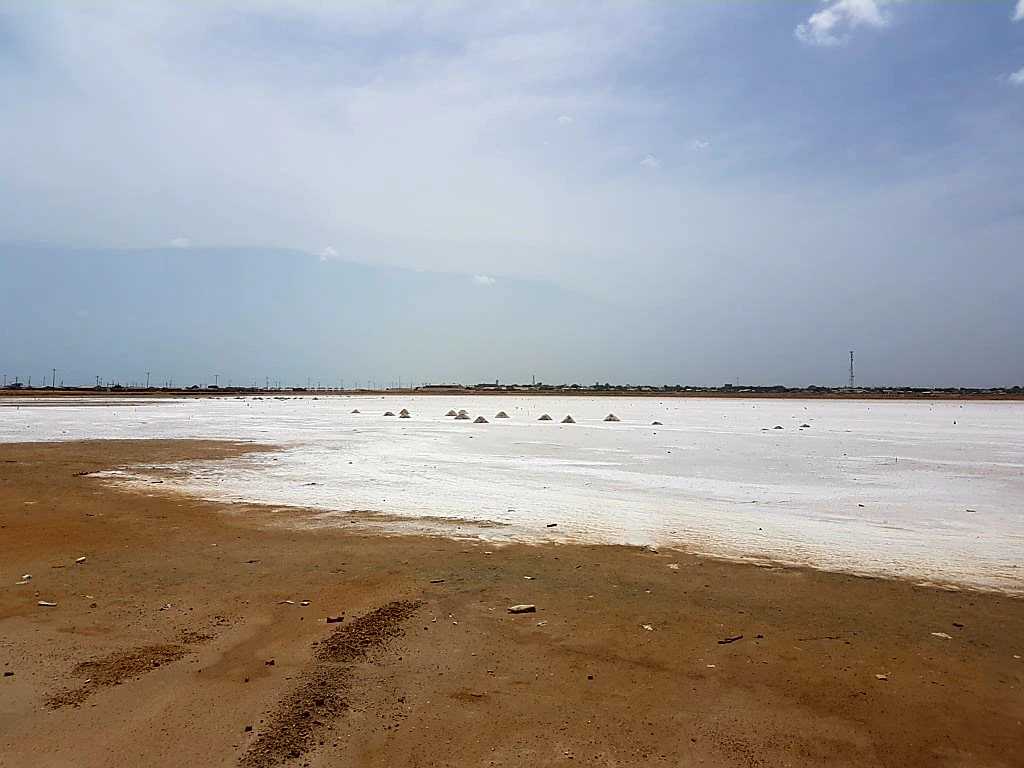
At first a tarmacked road took us past the coal and natural gas extraction plants and salt works that are more or less the region’s only livelihood.
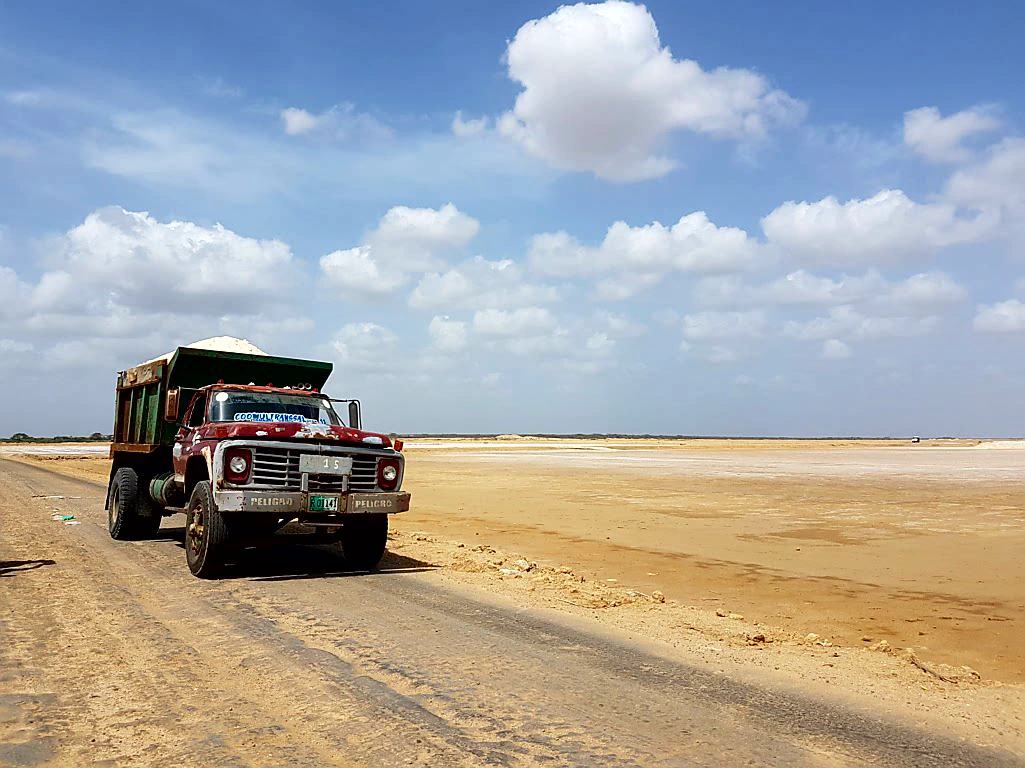
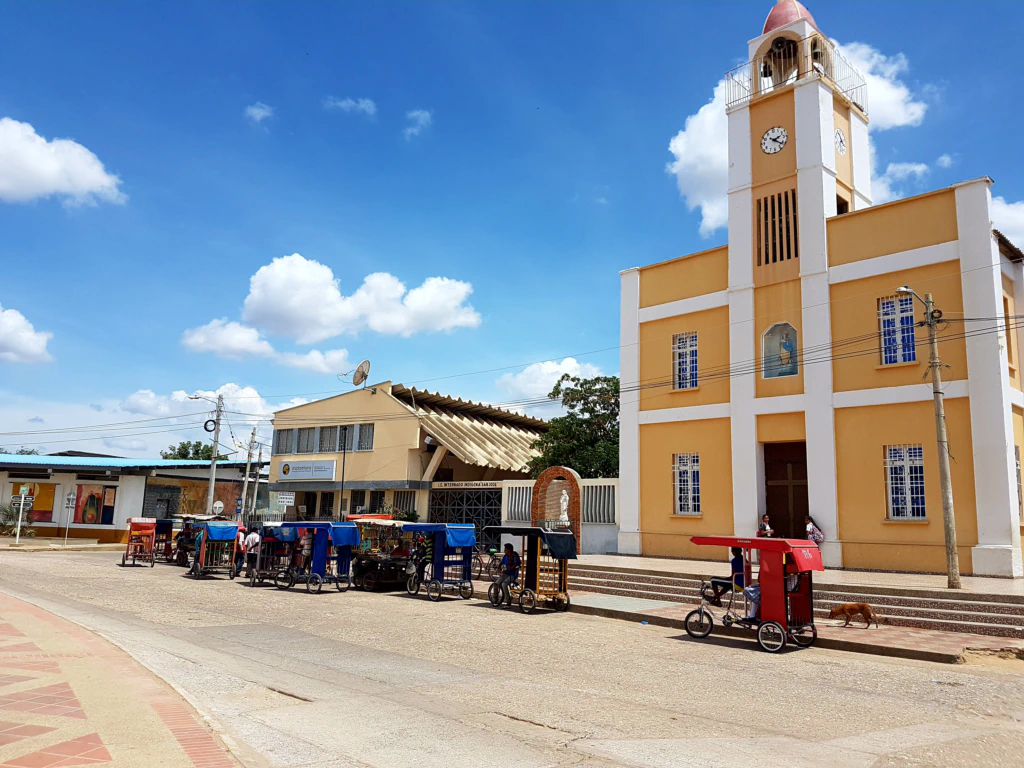
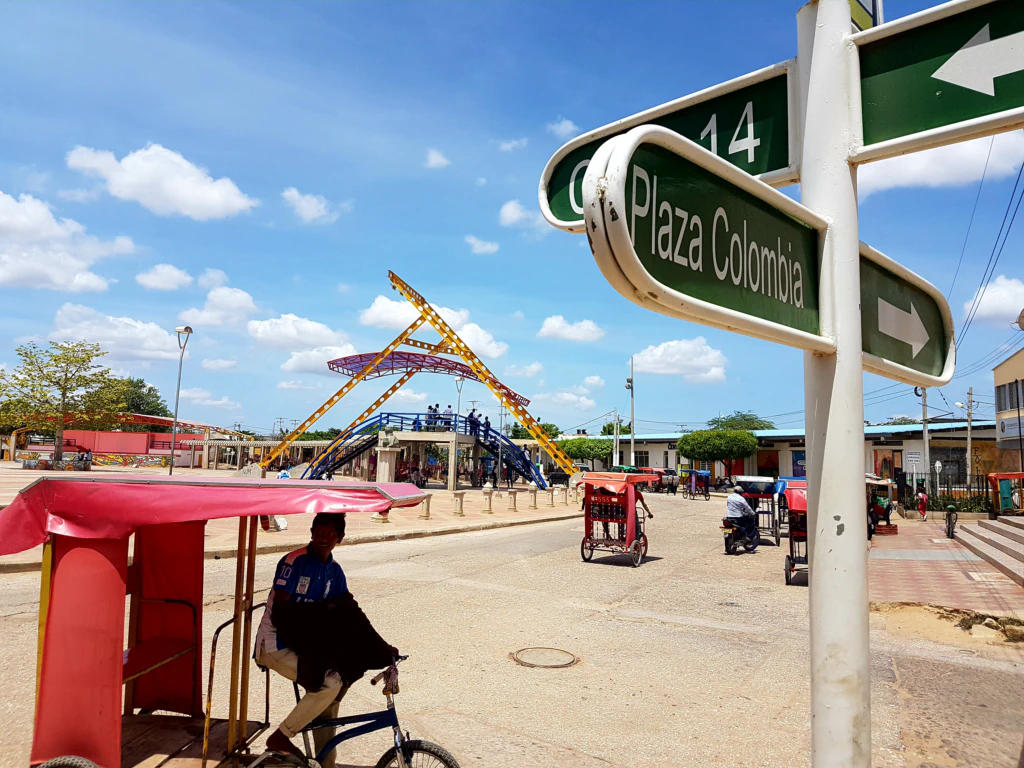
In the indigenous capital of Uribia we were to stock up on water and biscuits to pay at the roadblocks awaiting us in the desert. Since Brigit had been heartbreakingly begged for a mango on the way to Uribia, I bought a few pieces of fruit as well. It was not entirely clear to me whether the poor roadblock keepers might really have to live on water and biscuits?!?
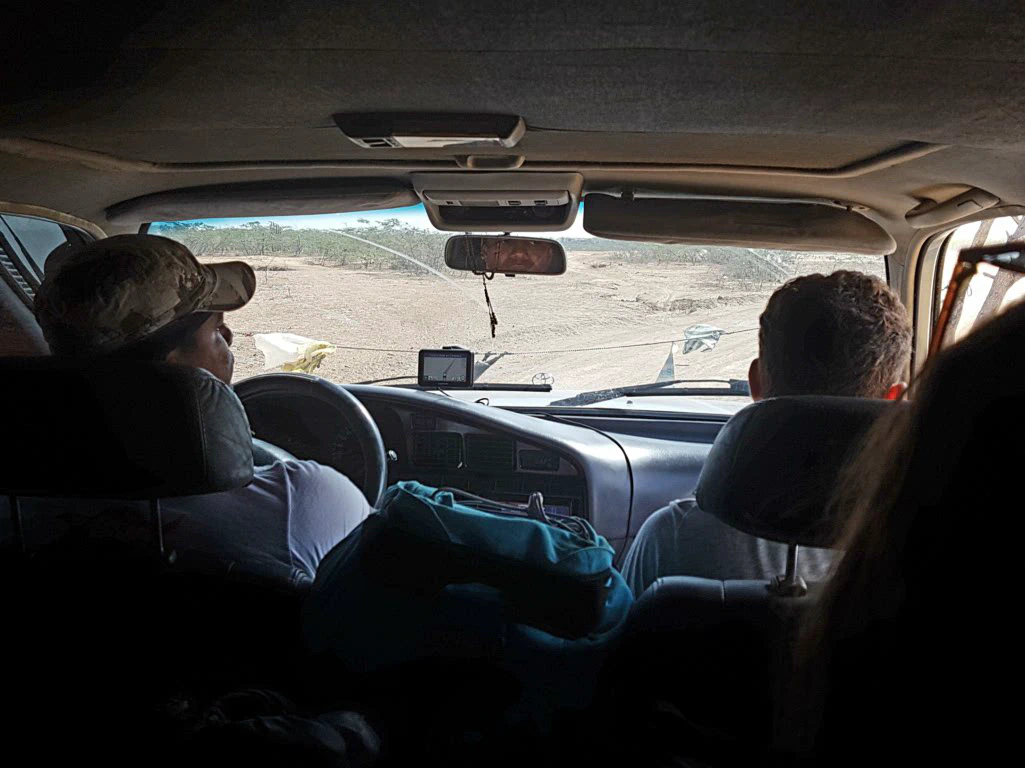
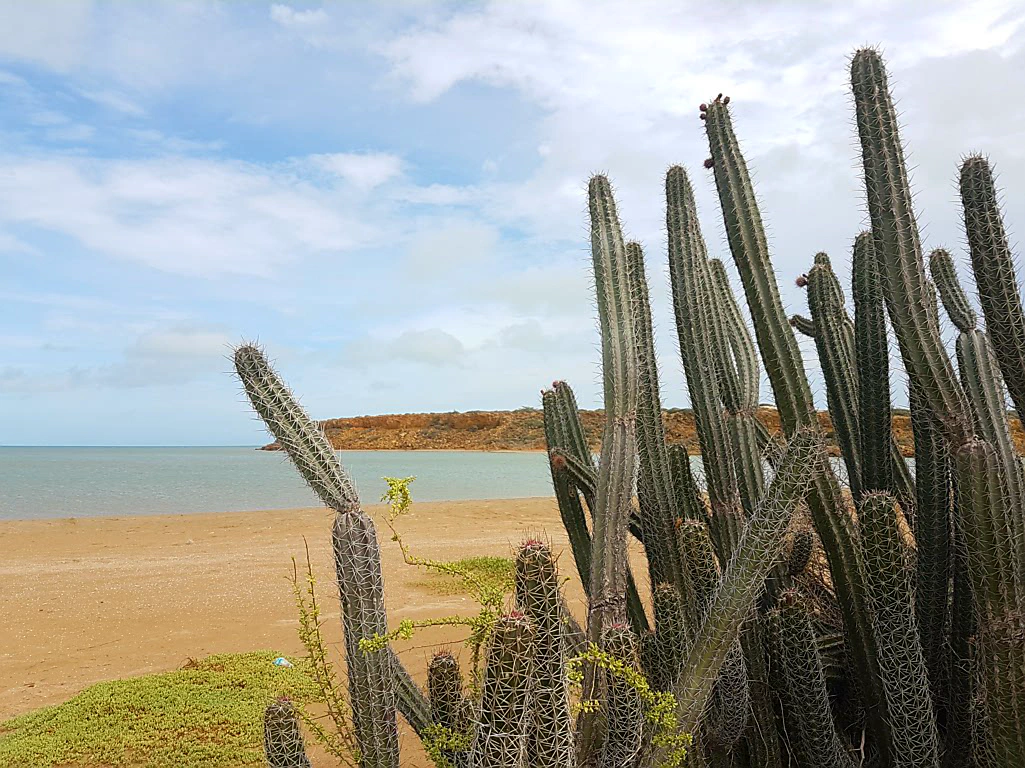
Soon the tarmacked road ended and the fun began. A shame we were not allowed to take turns at the wheel. The desert consists largely of cactus landscapes crossed by 4WD tracks; but again and again there are wide sand fields on which our guide was visibly enjoying himself.
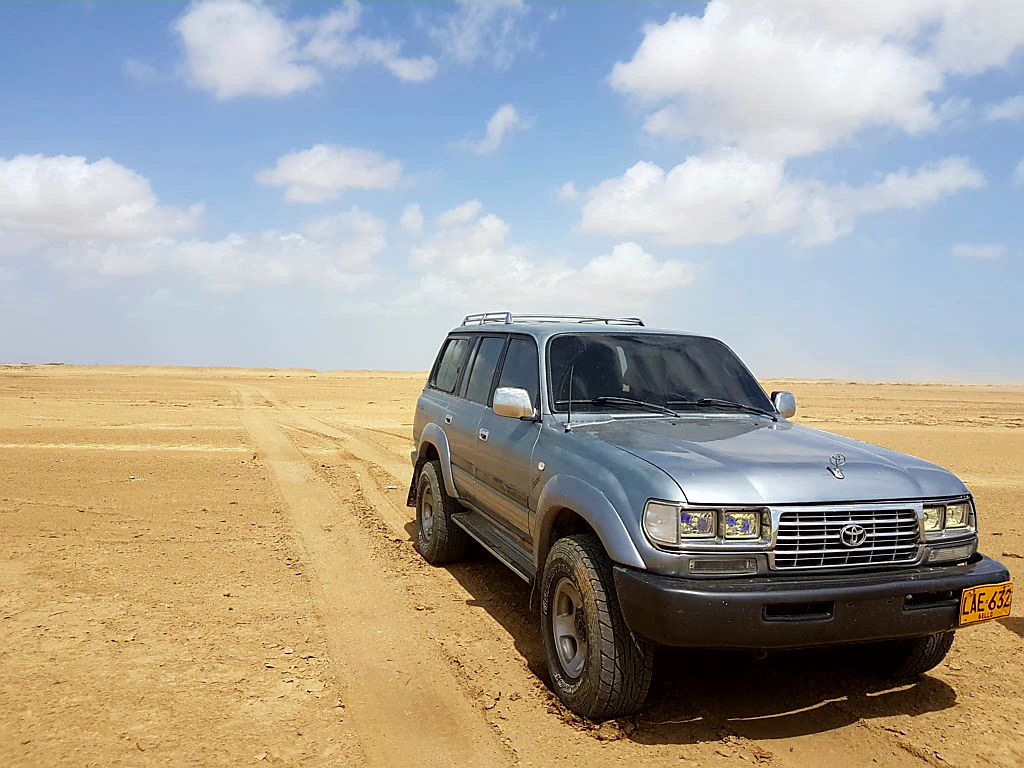
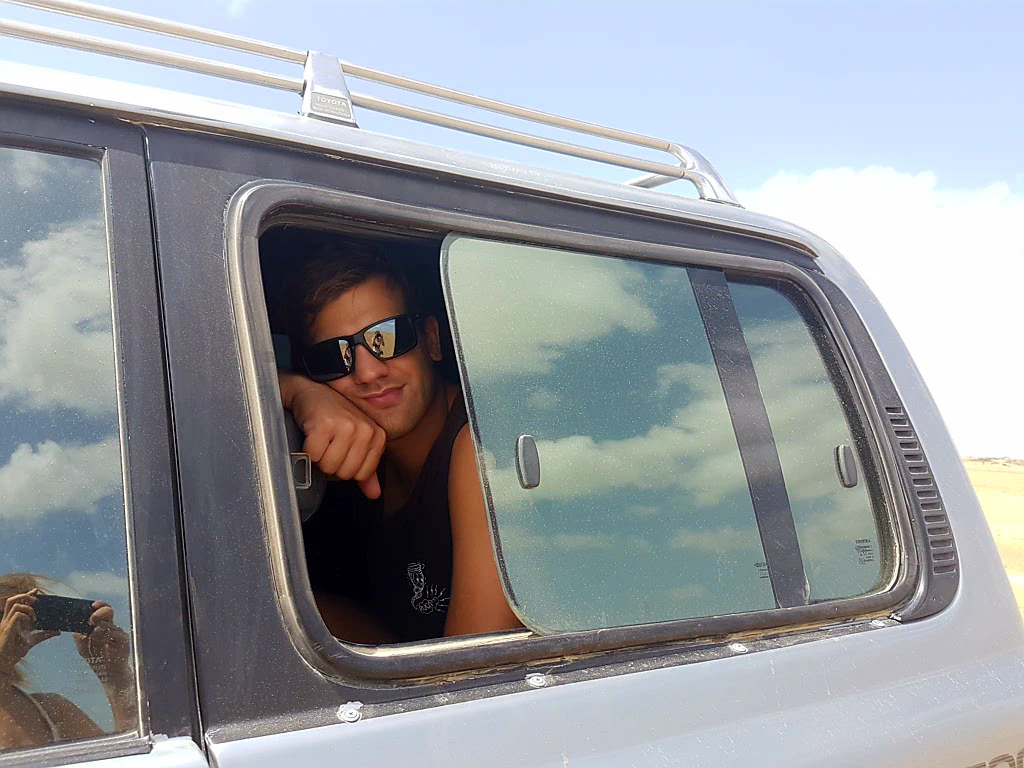
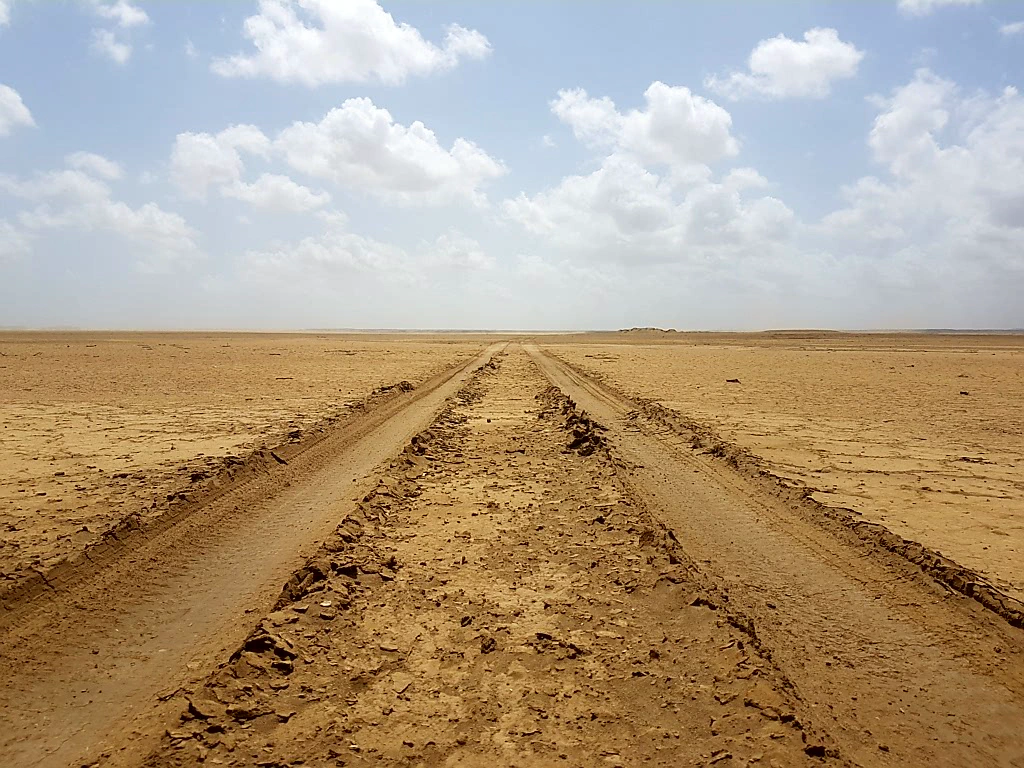
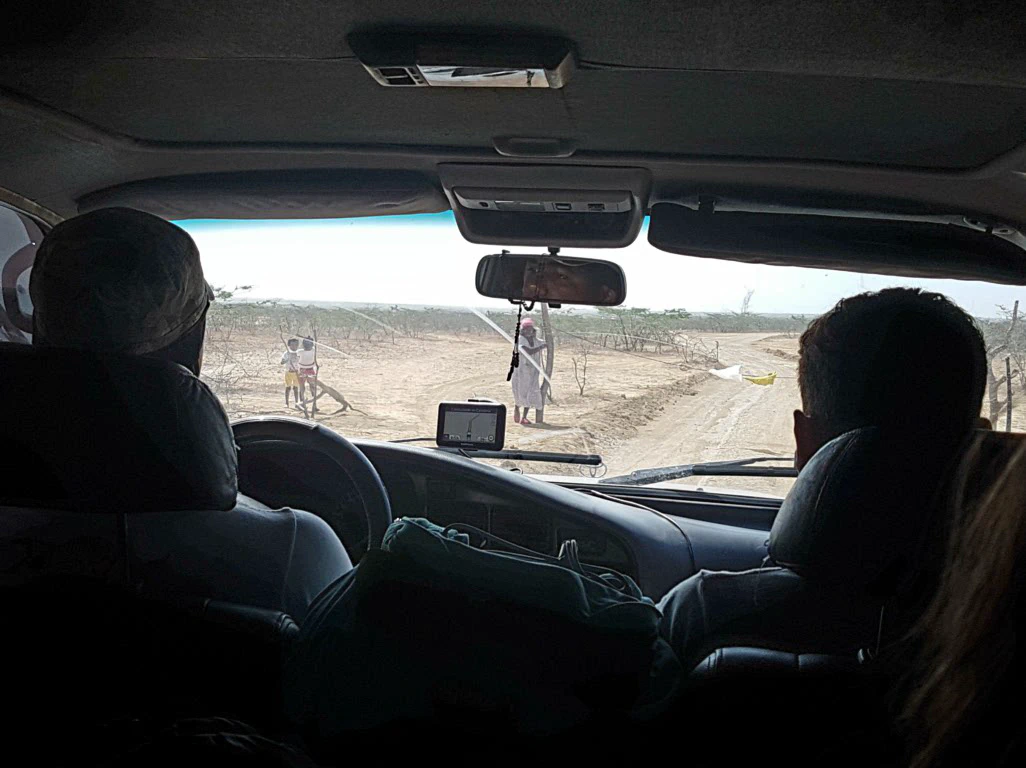
Here and there was a roadblock in the form of ropes held across the road. We dutifully paid with a bag of water and a packet of biscuits and were allowed to pass. We thought: oh, we have bought far too much; and cheerfully threw biscuits out of the car as if at carnival whenever a child held out a hand at the roadside. The living conditions here in the desert stirred our sympathy considerably, and it is hard to grasp why the Wayúu people continue to live in this barren landscape, or how they can survive at all.
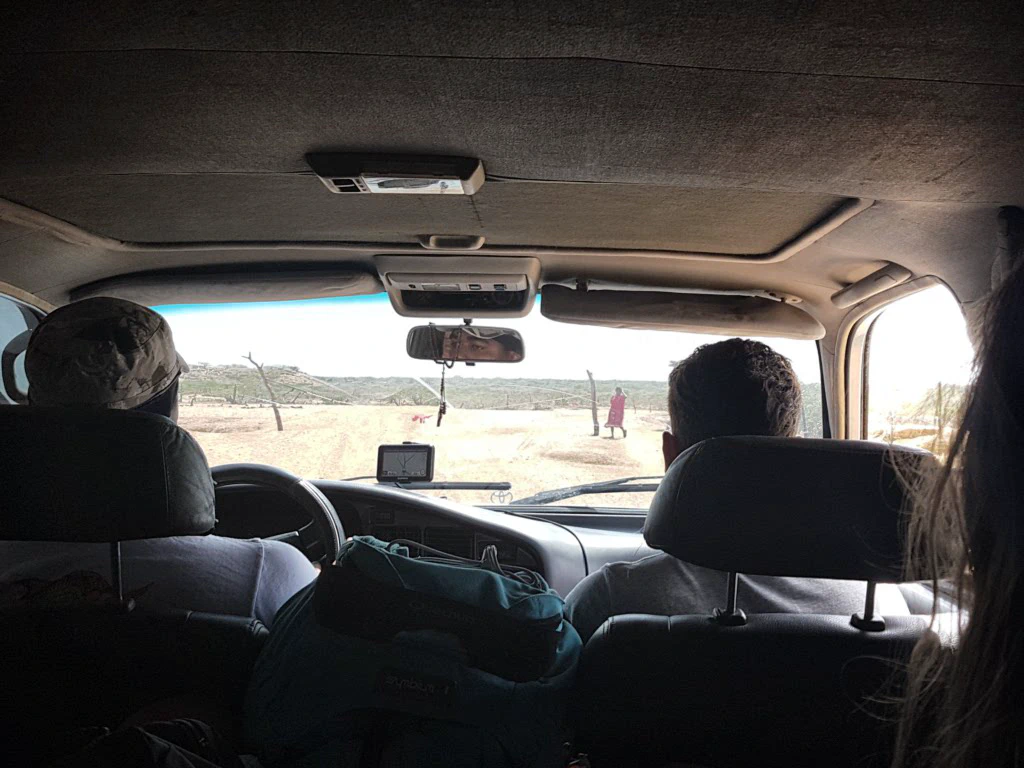
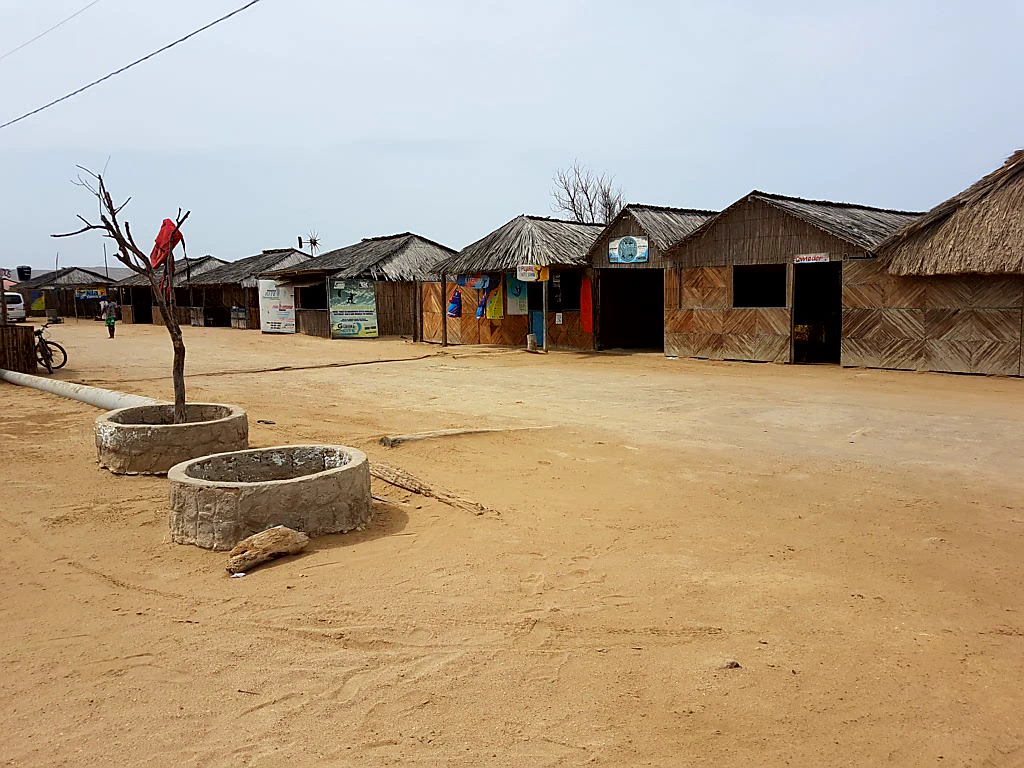
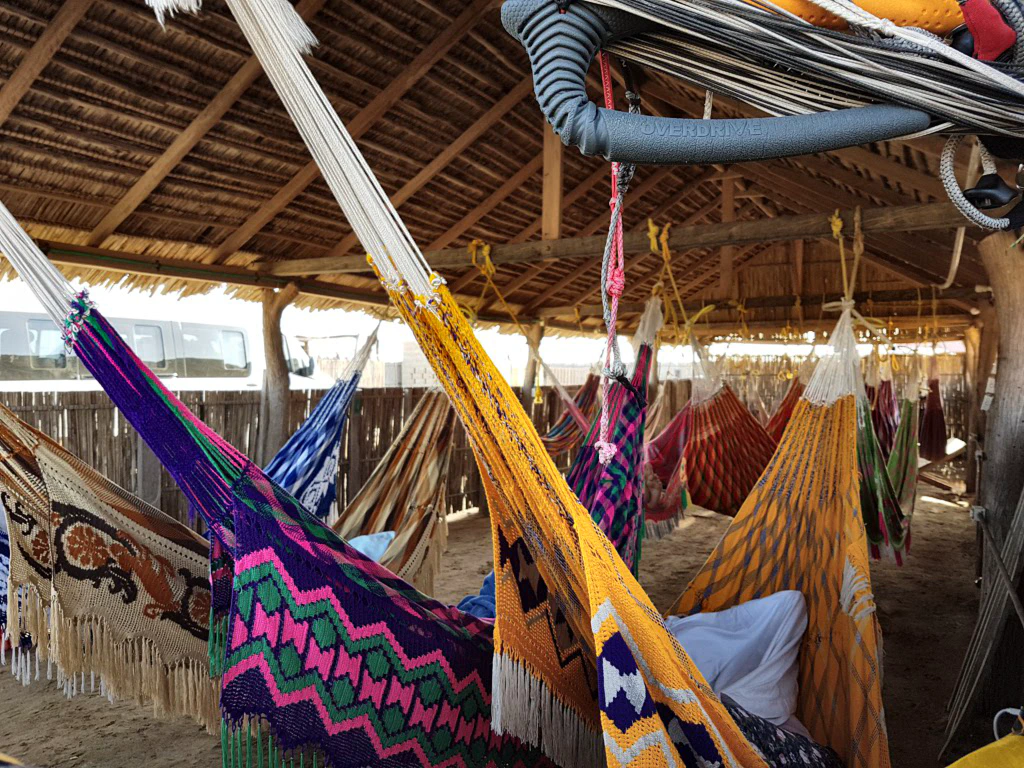
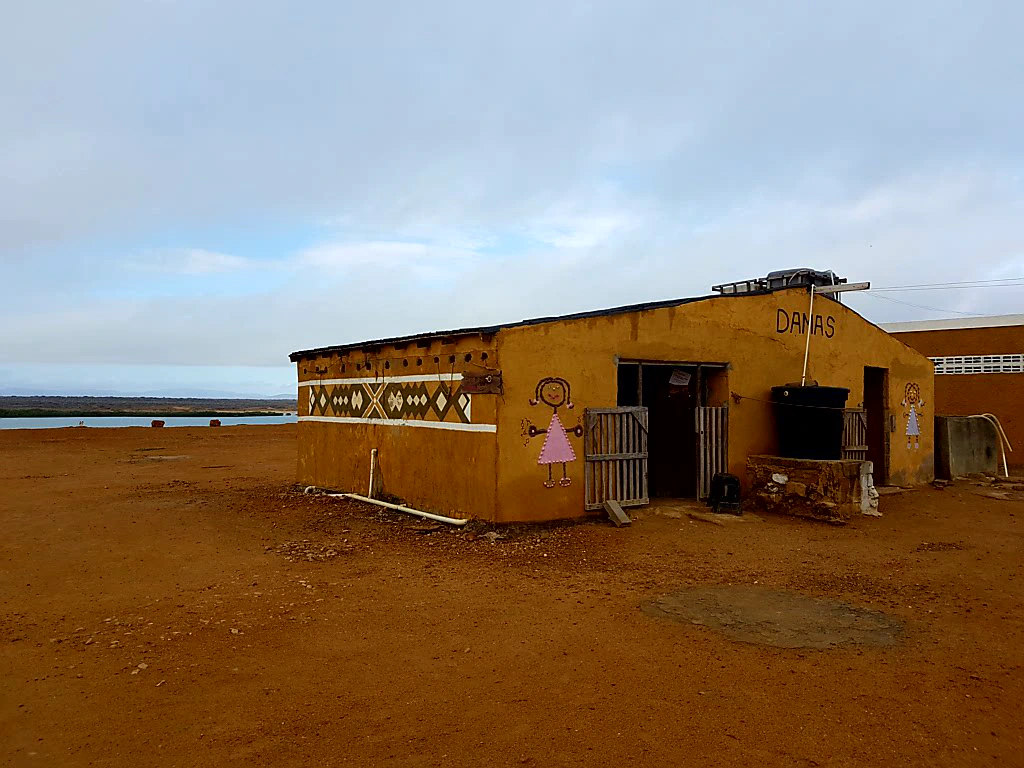
At midday we arrived in the village of Cabo de la Vela, where we were to stay overnight. And to experience the indigenous culture at first hand, we were to sleep in hammocks, as the members of the Wayúu tribe do. Not in hammocks (hamacas), to be precise - and that appears to be an important distinction - but in typical hammocks (chinchorros), which are larger, stretchier and therefore more comfortable. Every time I said hamacas, simply because I can remember that word better, our guide corrected me: chinchorro!
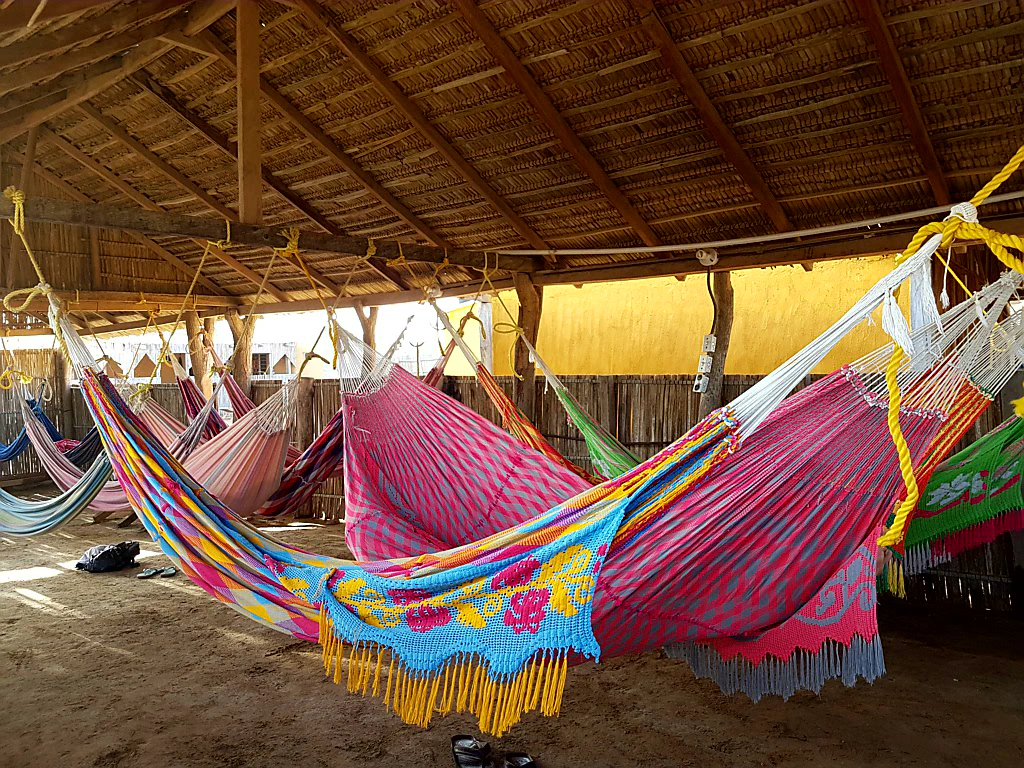
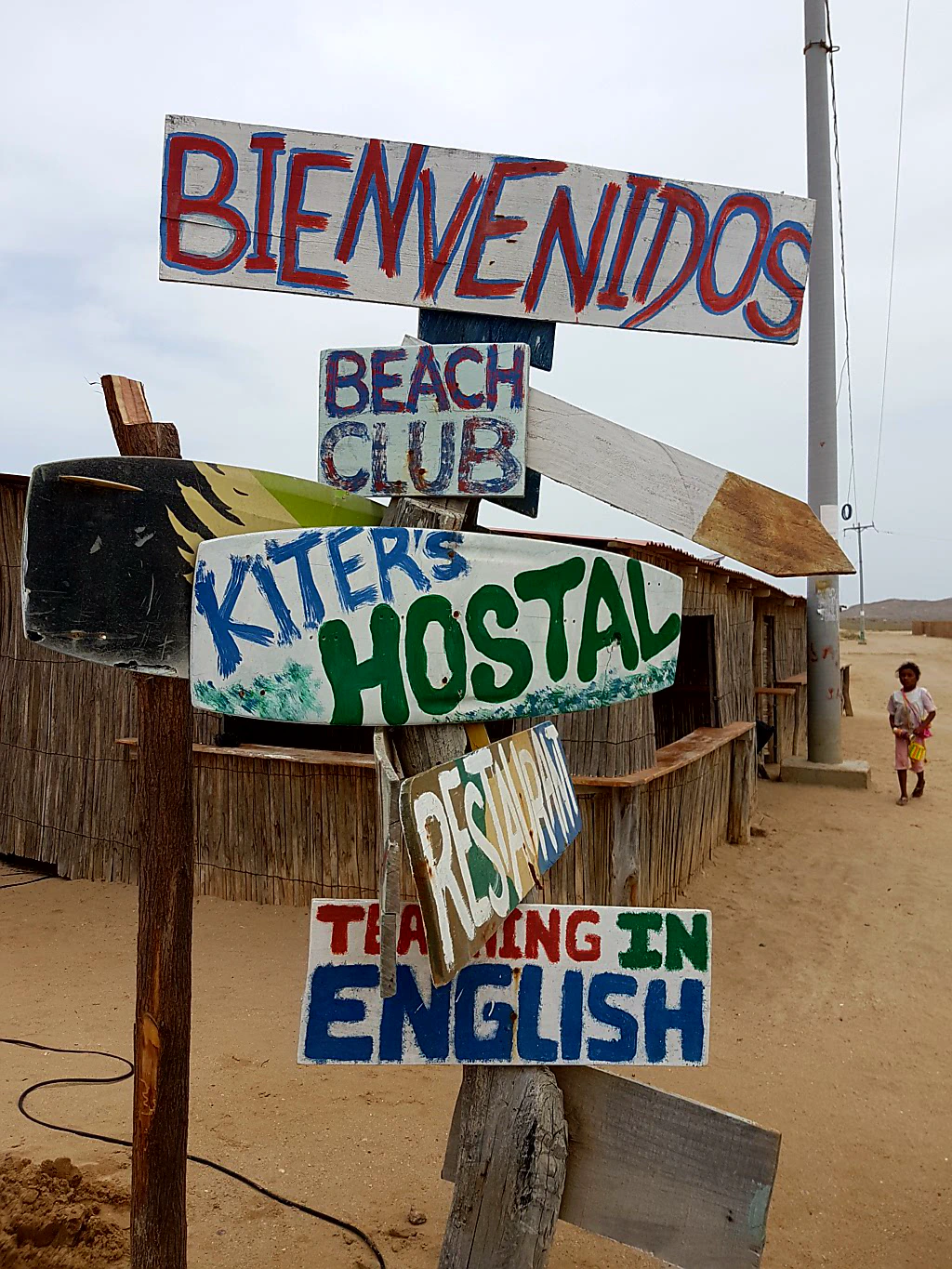
Cabo de la Vela is a very strange place that seems to exist only because the strong wind offers perfect conditions for kitesurfing.
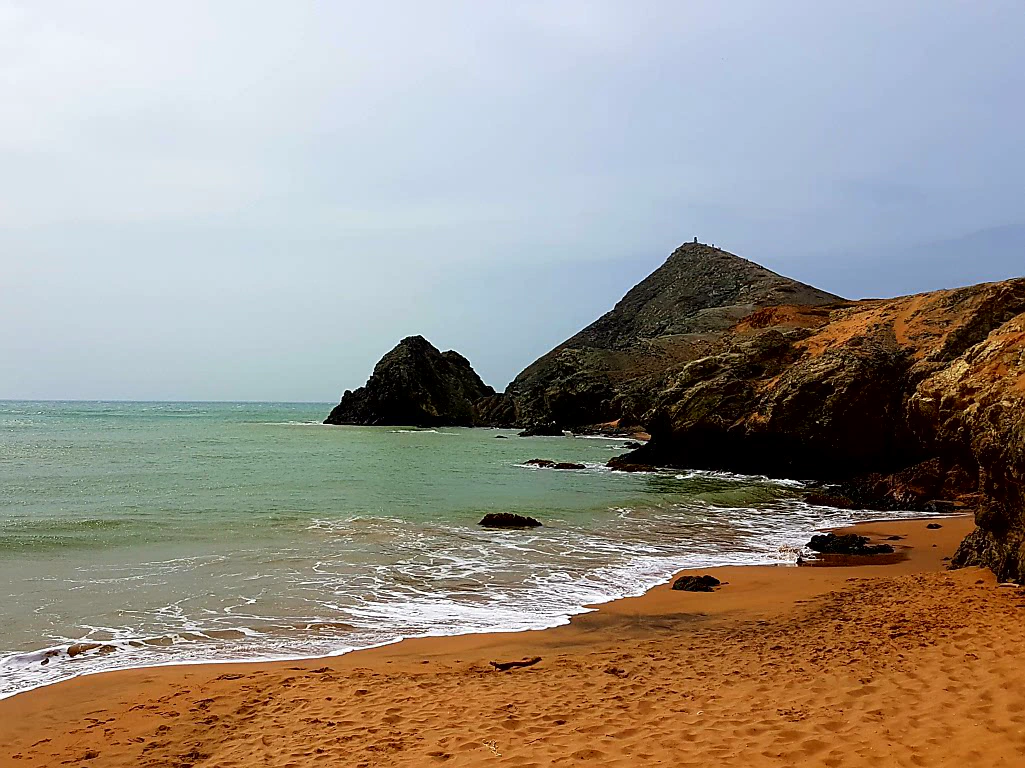
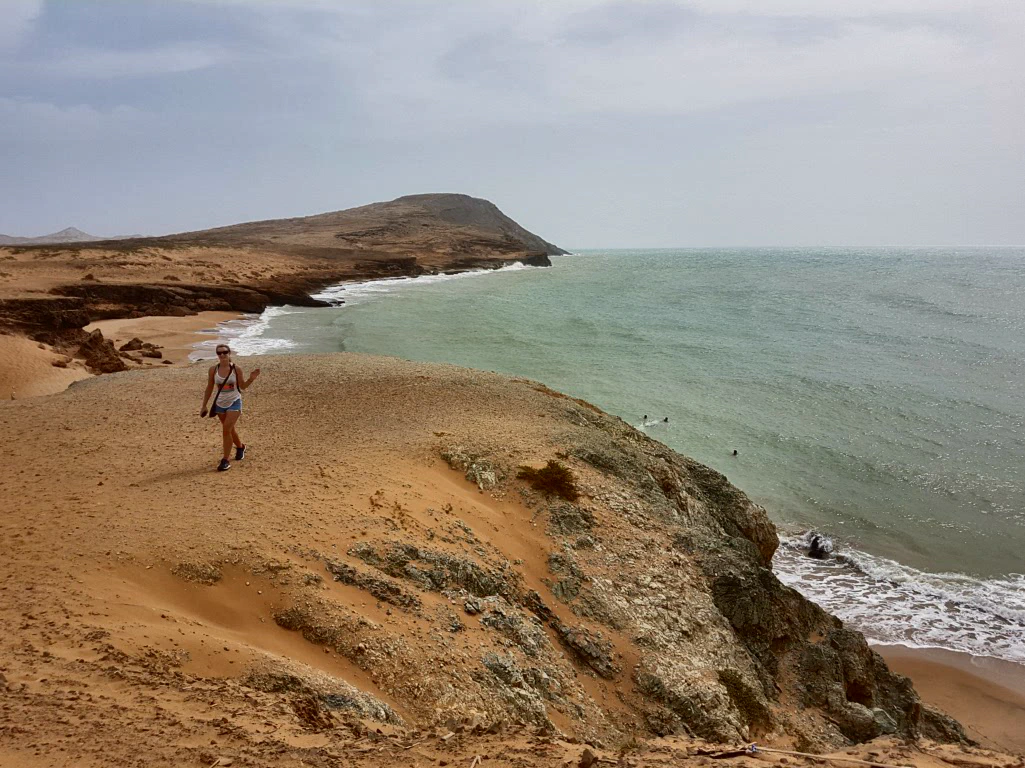
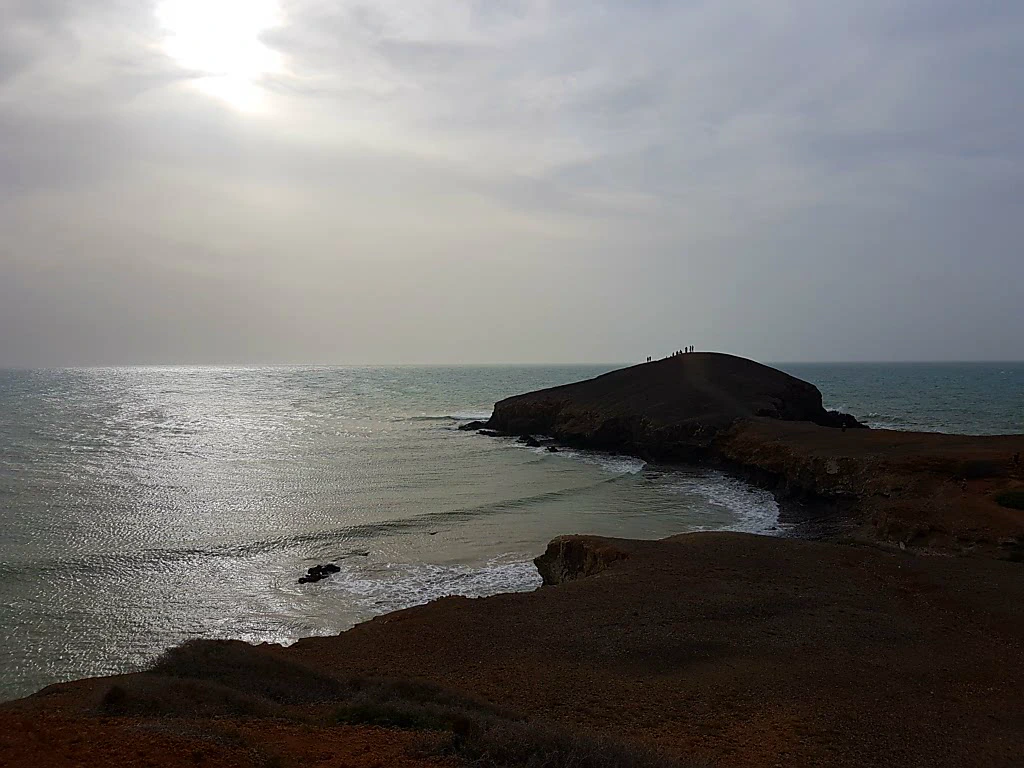
In the afternoon we drove a little north of the village, first to the Pilón de Azúcar (sugarloaf) and then to another beach to swim and watch the sunset - which sadly did not happen because of the cloud cover. Instead Jan carried on handing out biscuits to children. He really should join a carnival club when he gets home…
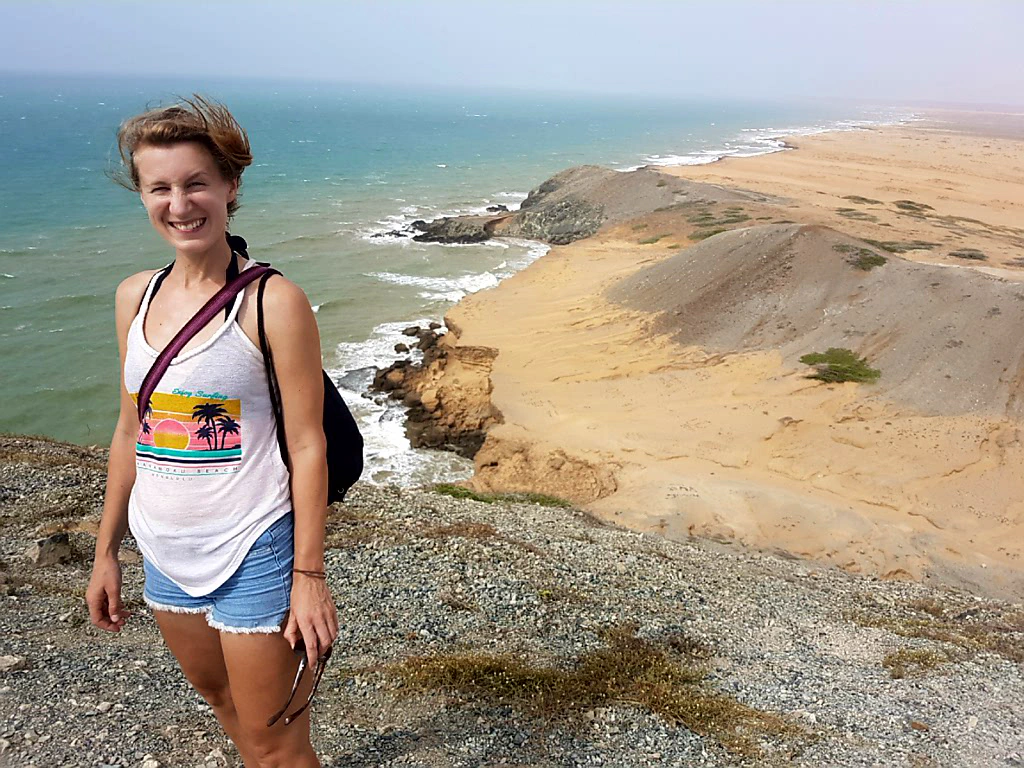
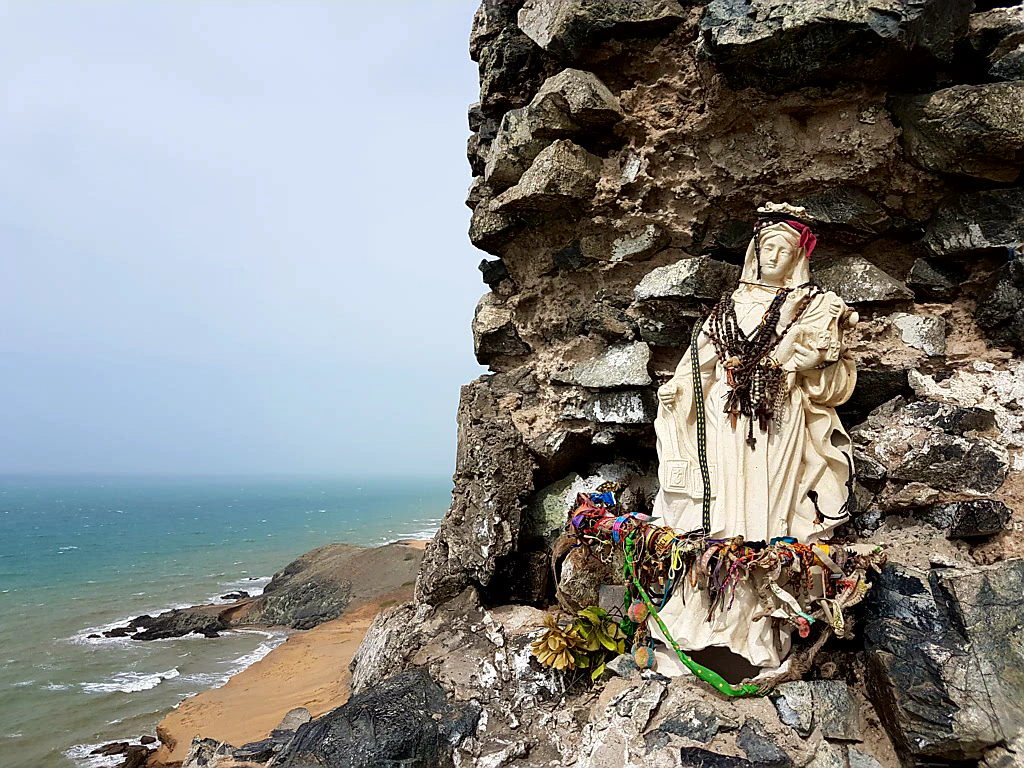
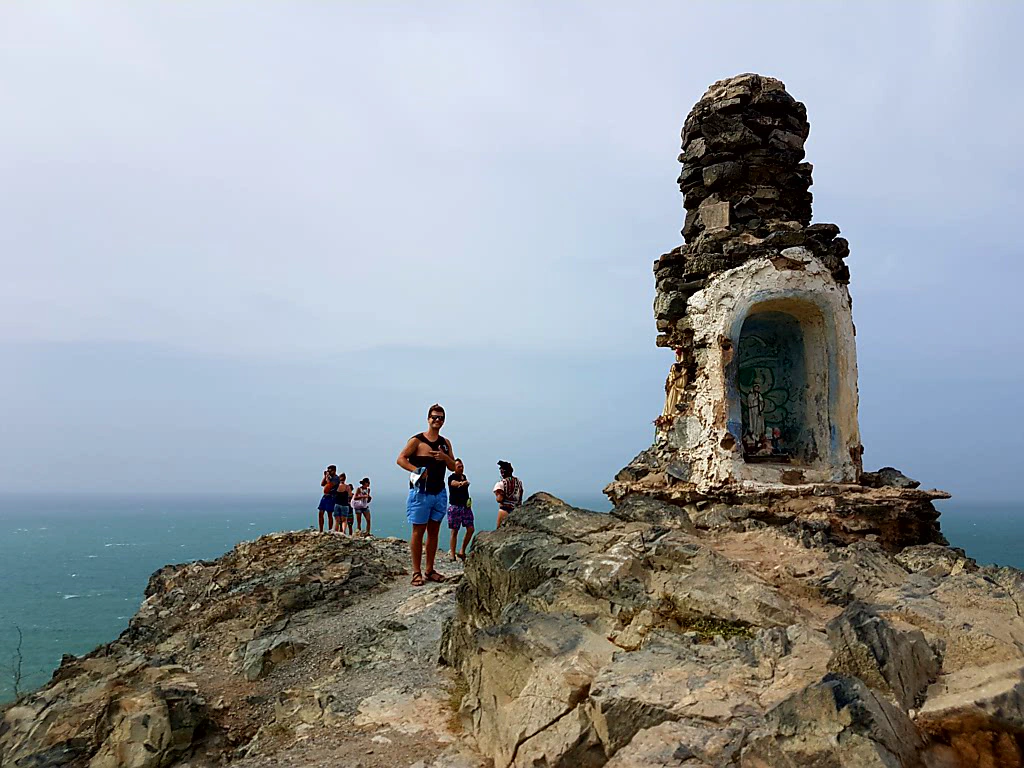
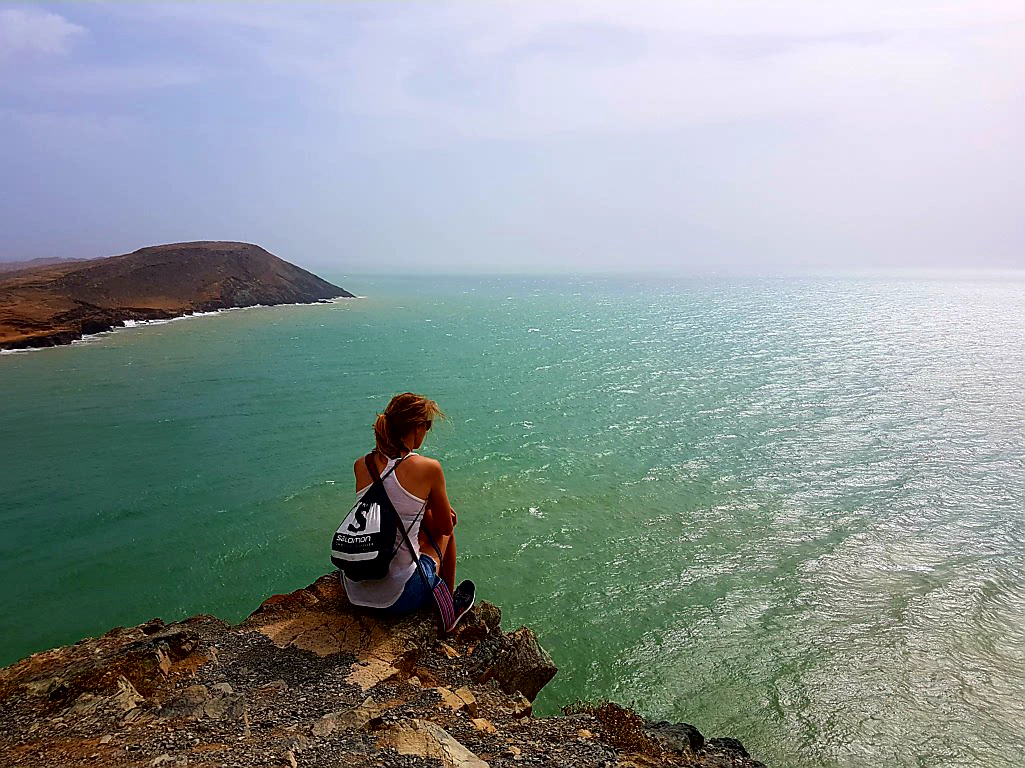
Now it was upon us: our first night in a hammock. Yes, we are rather the upmarket backpacker sort and generally treat ourselves to a private room - apart from New Zealand , of course, where we made use of every conceivable kind of accommodation. But a hammock was not among them there either. I have to say: sleeping in the hammock was not bad at all! I woke every few hours, but fell asleep again quickly. What did cause a lack of sleep were the other occupants, who chatted and laughed late into the night, had forgotten to switch off their alarms for 3:30 and 4:00 and were too lazy to heave themselves out of their hammocks to turn the alarm off, or were awake at 6 and of the opinion that nobody else needed any more sleep either… Just as well that we had moved to the “quiet” side away from the road…
Sadly the landlord only shrugged contemptuously at breakfast when I asked for coffee without sugar. He would have to brew that specially, he said, and put a mug of brown sugar brew in front of me in a take-it-or-leave-it manner. It is beyond me why everybody cannot simply sweeten to their own taste… Brigit had it worse as a vegetarian, though. Because the concept of vegetarian food is unknown in this part of Colombia at least. We could generally choose between fish, chicken, meat and prawns (many families in this region live from prawn fishing!!) and with it we got - every time and regardless of what you had chosen - rice, chips, fried plantain and a salad garnish. For the vegetarian version the main component was simply left out. If she asked nicely, it might be replaced by beans or egg. Well, compared to the Wayúu, who may genuinely have to live on biscuits alone (that was never conclusively established!), that is complaining at a very high level. Especially when, like Brigit, as a vegetarian you do not like rice or chips either… I found it fantastic every time!
At 8 we carried on towards the northernmost point of South America: Punta Gallinas. And that meant: properly through the desert. Three hours without a made road. No, hang on, there were 500 m of made road somewhere in the middle of nowhere.
And above all there were roadblocks, roadblocks, roadblocks. 30? 50? At times we had to stop every 10 m. At some point our guide, or rather just our driver, since sadly he gave us very little information, asked how many packets of biscuits we still had. After all, we still need some for the way back. Oops, we had evidently been a little generous the day before…
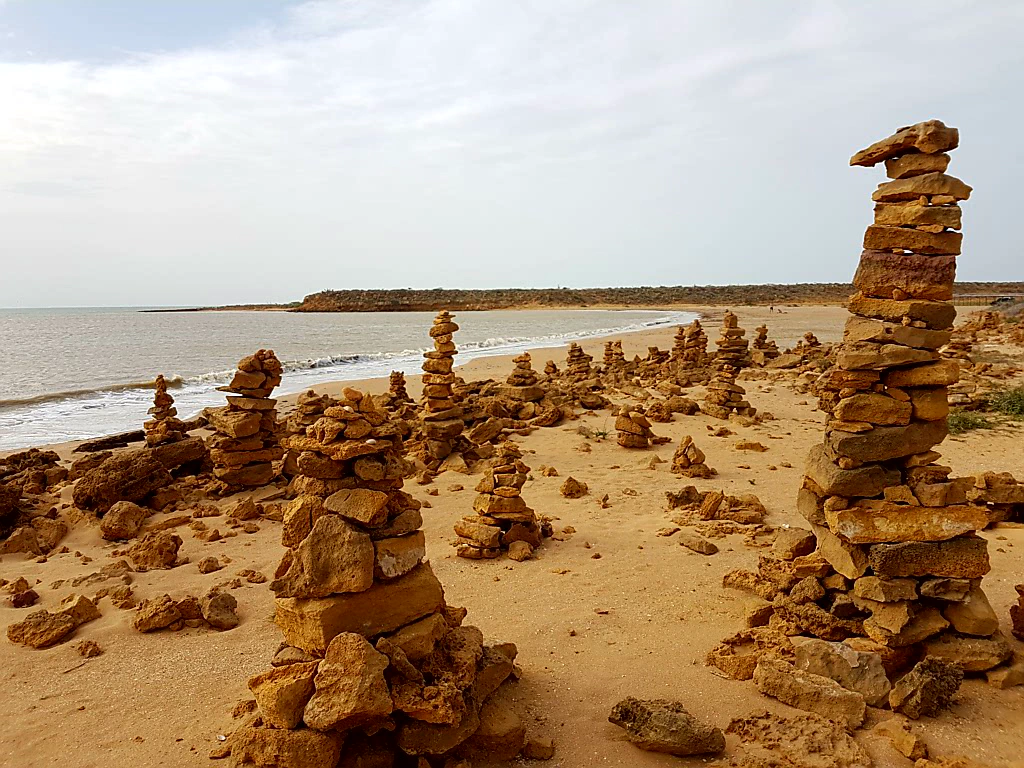
Finally we had fought our way through to the sand dunes of Taroa, which run straight into the Caribbean Sea. Beautiful! Somehow I find this freshwater-free landscape unsettling as well…
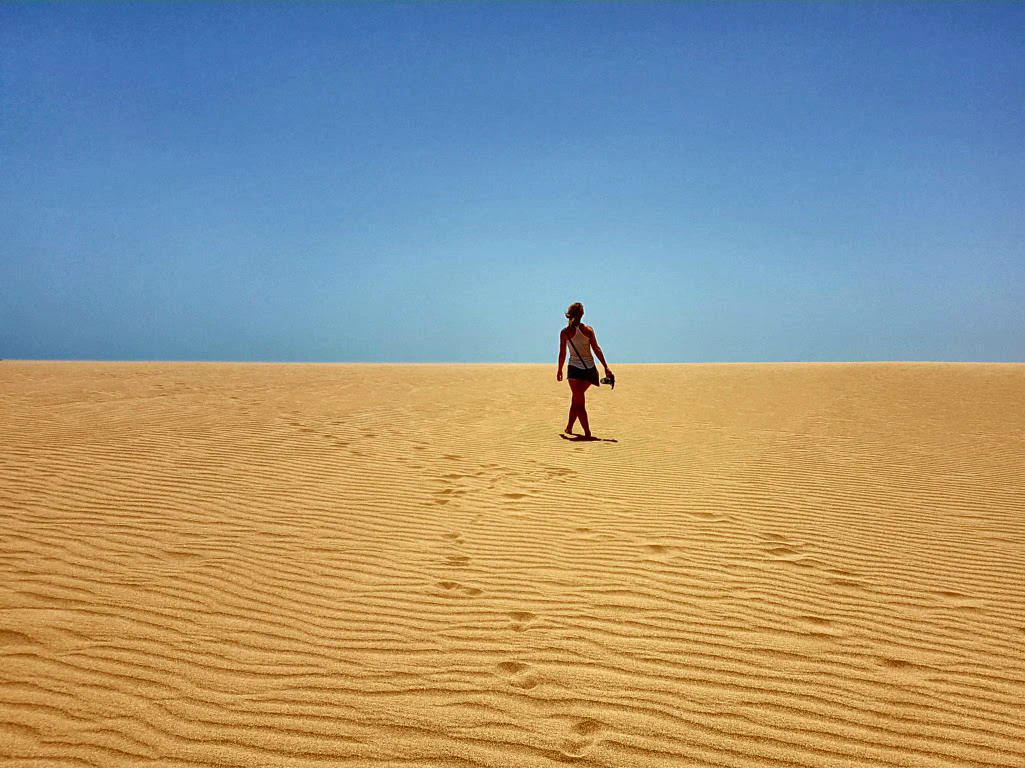
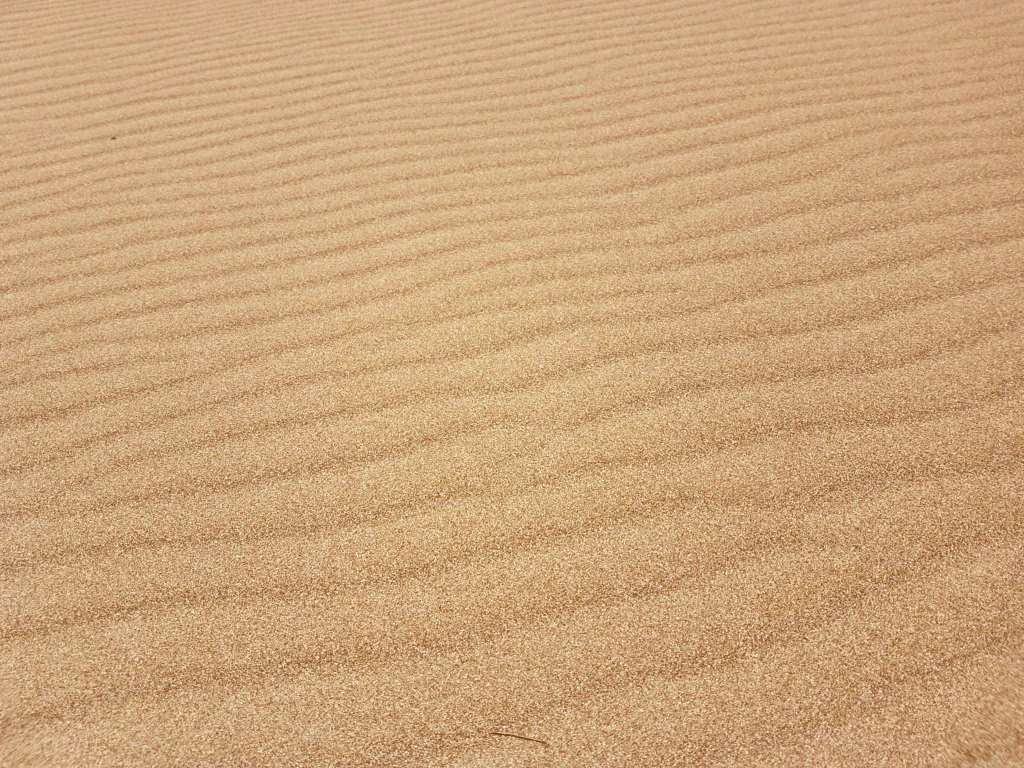
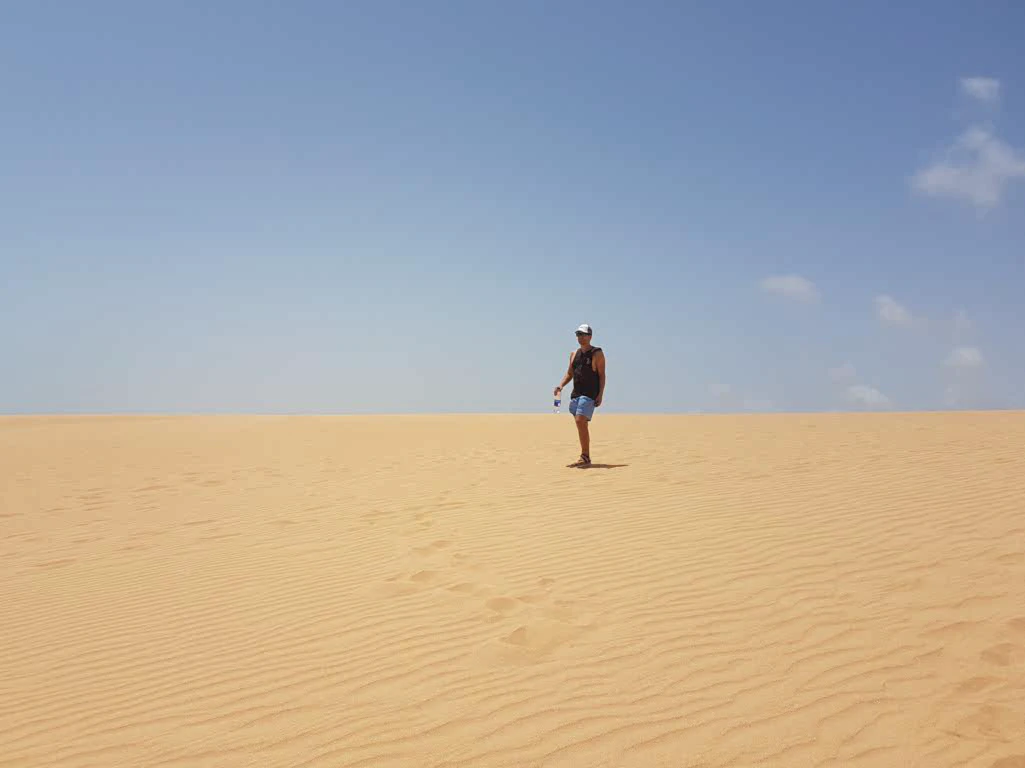
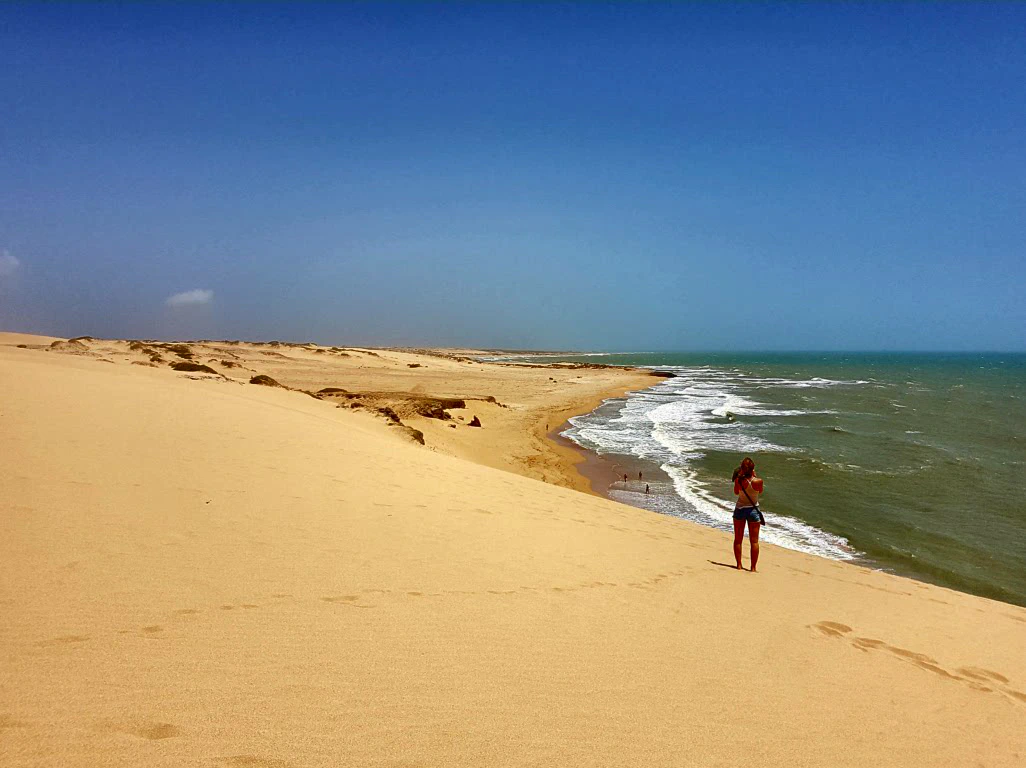
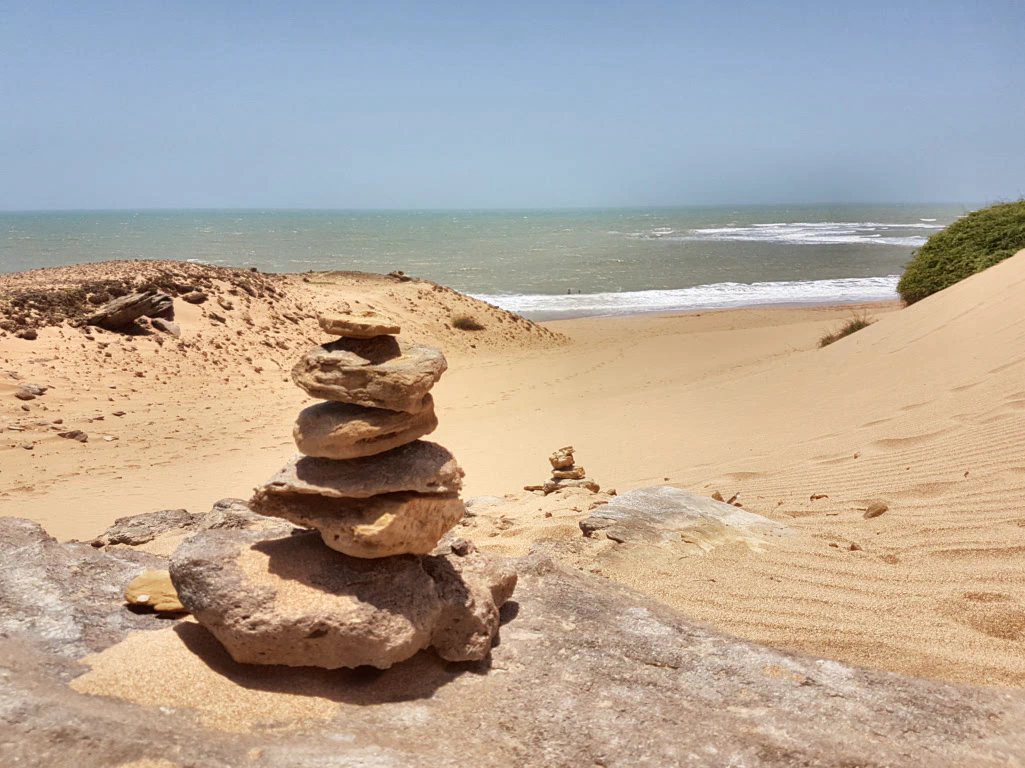
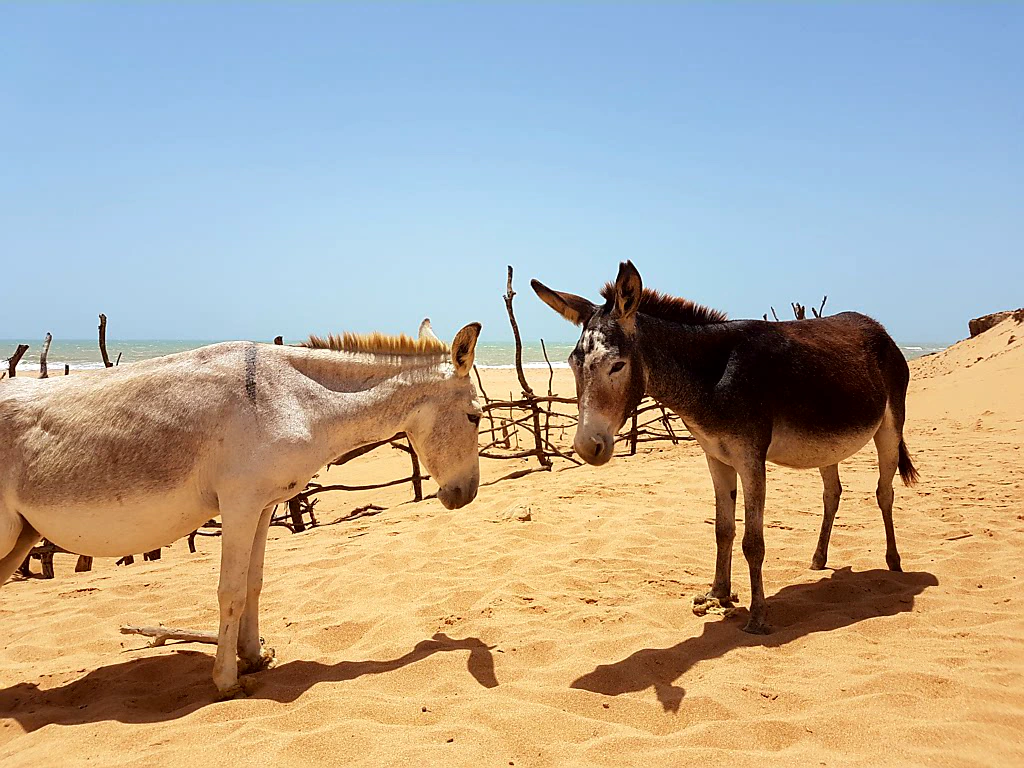
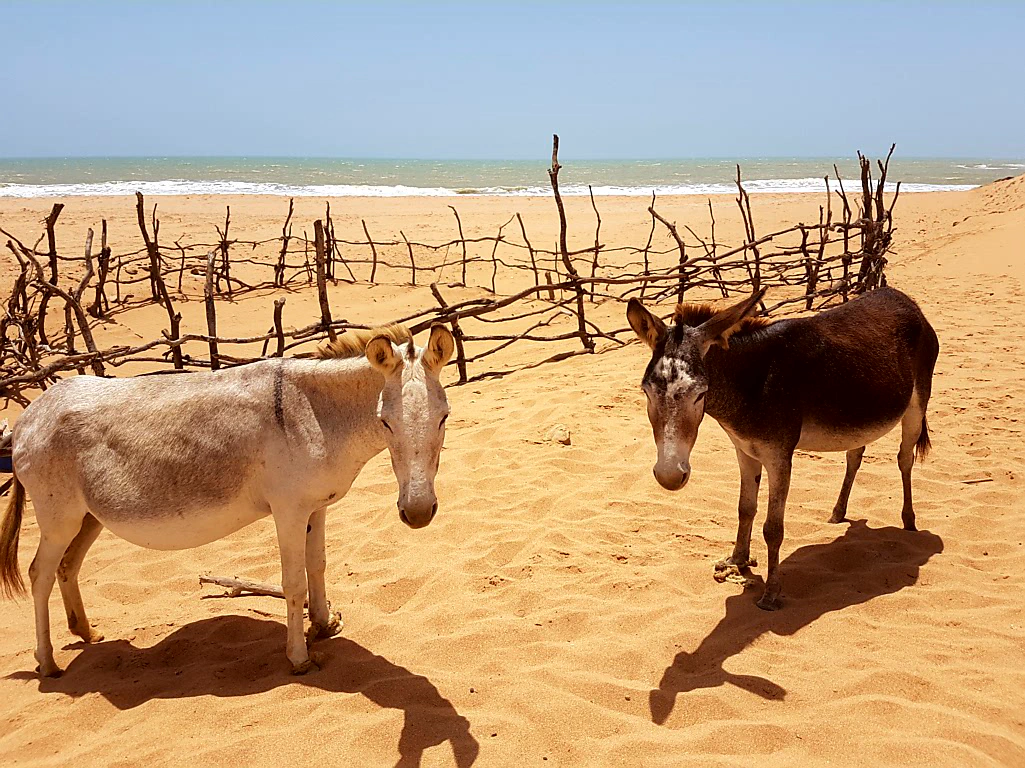
On we went to our accommodation Luz Mila, one of only two guesthouses around Punta Gallinas. For that night we got ourselves a room with beds this time, partly because Jan had caught a heavy cold and partly because there was no need to repeat the hammock adventure two nights running.
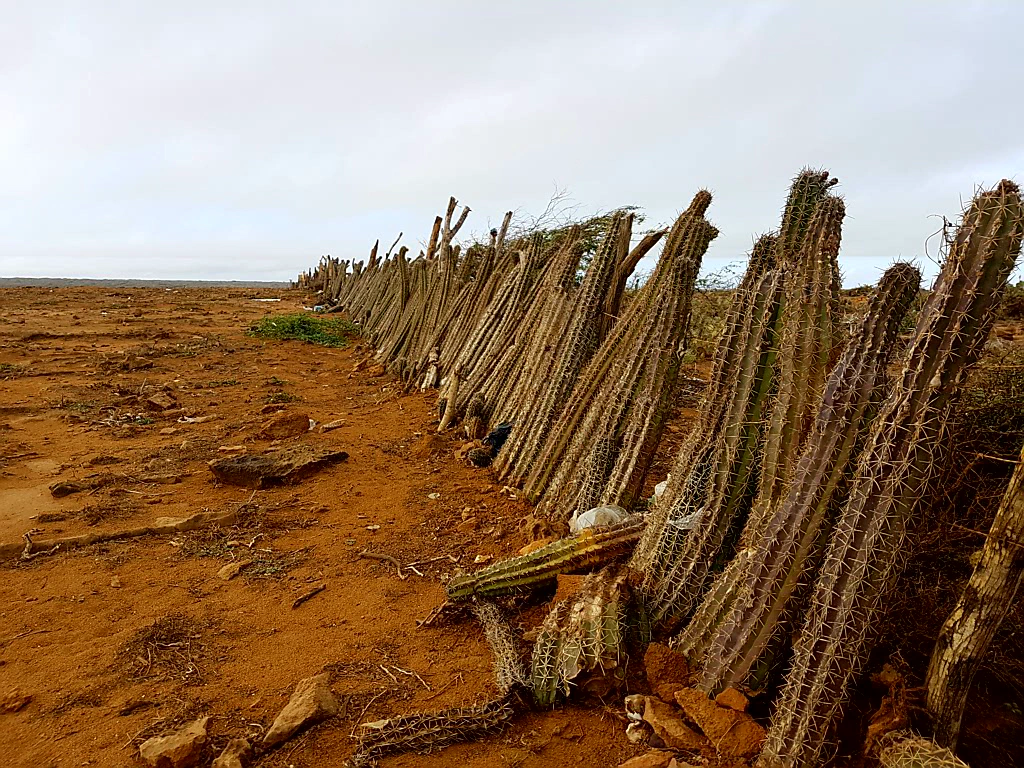
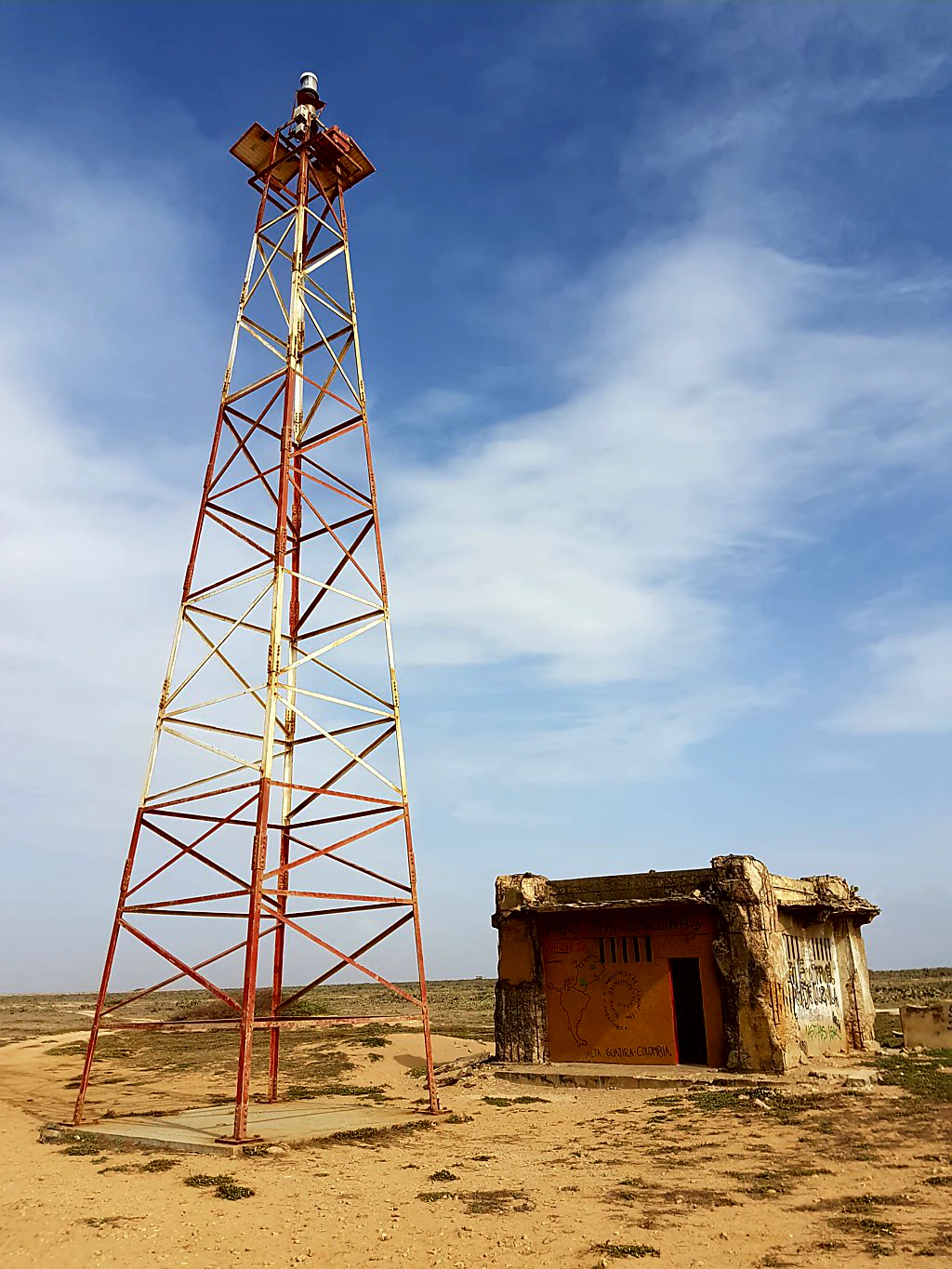
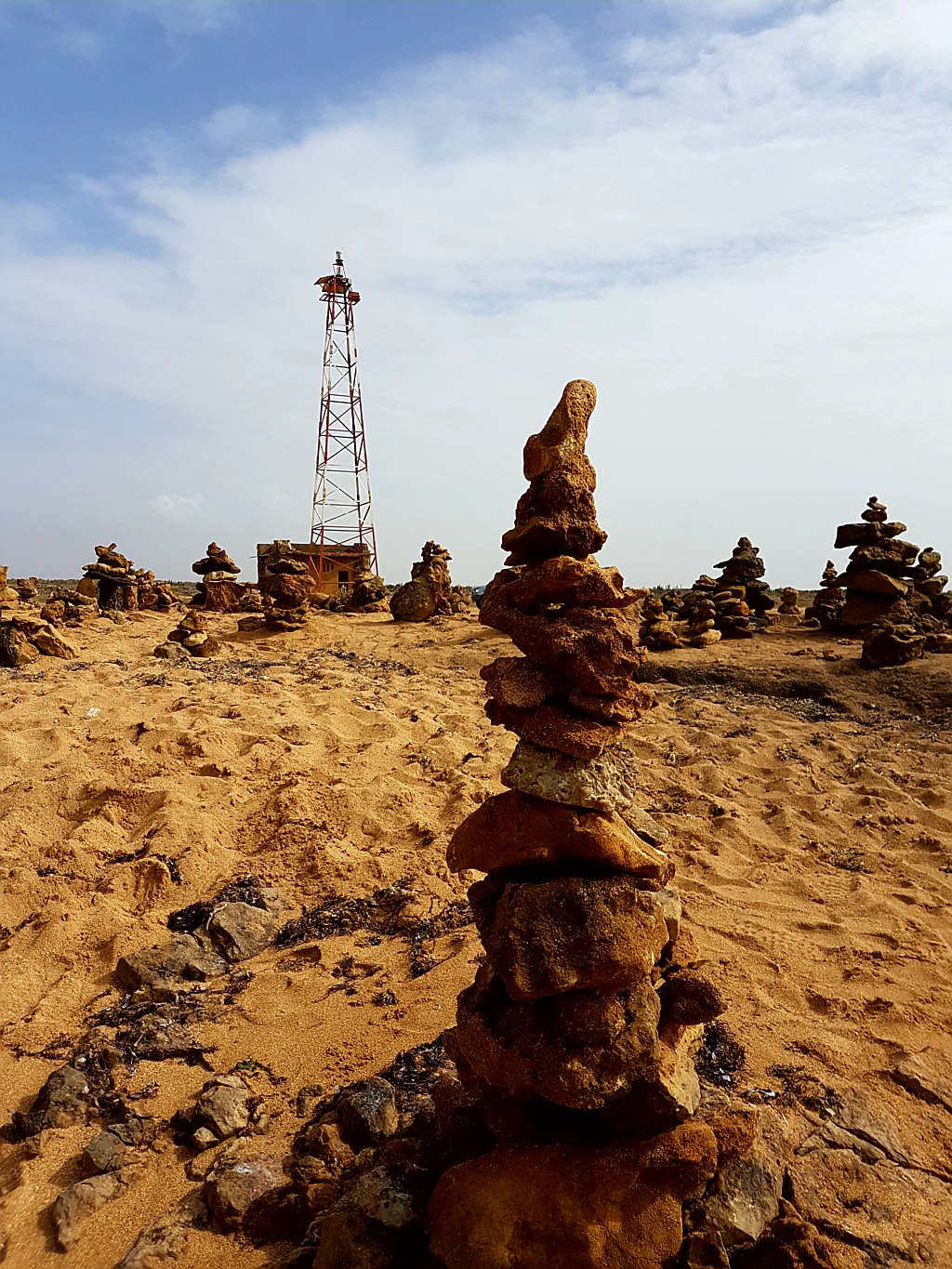
In the afternoon we drove on to Punta Gallinas, the northern point of South America, marked by a bleak metal lighthouse. Behind it you can still see the remains of the former lighthouse, worn down by the salt-laden weather until it collapsed.
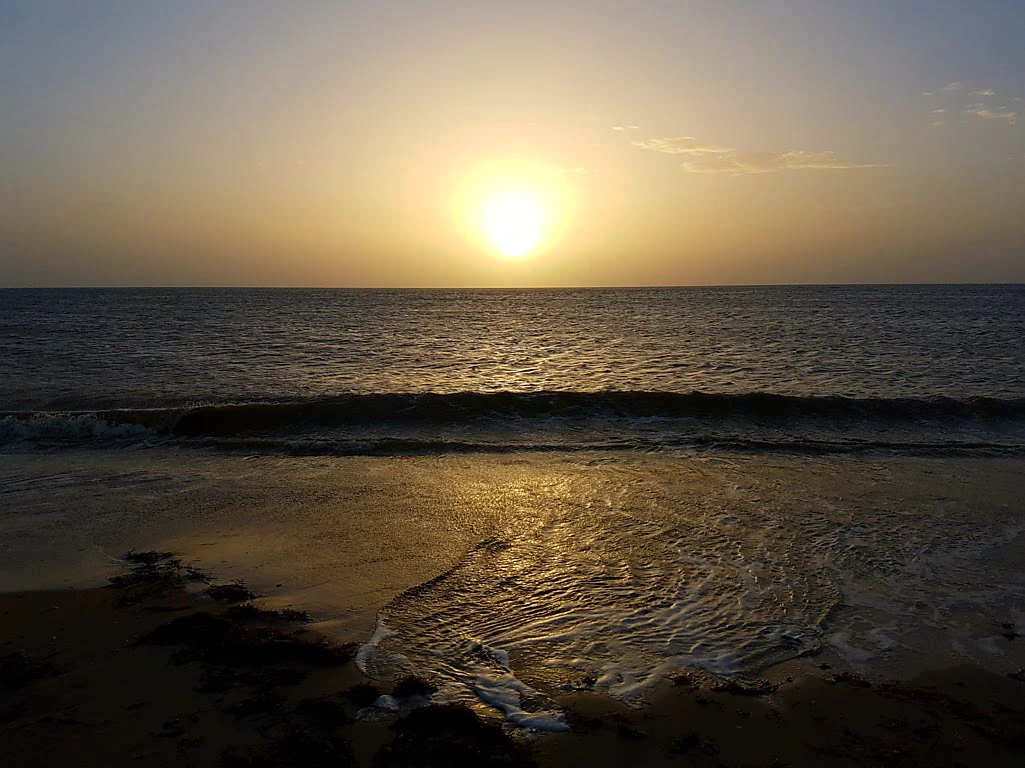
Afterwards we drove to one of the many beaches of Bahia Hondita. This time with a sunset, which was not as magical as desert sunsets are said to be, though. The sky was too cloudless.
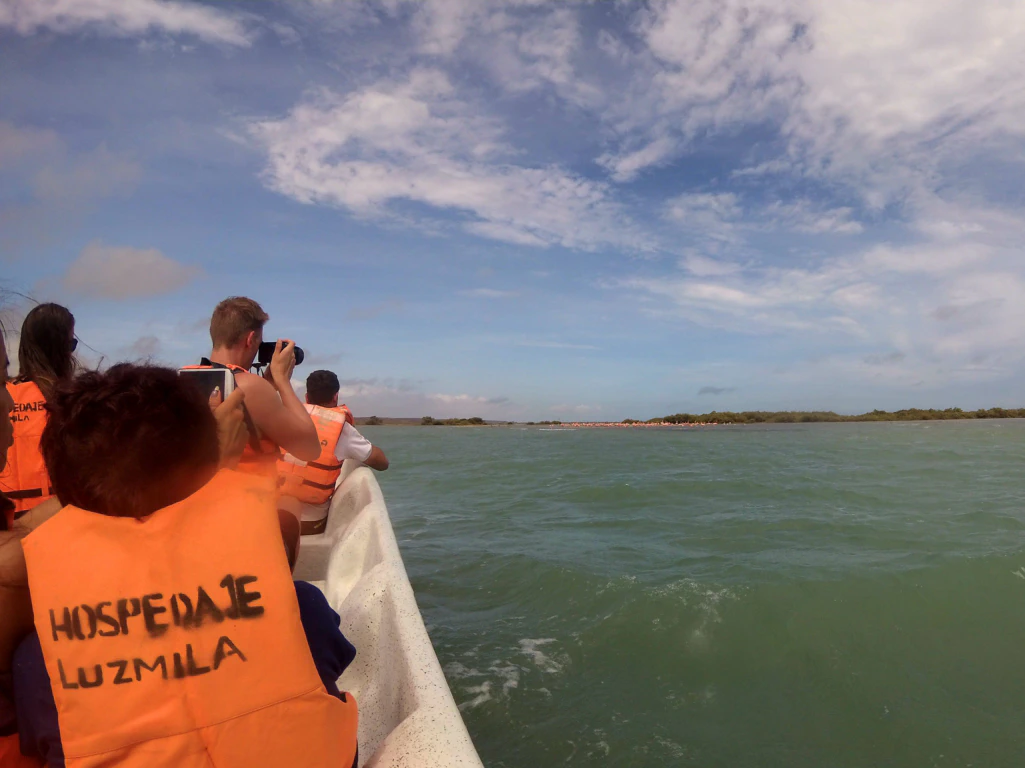
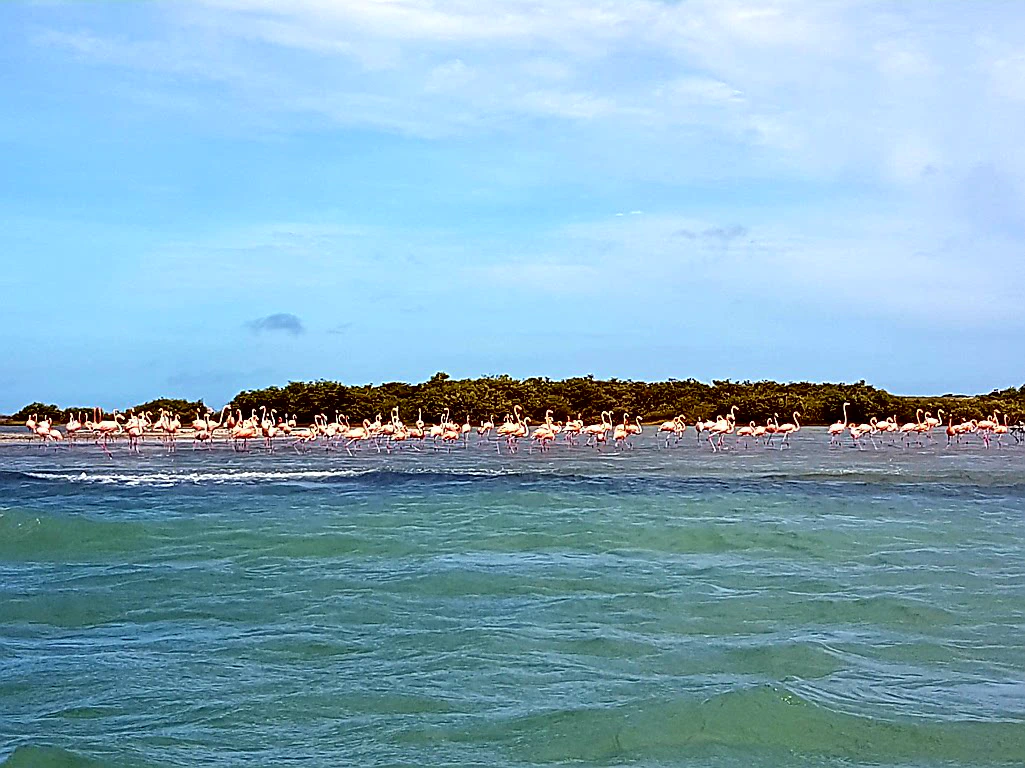
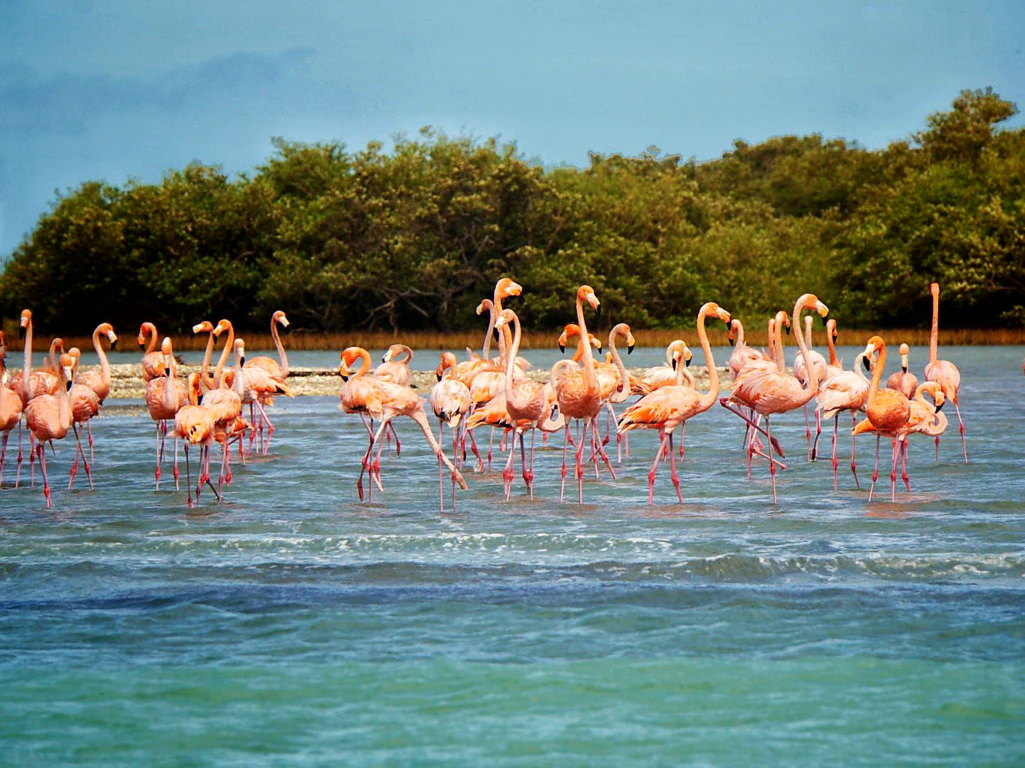
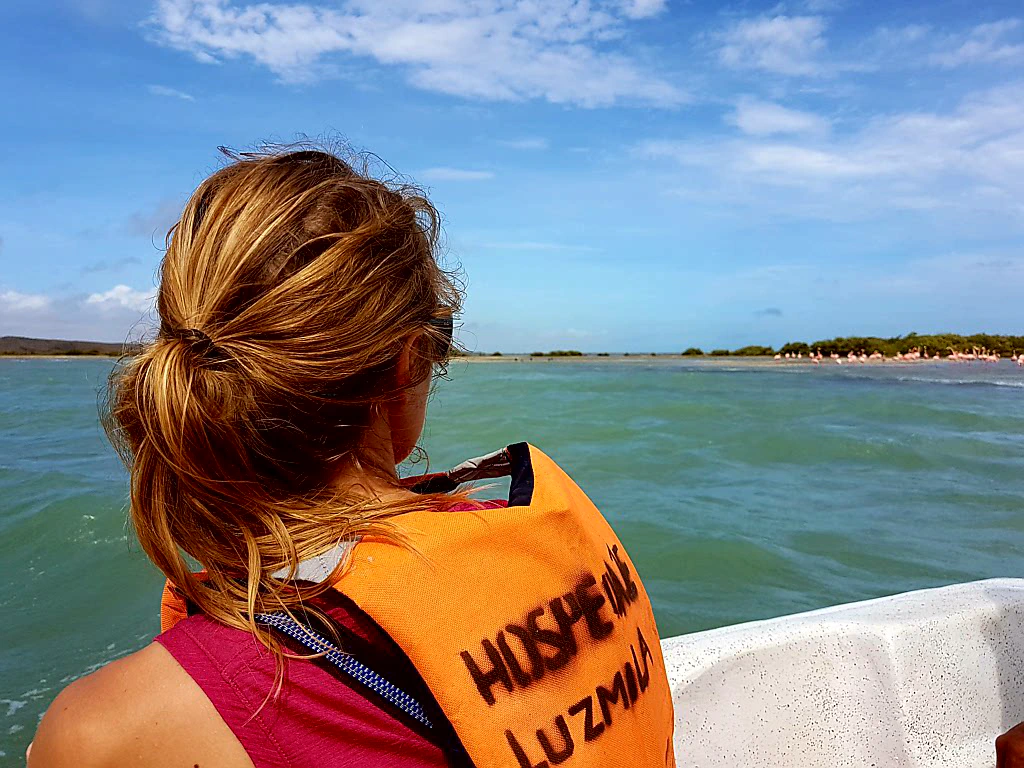
To round off the tour we cruised through Bahia Hondita the next morning to spot flamingos. And we found them! They are simply beautiful every single time! Where is the flamingo emoji when you need it?!?
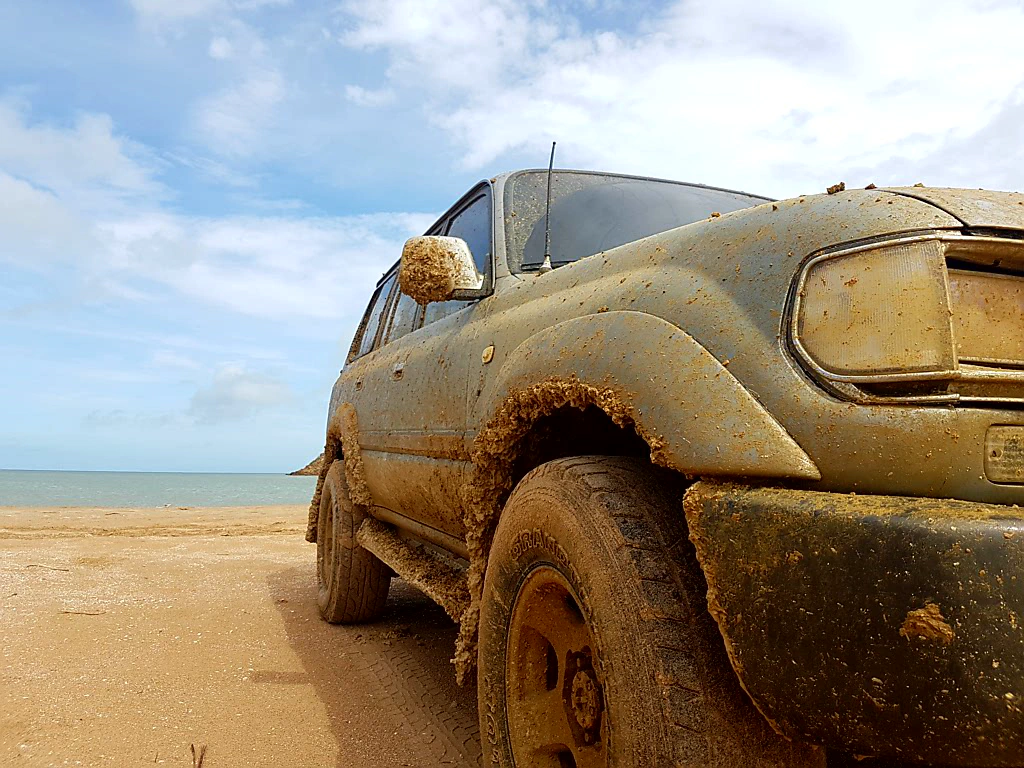
Now it meant eight hours of driving back to Santa Marta. The first hour in particular was very interesting, because although it had rained for only 10 minutes in the night, it had rained properly. Desert sand cannot absorb liquid, so the rain left behind one big mud landscape. You could tell from the state of our jeep. In the rainy season large parts of the desert are even flooded, which is why Google Maps suggests you are driving through lakes most of the time.
The remaining seven hours were above all very uncomfortable, since the back row of the jeep, Jan’s and my regular seats, fell into the wooden-class category in terms of legroom. But since the Dutch are genuinely tall (Koen over 2 m and Brigit certainly 1.85 m as well), we simply could not inflict a rotating seat system on them.
Since our water and biscuit supplies had shrunk alarmingly, our guide’s roadblock strategy was: eyes shut and through. Well, my eyes shut, while he himself took it entirely calmly, racing towards the barricades without braking in the deep confidence that the kids would let go of their rope in time. Mind you: some of the ropes were metal chains! It was already really warm (desert, after all) and nothing of the air conditioning reached the back of the jeep, but these driving manoeuvres made me sweat quite a bit extra. Well, we survived it, and so did the poor barricade children who were cheated out of their biscuits…
Back in Santa Marta we are currently pumping Jan full of medication so he is fit again in time for the start of our next tour. Which is the day after tomorrow. Perhaps I will have to consult the coca leaf trader around the corner after all…